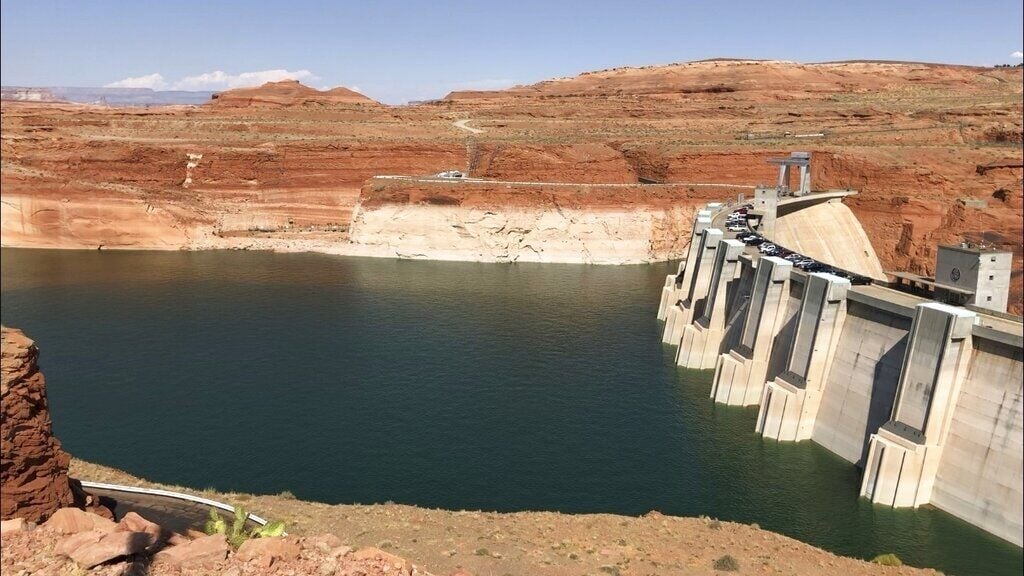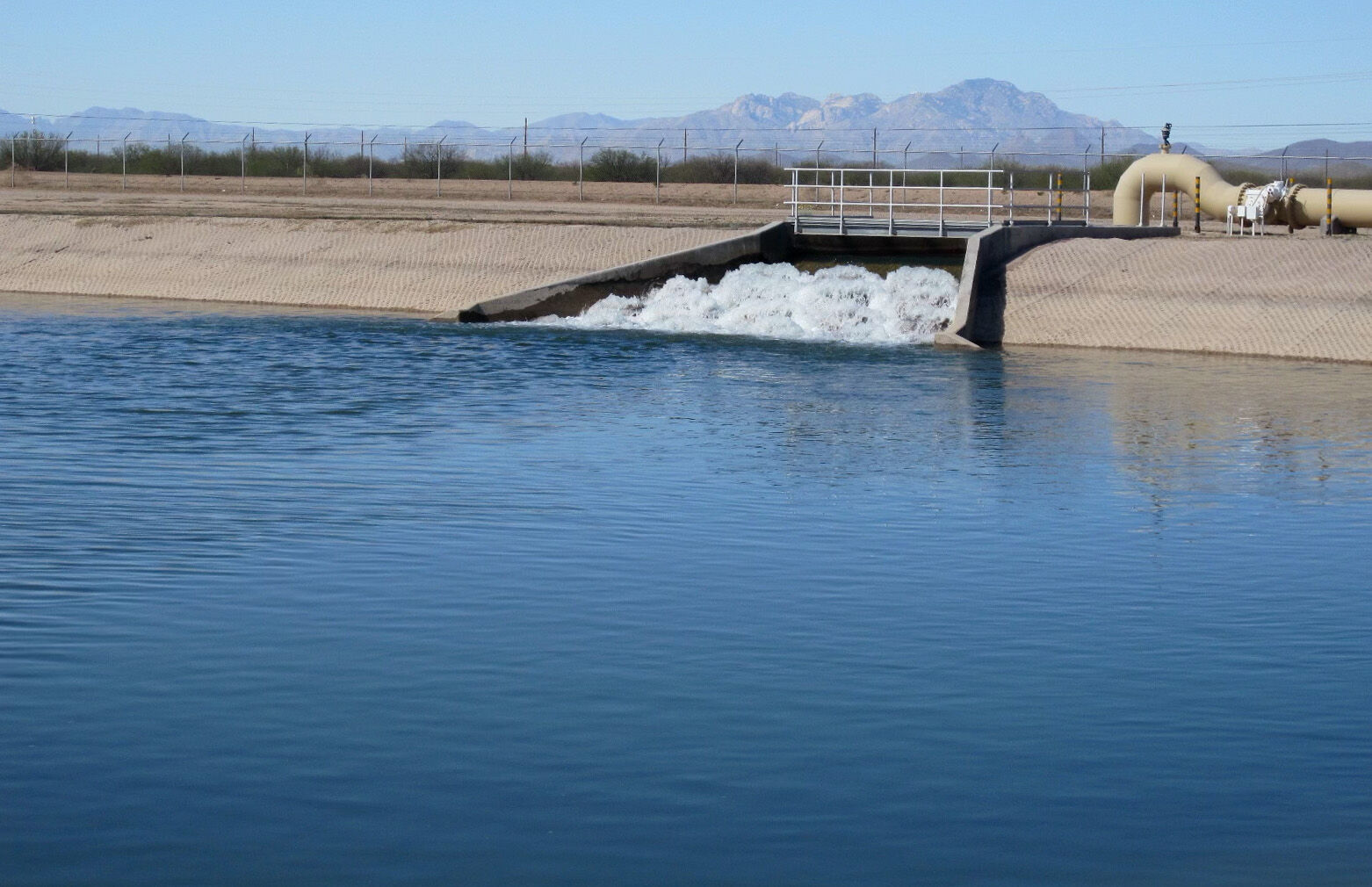
The potential collapse of the Central Arizona Project due to continued low Colorado River flows could be a game-changer for Arizona's water use and policies, triggering vastly increased emphasis on water conservation and possibly even future growth limits.
Or, the state could simply return to its post-World War II custom of unlimited groundwater pumping, combined with building massive water augmentation projects such as desalination plants.
The Star got both kinds of responses when asking numerous water officials, outside experts and environmentalists which path they think Arizona will follow, if massive cuts in CAP deliveries to Tucson and other Arizona cities now being considered become reality. To read the full story, click here.
People are also reading…
The U.S. Bureau of Reclamation is weighing possible options for reducing our take from the overused Colorado River, and three require massive CAP cuts, as drastic as 98% of what the 336-mile-long CAP canal system delivers to Phoenix and Tucson.
Here's a sampling of responses:
- Brad Udall, a Colorado State University water researcher, said, "I think large cuts to CAP will have an enormous and lasting impact on Arizona. It will affect Arizona water users and uses, Arizona politics, Arizona growth, and Arizona’s sense of itself."
His reasoning: These will not be one-time cuts but the beginning of the end of reliable CAP supplies.
"This winter, unfortunately, is the kind of winter that is likely to become more and more common due to human-caused climate change. . . And without CAP, much of Arizona’s water reliability and sustainability will be called in question," said Udall.
- Massive CAP cuts could prove "a shock to the system" for Arizona water users, said Sharon Megdal, director of the University of Arizona's Water Resources and Research Center.
"In the short run it might be hard for people to make adjustments in how they use water. Over time, and I don’t mean a long period of time, it has to bring about changes. This could be a shock to the system," Megdal said.
"I don’t think we planned for this. Now we have to plan with different assumptions and scenarios," said Megdal, a CAP board member from 2008 to 2020.
- Sarah Porter of Arizona State University said a lot of people in the state already understand they need to help and "change what they're doing with water use."
"I am asked all the time by people who are concerned and want to know what they can do in their homes and businesses," said Porter, director of ASU's Kyl Center for Water Policy. "I was even contacted by an incarcerated individual who felt that the state prisons could do more to conserve water."
- Warren Tenney, director of a water users group representing 10 Phoenix-area cities, agreed the state is ready to change how it uses and manages its water.
"I think water is going to become a major focus. It is existential to everything we do here. It is the foundation for our communities, for our economy to thrive," said Tenney, director of the Arizona Municipal Water Users Association. "I believe that the cities recognize that using the aquifer is not a long-term solution. We can’t deplete our aquifer. That would place us back to where we were in the 1960s and '70s. We can’t go back there."
- But former Arizona Department of Water Resources Director Kathleen Ferris is very skeptical that CAP cutbacks will bring much change to Arizona water policies.
Ferris bases her skepticism in part on recently proposed legislation that would for the first time in decades allow the mixing of groundwater with effluent in artificial lakes, and efforts by homebuilders to overturn in court an ADWR-imposed ban on new homes in some areas on the Phoenix area's fringes that rely on groundwater.
"It’s one thing after another. It doesn’t feel like there is an acknowledgement that we are past a crisis stage," said Ferris.
"A crisis is something that comes along and passes. This isn’t going to pass."
Contact Tony Davis at 520-349-0350 or tdavis@tucson.com. Follow Davis on Twitter@tonydavis987.

Tony Davis
Reporter


 As water lifeline evaporates, Arizona faces a cultural change over water use