

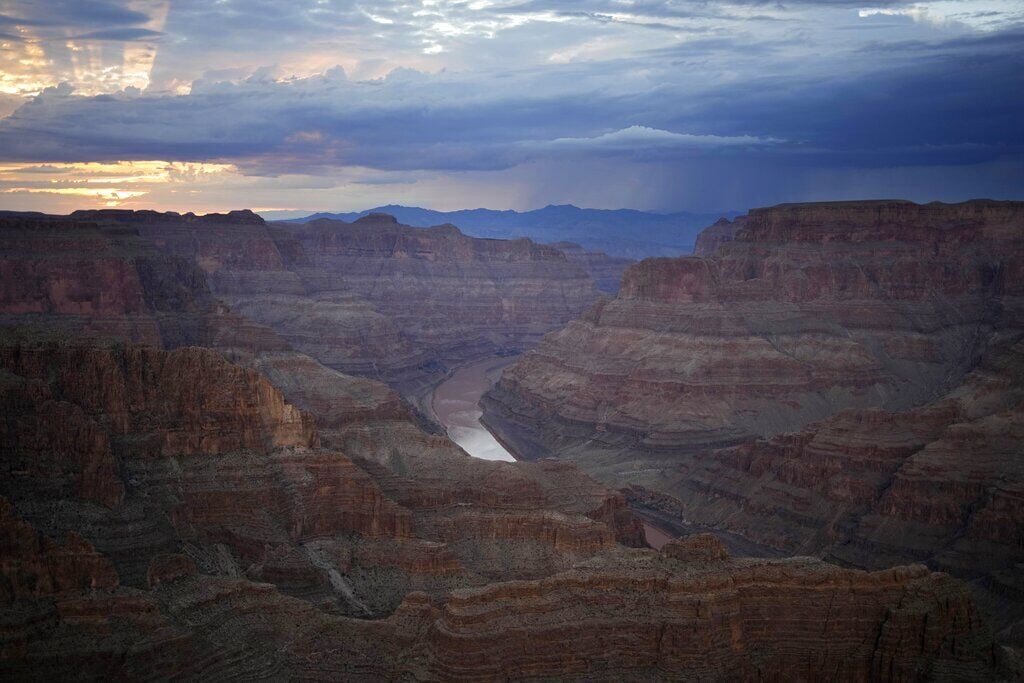
As the temperature keeps heating up, the Colorado River's expected spring-summer flows into Lake Powell keep declining.
The latest federal forecast, released Tuesday, projects the river will only carry 27% of its normal April to July flows into Lake Powell. That lake supplies water to Lake Mead, which stores water for delivery to Arizona, Nevada and California in the Lower Colorado River Basin.
Just two weeks ago, the U.S. Colorado Basin River Forecast Center had projected that April-July flows into Powell would be 36% of normal. Put in raw numbers, the lake at the Arizona-Utah border is now expected to get 1.75 million acre-feet of water in that period this year, down from forecasts of 2.3 million on March 1st and 3.65 million at the start of 2026.
One million acre-feet of river water used to be delivered each year to the Central Arizona Project canal system serving drinking water to Tucson and Phoenix, until the federal government started cutting deliveries to the project in 2022.
People are also reading…
Here are four takeaways on the significance of the declining river flows and their causes:
1. Cause. Predictions of spring-summer runoff into the river — the water that flows down mountainsides as the winter snows melt — have been below average all year because the West has had extraordinarily low snowpack.
But the forecast worsened this month because first, precipitation in the Upper Colorado River Basin above Lake Powell was only 50% to 60% of average for the first two weeks of March, said Cody Moser, a senior hydrologist for the river forecast center.
Second, the upcoming, West-wide heat wave that will start Thursday is expected to melt existing mountain snows earlier than usual. "Because this snowmelt and streamflow are occurring in March, that means less snow will be available during the April-July period," Moser said.
2. Impact and significance. The April to July river flows from runoff are a crucial contributor to the Colorado River's overall supply because the amount depends so much on how much winter snow falls in the river basin.
This year's dismal snowpack and river flows likely will only cause relatively minor cutbacks in CAP deliveries this year. But if next winter's snows and runoff of water into the river and lake stay bad next year, the basin could be in for a major crisis, requiring much deeper cuts in water deliveries to Phoenix and Tucson, experts said.
3. Accuracy. Alan Boyce, a farmer in Yuma and in Southern California's Imperial Valley, says the federal forecasts for flows into Lake Powell are too optimistic. That's because they rely on past weather and runoff data from 1991 to 2020, which had some very wet years in the 1990s. They don't take into account the much drier period of 2021 to 2025.
Moser said the forecast center will start considering the last five dry years in its forecasting beginning in 2027. But for this year, Boyce predicts the April to July flow will be as low as 900,000 acre-feet, while a former U.S. Bureau of Reclamation official, David Wegner, said it's more likely to fall between 1 million to 1.2 million acre-feet. The record low spring-summer flow into Powell was 963,000 acre-feet in 2002.
4. Safety net. If the river flow forecasts stay low, the Bureau of Reclamation may step in and release a large amount of extra water into Lake Powell from reservoirs lying further upstream, particularly the Flaming Gorge reservoir at the Utah-Wyoming border. But the river's Upper Basin states — Colorado, New Mexico, Utah and Wyoming — will likely oppose such releases, at least on a large scale, because they want that water kept in their states for their own needs.
Perhaps more important, if the upstream reservoirs are drained this year to avert an immediate crisis, they likely will not be able to bail the river and Lake Powell out next year if winter snowpack stays low starting this coming December.
To read more, click here.
Get your morning recap of today's local news and read the full stories here: tucne.ws/morning
Contact Tony Davis at 520-349-0350 or tdavis@tucson.com. Follow Davis on Twitter@tonydavis987.

Tony Davis
Reporter

 Record heat could put Colorado River closer to crisis


