

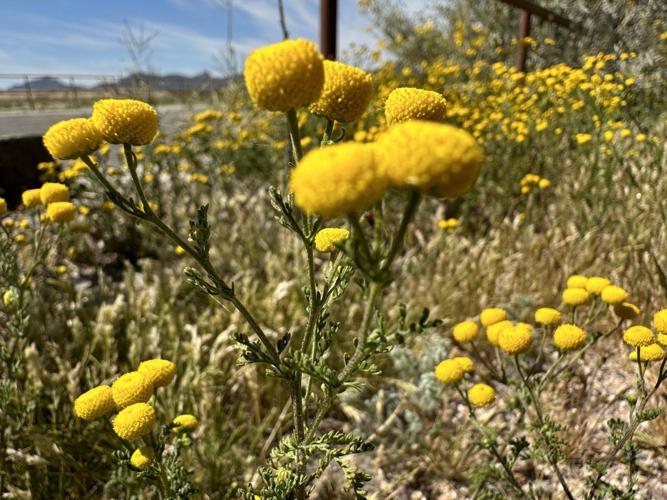
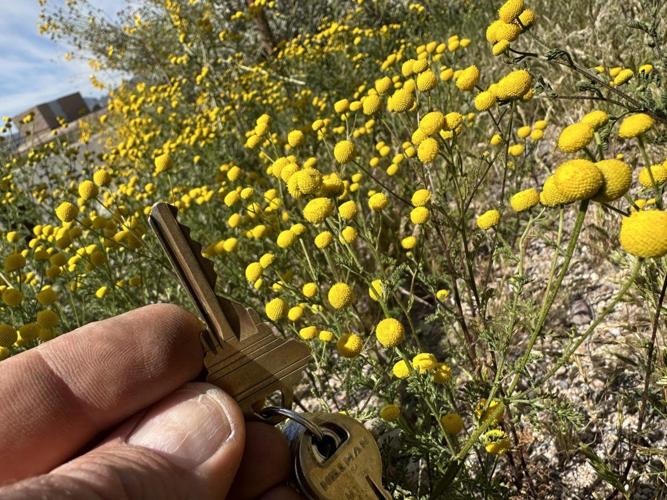
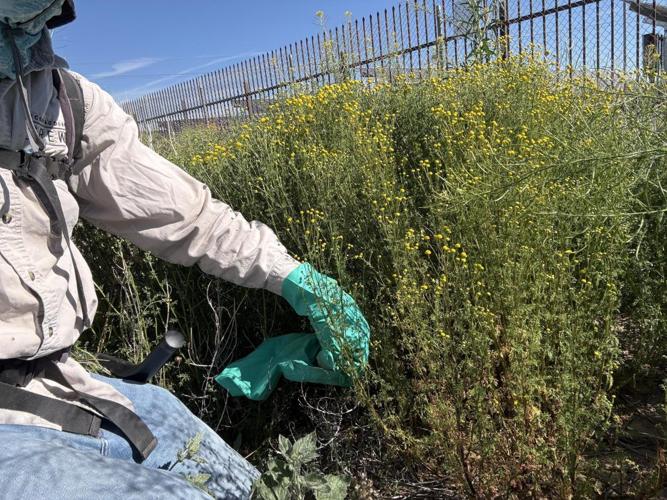
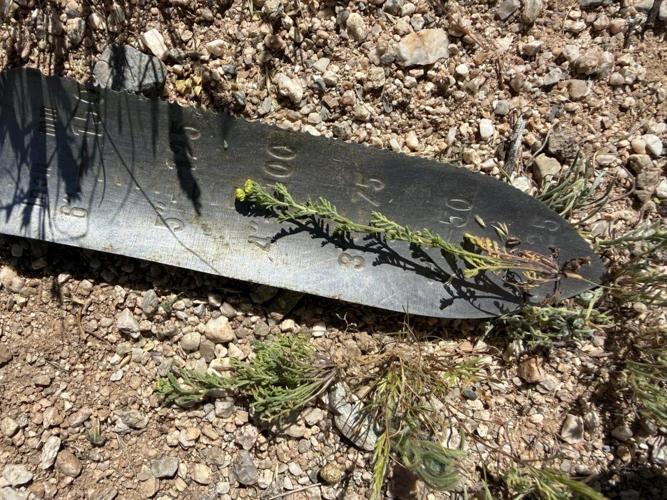
Every spring in Southern Arizona, stinknet, a small, yellow flower without petals blooms and spreads across the desert like the wildfires it causes.
This time of year, the invasive plant is actively flowering and just starting to set seed, said Tony Figueroa, director of invasive plant management for the Tucson Bird Alliance.
“You can literally save a community just by removing that one plant today,” he said.
Originally from South Africa, stinknet was discovered in the United States in the 1980s in Paris, California, at the intersection of several highways between California and Arizona.
Since then, it has spread throughout Maricopa County and now to Tucson on Interstate 10, said Rachel Mitchell, an associate professor in the School of Natural Resources at the University of Arizona.
People are also reading…
“Now it’s just like in Maricopa County, everywhere. It’s gone from like a thing people were worried about to like a thing people can’t even begin to think about dealing with. It’s so aggressive,” she said.
Stinknet spreads
Stinknet seeds are electrostatic and become charged when cars drive by. Then, when a vehicle pulls over, the seeds jump toward the tires and stick to them, Mitchell said. Once they are picked up and driven away, the seeds fall off the tires and new stinknet bushes take root.
Stinknet spreads fast because each plant contains thousands of little seeds, said Christine Flannigan, the president of Friends at Ironwood Forest and a volunteer helping remove stinknet in Pima County.
“If your neighbor has stinknet, you will have stinknet. It’s just a matter of time,” she said.
The plant grows densely and creates carpets of yellow flowers across the Sonoran Desert. The flowers are spherical with feather-like leaves, similar to dogweed and pineapple grass.
But when stinknet flower bulbs are crushed, they produce a stinky, resinous smell.
“It’s easy to identify if you see a little yellow sphere. No petals on it at all. You know, that is the plant. Get rid of it,” Figueroa said.
More than a stench
Stinknet carpets provide extra vegetation in an ecosystem that does not need it, Mitchell said. Its dense clusters choke out native plants and affect the food sources of animals because it is inedible and outcompetes their food sources.
“The Sonoran Desert historically didn’t have a lot of vegetation, meaning wildfires were very uncommon because there just wasn’t enough connected vegetation to carry fire. Stinknet is really changing that by connecting vegetation and creating dense fuel beds that can carry fire in the desert,” she said.
Oils in the plant also cause it to catch fire much quicker and easier than surrounding native plants, said Ellie Schertz from the volunteer invasive plant removal group Arizona Sonoran Weedwackers. And stinknet-fed wildfires burn bigger and hotter because the plant is fire-tolerant.
Flannigan said some people in the Tucson areas are losing homeowners insurance because flammable stinknet is cropping up in their yards.
It’s hard to eradicate. Even after landscapers use herbicide to remove the stinknet, the seeds can survive and continue to spread.
It can also pose a health hazard. Stinknet can cause respiratory issues to livestock, pets and people even when it is not burning, Schertz said.
The issue only becomes worse with fire. The smoke the plant produces is noxious and can potentially cause lung damage, Mitchell said. People also get headaches and rashes from being exposed.
Stinknet removal
That has made removing the plant correctly crucial in Southern Arizona.
Removing stinknet is similar to removing other invasive grasses and plants. There are predominantly two methods: herbicide and human pulling.
Herbicide is commonly used for larger patches by licensed contractors to ensure that it does not harm native plants. Smaller patches are easy to pull by hand, but gloves and a mask are recommended when doing so.
Timing is vital. The best time to remove stinknet is when the plants are bright green, still flowering and germinating. If the plant is dried out, mature seeds fall off very easily, spreading even more stinknet. Seeds can live in the soil for at least five years and potentially longer, Mitchell said.
Because it is an annual plant — dying off after a year, unlike buffelgrass, which is a perennial — stinknet does not have a robust root system and can sometimes be removed by pulling at the base. A gardening shovel or hoe can help to loosen the hard rocky ground stinknet inhabits, Schertz said.
“Sometimes I literally just grab them with my hand and pull them,” she said.
To help remove stinknet, Tucson Bird Alliance created stinknet.org. Users can take pictures and record stinknet sightings on a map, noting whether they removed it or not.
If it has not been removed, Figueroa and the Tucson Bird Alliance team find and remove it.
The website also helps them monitor where the plant is growing and if it is coming back after removal.
Experts hope taking action to remove stinknet in Tucson now can prevent it from becoming as widespread as it is in Phoenix.
“It’s a very bad tasting, stinky, blistering, horrible plant,” Mitchell said.
Arizona Sonoran News is a news service of the University of Arizona School of Journalism.


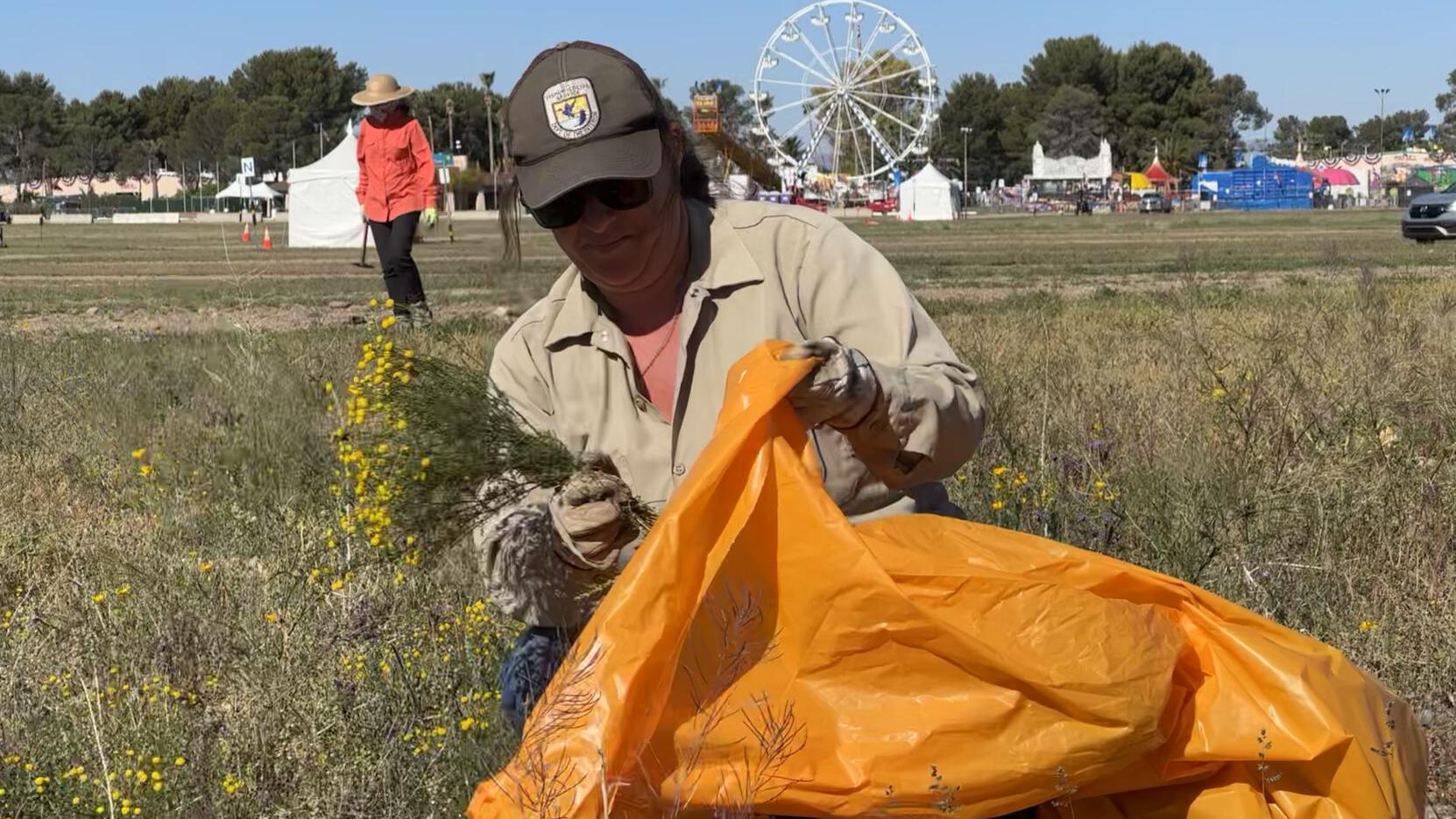
 Stinknet slayers staged emergency weed pull ahead of Pima County Fair

