Tucson Electric Power bills will increase for most residential customers Dec. 1, and the utility will be able to pursue rate adjustments annually, following a 4-1 vote by the Arizona Corporation Commission.
The average residential bill will increase by about $13 a month.
Five commissioners and the many interveners in the sprawling rate case went back and forth for nearly eight hours Tuesday, proposing amendments to Administrative Law Judge Julia Matter’s formal recommendation filed late last month that is arguably one of the most important documents of the nearly 18-month case.
The final ruling from the commission was 9.4% return on equity, slightly lower than TEP’s final position of about 9.8%. ROE is a key percentage in rate cases that means how much a utility is allowed to earn on the shareholder-funded portion of its investments. It is used to calculate the utility’s overall revenue requirement, or how much money it needs to collect from customers, said Sarah Barrios-Cool, an attorney for the Residential Utility Consumer Office in the TEP case.
People are also reading…
The net revenue increase, including surcharges, amounts to about 10%, which will increase bills for residential customers on the basic plan to $12.93 a month. That brings the new average monthly bill to about $150, according to commission filings.
Commissioner Lea Márquez Petersen was the only vote against the TEP rate case. Petersen said she opposed inclusion of the Annual Rate Adjustment Mechanism. The ARAM, or formula rate increase, allows TEP to adjust rates up to once a year without going through the formal rate case process.
“With the ARAM in place and the lack of protections for ratepayers that I championed in my amendments that did not receive support, I am not comfortable with the outcome of this rate case and could not support it," she said.

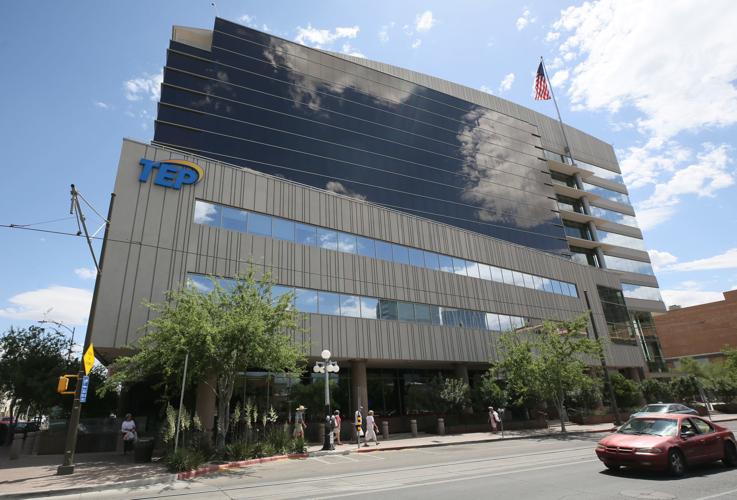
Tucson Electric Power’s roadrunner reserve, 10000 S. Rita Road, on Nov. 5, 2025.
Annual rate adjustments
ARAM’s are untested and shift costs to ratepayers, according to the RUCO. The state agency is also challenging Arizona’s use of formula rates in a separate case along with Attorney General Kris Mayes. It claims the ARAM rewards TEP even if it underperforms or overspends, said Barrios-Cool.
“There was undisputed evidence in the case that what happens in a formula rate plan is it shifts the risk from the company's shareholders to the company's ratepayers,” Cool said.
Earlier in the day, Petersen introduced an amendment to deny the ARAM, saying the mechanism is not in the public interest, but received no support on the board.
“The record indicates that the benefits of the ARAM accrue primarily to the company and its investors, and that any potential benefits for ratepayers are speculative and unquantified,” Petersen said.
TEP was unable to provide adequate information about future bill impacts and rate increases, in Petersen’s opinion. Her amendment failed 4-1, with commissioners Rachel Walden and René Lopez siding with TEP’s claim that smaller, more frequent increases are easier on customers.
“What we're seeing is that costs are continuing to go up, inflation's continuing to be high, utilities are not exempt from that. Everybody feels that, and I think gradualism is going to be one of our best tools at combating that as we go in the future,” Walden said.
Lopez said the commission has guardrails it can exercise over TEP, and supported the ARAM. TEP has said the ARAM will not guarantee rates will go up every year, which Lopez echoed.
“When we review these on an annual basis, again, the ARAM does not mean automatic. There is nothing automatic about it, other than we are doing a review every year, and if things go off the rails quickly, we can pull this back and require the TEP to come in for another rate case instead of another ARAM,” he said.

Arizona utility regulators approved a Tucson Electric Power rate increase that will add about $13 to most residential customers’ monthly bills Dec. 1. The Arizona Corporation Commission also voted to allow TEP annual rate adjustments.
TEP can collect on inflation
Another criticism shared by RUCO and Underground Arizona, another intervener in the case, is the commission’s approval of a .2% fair value increment, or FVI, which allows a utility to collect additional returns on inflation value of their infrastructure, Barrios-Cool said.
Judge Matter’s recommended order did not include this opportunity for additional returns.
Commissioner Nick Myers, who recently lost a re-election bid, introduced the amendment to reinstate it, and argued reducing TEP’s return on equity as well as taking away the ability to collect returns on inflation would be “too penalizing.”
Underground Arizona Director Daniel Dempsey said that FVI approval essentially undoes the positive benefits for ratepayers that came from approving a lower return on equity.
“Whatever savings were implemented are fully offset by new additions,” he said.
Arizona is one of the only states to allow utilities to collect returns on inflation, Barrios-Cool said.
“They're basically providing a windfall to the company,” she said.
TEP strongly supported the FVI approval, said the company’s attorney Michael Patton.
“We think it helps support our credit ratings. It improves the regulatory environment here,” he told the commission before a 3-2 vote in favor.
Vice Chair Rachel Walden and Petersen voted against Myers’ amendment.

The Arizona Corporation Commission in Phoenix.
More reactions
TEP initially requested a 14% rate increase, but lowered its position several times as the case went on. The final recommendation is minimally lower than their final proposal to the commission, but a spokesperson said the final ruling will help the company.
“We appreciate the time and effort that commissioners, staff, and intervenors spent studying our application for new rates, which will help cover higher costs of providing service to our community and added support for low-income customers,” said TEP spokesperson JD Wallace.
Public Power Tucson, a coalition that frequently petitions the Tucson mayor and council to consider a publicly-owned utility, criticized the commission’s decision Tuesday night.
“TEP’s unaffordable rate hike is further proof that we need a public power utility that simply exists to serve us electricity, not make profit for a Canadian corporation. Too many TEP customers already can’t afford the utility’s unreasonable rates, bloated by their extreme rate of profit,” the coalition wrote in a statement.
Hannah Cree covers local government for the Star. Reach her at hcree@tucson.com.

Hannah Cree
Government Reporter


 Election shows how unhappy Tucson is with TEP