


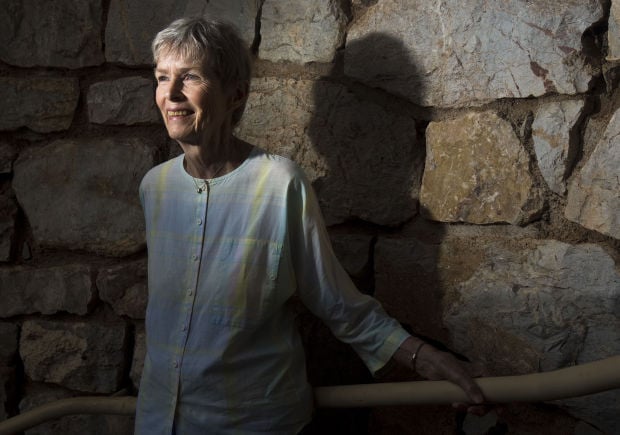
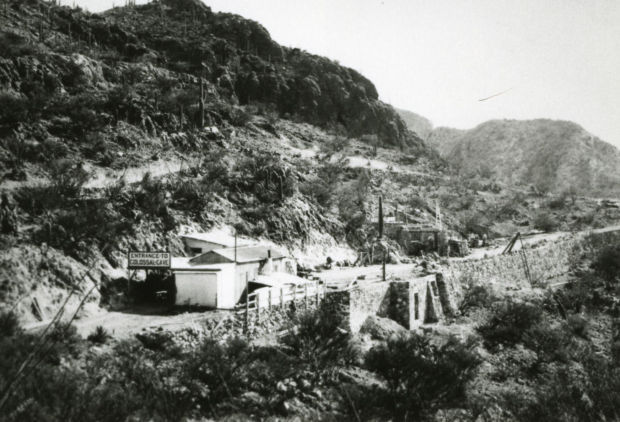
When Martie Maierhauser scans the southern horizon of Colossal Cave Mountain Park, she says not much has changed in the last 52 years.
But there’s a possibility that big change could come to the park in the next year.
At a recent Pima County Board of Supervisors meeting, the board voted not to renew Maierhauser’s operating contract when it expires next August. Instead, the board asked staff to prepare a request for proposals to entice a new operator who could revitalize the park.
“A new broom sweeps cleaner,” said Supervisor Ray Carroll, who represents the district that encompasses the park.
A 322-page audit of the park ordered by the board detailed the park’s aging infrastructure, outdated marketing and inability to turn a profit for nine of the last 10 years.
People are also reading…
One thing the county, Maierhauser and the park’s employees agree on is the park’s significance as a cultural and natural landmark in Pima County.
Maierhauser, who moved to Arizona when she was in her 20s to work as a guide, made the park her home and life’s work after marrying park champion Joe Maierhauser.
Looking over the acres of saguaros, mesquite trees and other vegetation, Maierhauser recalled conversations with her late husband.
“This is what we would stand and look at and say, ‘We gotta figure out how to protect this. We got to figure out what we can do to protect it as best we can,’” she said.
A life’s work
Maierhauser visited Tucson as a child, but it was a work-sponsored trip to Mexico that brought her back to Arizona in the fall of 1962.
The young woman was working for Reptile Gardens, an animal attraction in South Dakota, but her husband-to-be convinced her to join his crew at Colossal Cave.
“I was very intrigued by him, but I also fell in love with the desert,” Maierhauser said.
She was assigned to take the brochures to nearby hotels and attractions. It’s a part of Colossal Cave Mountain Park’s marketing that has persisted.
The Maierhausers had big dreams for preserving the land around the cave. Those ideas were realized starting in 1991 when Pima County acquired La Posta Quemada Ranch.
In all, the county spent $5,003,434 in bond funds to expand the park to its current size of 2,030 acres.
But the expansion came with a cost. The ranch, in particular, needed extensive renovations before it could be opened to the public. Maierhauser estimated the couple poured $1.5 million into revitalizing the property and constructing museum exhibits.
The park’s operators continued to inject money into it. The county audit shows Maierhauser spent $41,000 of her own money to keep the park open in 2012. The county also contributed $900,000 in bond money to rehabilitate other parts of the park.
The Maierhausers never made back all their money — many of their renovations coincided with a sharp tourism downturn.
Joe Maierhauser died in 2007 at age 79 after being diagnosed with cancer. His death ended the longest-running management lease with a single person in Pima County history.
Martie Maierhauser had already started to take on the responsibilities of running the park.
“It was a foregone conclusion between us that if something happened to one of us, that the other one would continue,” she said.
Times change, park operations haven’t
Today’s typical park experience begins with a $5 payment at the toll booth, a practice that was meant to help raise revenue for the park, but has sometimes deterred visitors.
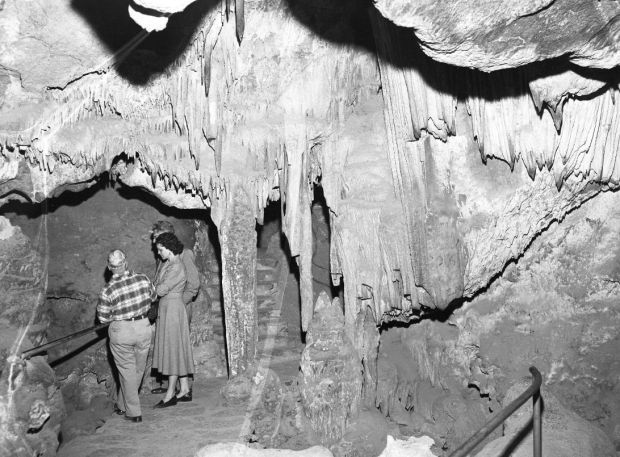
A tour of the cave’s half-mile paved pathway is another $13 dollars.
Highlights include geologic structures with descriptors like popcorn and cave bacon and stories of bandits using the cave as a hideaway.
Colossal Cave’s geologic structures aren’t pristine like Kartchner Caverns or other so-called “show caves.”
Generations of humans, from Native Americans to thrill-seekers have exploited the cave. The tips of many of the delicate structures have been snapped off for souvenirs, a practice no longer allowed.
But the visually stunning caves can have a downside.
“It feels a little distant because you can’t get in and touch anything; you could damage it,” said Tucson caver Dylan Bixby, who’s explored many caves in Southern Arizona.
In its less-than-perfect state, Colossal Cave is accessible. With the right guidance, adventurous types can shimmy through tunnels and clamber up the cave’s sides.
“It’s a lot like underground rock-climbing in three dimensions,” Bixby explained.
The audit committee noted Colossal Cave could charge a premium for these adventure caving experiences and there are already 3.5 miles of known passages.
The park currently offers a few adventure tours, but they’re not well-advertised.
Other suggestions for broadening the park’s audience include adding an outdoor zipline, ropes course and offering souvenir photos.
Whatever is installed, caring for the geologic structures of the environment and the cave will need to be a priority.
“If you break one, it’s not coming back in your lifetime or your children’s lifetime,” Bixby said.
Two former park employees said its financial instability was a factor in their decision to leave.
They said some weeks it was unclear whether the park would be able to make payroll, though Maierhauser noted the park has never failed to pay its employees since 1956.
Rita Sims started working at the toll booth eight years ago, and was the manager of cave operations before resigning in November. A recent surgery contributed to her decision to resign, but she also cited management’s unwillingness to incorporate the staff’s ideas as a reason for leaving.
Sims said she wasn’t surprised by the audit’s findings, and agreed the cave might fare better under new management.
“It’s a shame,” Sims said. “Martie is a really wonderful person, just not the right person.”
Maierhauser embodies the cave’s history
On a recent drive through the park, Maierhauser maneuvered a 1990s Chevy SUV through the pitted roads with practice.
“It’s sad and worn, but it will get us there,” she said of the truck.
She has a keen eye for any discrepancies in the landscape, and is quick to pick up any stray piece of trash.
She can also point out every fixture made by the Civilian Conservation Corps, who built much of the park’s infrastructure in 1934.
For all her experience, Maierhauser said the park still has surprises, such as the changing of a cottonwood tree near a dry wash bed.
Maierhauser said she agrees with many of the audit’s findings — the park needs upgrades and could benefit from new attractions, but there’s never been enough money to make the changes.
She is determined to submit a proposal to continue operating the park beyond her contract.
“I want to hang in there for as long as possible,” Maierhauser said. “This place has been my life.”


