

In their heyday, the officer and enlisted clubs at Davis-Monthan Air Force Base were happening hangouts for work-hard, play-hard military personnel.
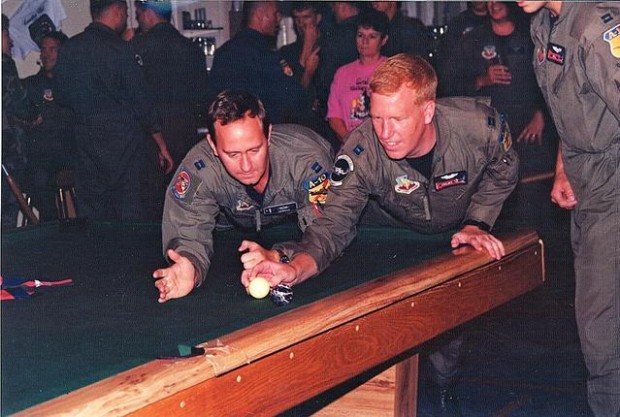
Booze flowed. Dance music blared until dawn. Local lovelies flocked to ladies' night to size up men in uniform.
A few decades later, the party is over.
At D-M and across the Air Force, base social clubs are struggling to stay afloat amid changing demographics and a servicewide effort to discourage heavy drinking.
"It's not the old watering hole like it used to be — that's for sure," said Larry Sanders, an Air Force veteran who oversees club management at D-M.
Since 2002, D-M's clubs have lost around 1,000 members, the result of a 45 percent drop in officer membership and a 14 percent decline among enlisted personnel.
People are also reading…
The clubs recently were on death watch after collectively losing $70,000 to $100,000 a year in each of the last few years. Such clubs are not tax-funded; they rely on membership dues and food and liquor profits to pay the bills.
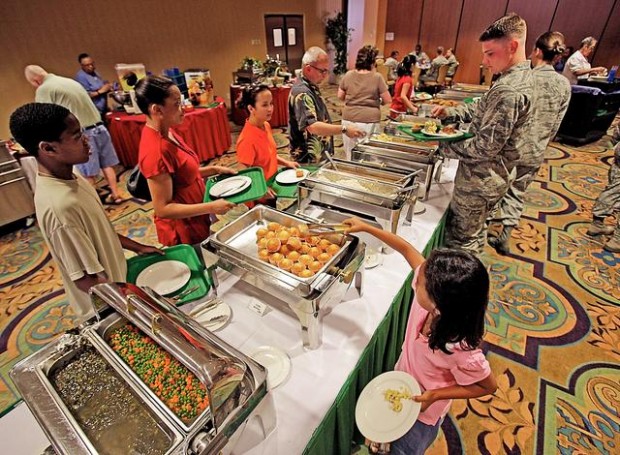
To cut overhead and stay solvent, D-M's officer and enlisted clubs merged last fall. The dining facilities are now shared by airmen of all ranks, though there still are separate bars for officers and enlisted personnel.
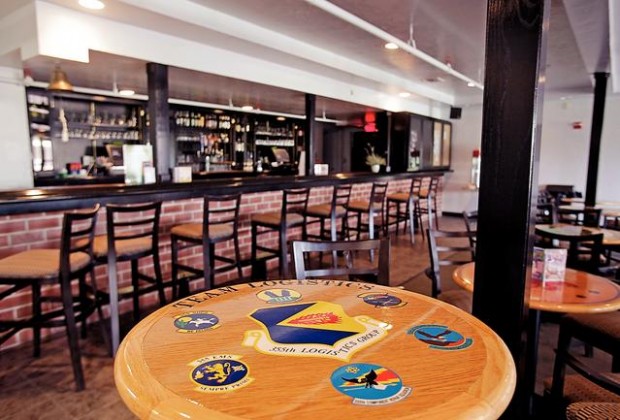
But most nights, the bars are empty. Due to decreased demand, the officers bar is open only Friday evening, while the enlisted bar, a few blocks away, is open Wednesday through Friday.
Lee Finn of Tucson, a retired Air Force master sergeant, remembers when D-M's enlisted club had "a hard-partying atmosphere."
"On Friday nights, the place was always hopping. They used to have dances that lasted all night long."
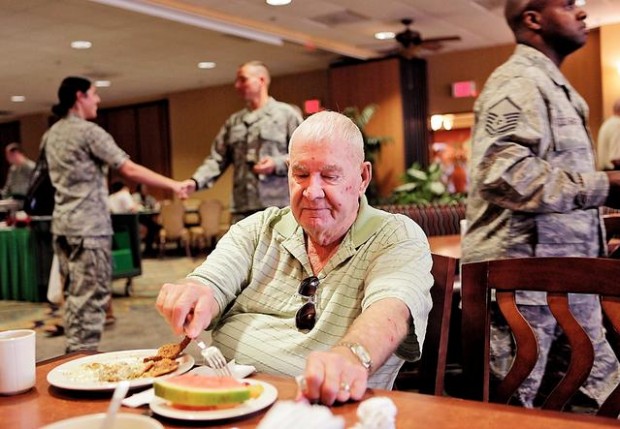
That was in the 1980s, before stricter drunken-driving laws and concern about the health risks of heavy drinking prompted a push for moderation, said Lee, 74. Today, retirees like him make up a substantial portion of D-M's club membership.
Another factor in the slump may be the changing makeup of the Air Force.
A few generations ago, about two-thirds of airmen were single. Today the trend is reversed, with two-thirds married.
Officer and enlisted clubs have been around about as long as the service itself, an outgrowth of the military's morale-boosting efforts.
Besides promoting esprit de corps, the clubs were a place to make connections that could advance one's career.
For years, Sanders said, Air Force job evaluations noted whether an airman belonged to the club, though that's no longer the case.
The Air Force Times recently reported that 19 Air Force clubs had closed in the past five years, and more than 70 percent of those that survive have merged officer and enlisted clubs, as D-M has.
The Times also reported that membership has been falling servicewide by about 10,500 a year, from 267,000 club members in 2002 to 193,000 today.
Air Force Services, the agency that oversees officer and enlisted clubs, did not respond to an Arizona Daily Star interview request submitted Thursday for this story.
At D-M, even with relatively modest dues of $16 a month for officers and $7 for noncoms, membership has dwindled from more than 3,600 in 2002 to about 2,600 today.
Recognizing the changes, the D-M club is striving to become more family-friendly. A recent membership drive included a jumping castle for kids as well as a clown and balloons. Other events have included a Mexican fiesta and a Hawaiian luau.
"Most of our special events are geared toward families," Sanders said. "We're doing everything we can to keep that (membership) number from getting any smaller."
The club also is a backdrop for traditional Air Force gatherings, such as change-of-command receptions and retirement or promotion parties.
With the recent merger of officer and enlisted clubs, Sanders said, D-M expects to break even by the end of this budget year.
He hopes that's the start of a permanent turnaround, one that will preserve the social club as a gathering place for people of "similar jobs, similar thoughts and similar values."
Times may be tough, Sanders said, but "we're not going to go down easy."


