

If the value of teaching art is in the eye of the beholder, then Green Fields Country Day School has rich vision.
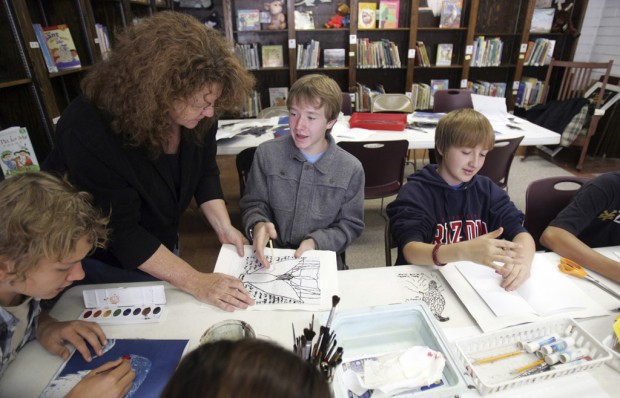
The little northwest-side private school at 6000 N. Camino de la Tierra just wrapped up a two-and-a-half week artists-in-residence program that, on the surface, seemed to be about birds but in reality was about pretty much every academic subject that kids study besides art.
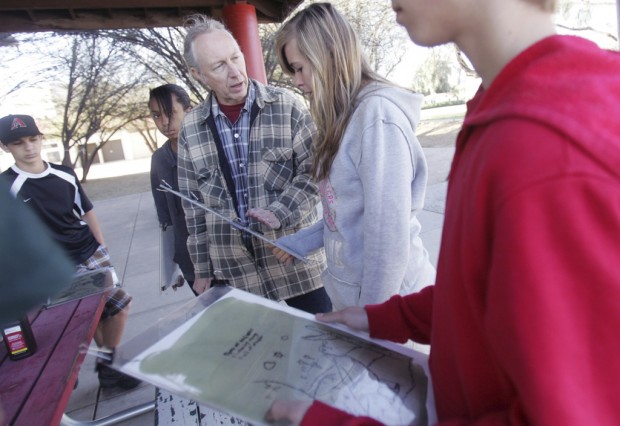
The students learned about pinhole cameras, discovering they can see pictures without using electronics or batteries.
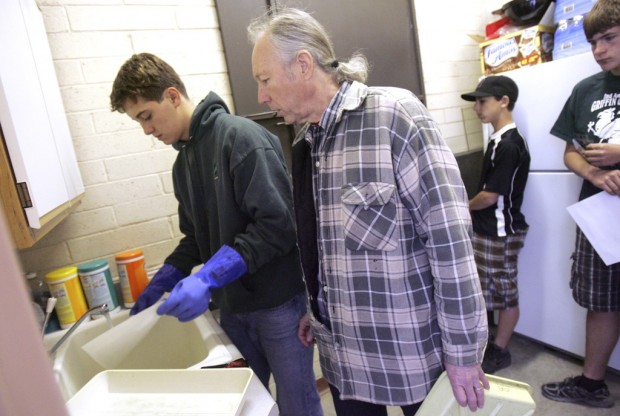
They learned how photographic negatives work, creating blue-printed "cyanotypes" from forms they laid on paper.
They learned about different kinds of birds and avian anatomy.
They also wrote poems to accompany their cyanotypes, and they compiled their work into books.
People are also reading…
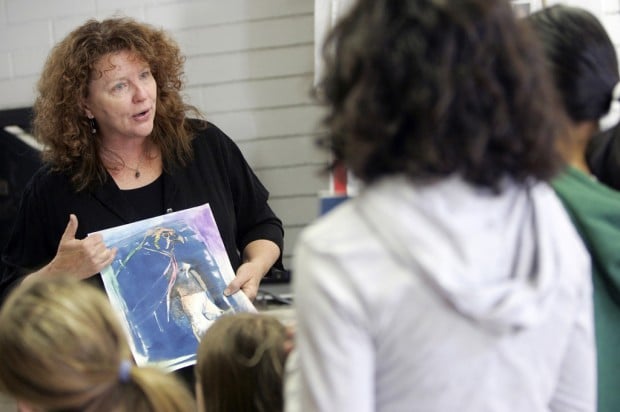
The younger children learned about birds in literature, and the older students used the themes of "canary in a coal mine" and the myth of Icarus, whose wings melted when he tried to fly to the sun, to create large, bird-themed banners.
A lot of people think art is just a bunch of kids sitting around drawing pictures, said artist Robert Renfrow, who presented the program with Catherine Nash under a grant from the Arizona Commission on the Arts.
"They (people) don't really understand how it's integrated," he said.
In addition to touching on academic subjects, art enables children to switch their brains from the analytical to the creative, which can help develop problem-solving skills, he said.
On a Thursday about halfway through the program, 17 first-graders gathered in a small room off the school library to work diligently on bird drawings.
They each had postcards of different birds and were drawing what they saw. As they were asked to clean up, they were told to write their bird's breed on their papers.
Exclamations of "I'm a roadrunner, baby! That means I'm faster!" and "I didn't really need that much color, but it's a really pretty bird," could be heard amid the shuffling of papers and screeching of chairs.
The Arizona Commission on the Arts commonly offers grants for the type of program Nash and Renfrow put on at Green Fields, Nash said. The artists design their programs with the schools they visit so it's never exactly the same from one to the next.
The grants must be matched by the schools for a program to happen.
At Green Fields, a parent group called the Fine Arts Boosters raised all the matching money - $2,000 - with a fundraiser.
Booster Ann Keuper wrote the grant with Nash and Renfrow in mind, though there are other artists who do residencies. She used to work for the commission and went to graduate school with the two artists many years ago.
Green Fields already has an arts program, Keuper said, but it's not as focused on multiple educational disciplines as the artists-in-residence program.
Teaching kids to be creative in math, writing, history and collaboration will make them better able to confront world problems when they're old enough to run things, she said.
"There's just a lot of learning that happens in the creative process."
Contact reporter Shelley Shelton at sshelton@azstarnet.com or 807-8464.


