


A task force charged with developing potential uses for Oro Valley's Steam Pump Ranch is grappling with ways to preserve the historical ranch while making it the kind of operation that generates revenue.
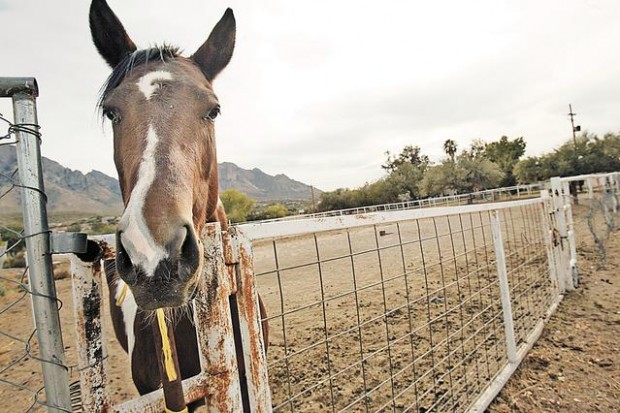
Among the options that have been discussed: museum exhibits, stables, chickens and livestock, corrals, a farmers market, a gift shop, a multi-use event center with catering kitchen and possibly even a restaurant.
So far, there is consensus on the Steam Pump Ranch Master Plan Task Force that the ranch must be restored and shared with the public. But the group continues to wrestle with the idea of incorporating commercial uses on the property without compromising its historical significance.
The task force, with the Town Council's blessing, took up the matter — which includes gathering public input — in late summer. In May, the town hired Tucson consultant Corky Poster of Poster Frost Associates Inc. to work on the project.
People are also reading…
The main thrust of the undertaking is to restore the ranch as a heritage site, Poster said.
"Oro Valley tends to be viewed as a young community, and this shows that it's not. It's got deep roots in the region," he said.
Several structures
The property dates to the 1870s, when European immigrants George Pusch and John Zellweger established it as a ranch and stagecoach stop in what would become Oro Valley. The site includes roughly 11 structures, including the original ranch house.
The town took possession of the ranch through eminent domain earlier this year, paying the bulk of $4.5 million in Pima County bond funds for the ranch. Of that money, about $460,000 is available for restoration.
The property is spread over 15 acres on North Oracle Road between First Avenue and Tangerine Road.
How much change the historical structures on Steam Pump Ranch can withstand without jeopardizing historical accuracy is a key question that the task force must answer, said Bill Adler, a group member who represents the town's planning and zoning commission.
Adler worries that adapting the historical sites to money-making, contemporary uses would impinge on historical accuracy.
If the old chicken coops are used as something else, Adler said, "Who's going to recognize them as chicken coops then? I don't see how you can be authentic when, in fact, the internal use is different than what was actually here. History is something that needs to be authentic."
Balance sought
Michael Zinkin, on the task force for the Development Review Board, said he does not believe commercial ventures would detract from historical authenticity.
"It is important to me that this ranch is maintained, that its history is captured, and that this is accomplished with as little financial drain to the town as possible," he wrote in a memo to the task force.
Dick Eggerding, on the task force representing the Oro Valley Historical Society, said the key is to strike a balance between the historical and commercial aspects.
In the end, Eggerding said, the ranch's fate rests with the Town Council, which will receive a final master plan in April.
So far, there is no estimated cost even for the most basic restoration work, which makes Bob Baughman uneasy.
"It makes it difficult to decide," said Baughman, the only citizen-at-large on the task force.
Pamela Pelletier, a town planner who is overseeing the project, said task force members must decide what they want on the site. That will determine the projected cost to operate and maintain the ranch, she said.
Needed repairs
As the group continues its debate, the town has moved forward on emergency repairs to keep structures on the site from further deteriorating.
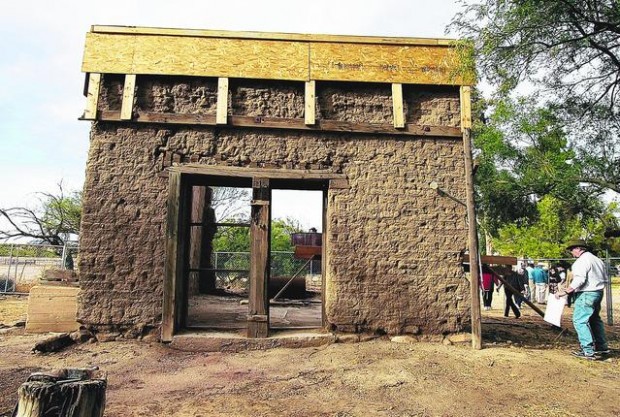
Over the summer, Oro Valley spent nearly $33,000 on electrical, adobe and roof repairs, said Scott Nelson, the town's special projects coordinator. The Southern Arizona Home Builders Association provided free labor.
The collapsed adobe walls, which once enclosed the steam-powered water pump that gave the ranch its name, were stabilized. And the tiny home of ranch caretaker Carlos Rivera, which in the old days functioned as an outdoor barbecue, got a new roof.
During a recent tour of the ranch, task force members filed in and out of Rivera's living room, where a hole in the ceiling hints at long-sustained rain damage.
He has become accustomed to visitors streaming in and out of the property since the ranch changed ownership, Rivera said. But the caretaker has little to say about the planned changes at the place he has called home for a quarter-century.
"It's going to be very different," he stated simply.
Rivera said he probably will leave the ranch with the Leiber family, which still lives on the ranch through a lease with Oro Valley.
John Leiber is a grandson of Jack Proctor, the Pioneer Hotel owner who bought the property from George Pusch's son in 1933.
Cheryl Leiber, John Leiber's wife, said the family's lease with the town expires in April.
If you go
What: Final open house on the Steam Pump Ranch Master-Planning Process.
When: 6 to 8 p.m. Jan. 10.
Where: Council chambers at Oro Valley Town Hall, 11000 N. La Cañada Drive.
More information: Call Pamela Pelletier at 229-4813 or go to the Oro Valley Planning and Zoning Department's Web site, www.orovalleyaz.gov/PZ/ and click on Steam Pump Ranch.


