University of Arizona faculty leaders are opposing a proposed change to the university email policy that would allow university officials to inspect, monitor or ask employees to disclose their email communications if they think there’s “reasonable suspicion” of violations of law or UA policy.
Faculty leaders say this would lead to increased surveillance, threaten academic freedom, and create a sort of “police state” at the UA. They also say that if statements or comments made in emails are taken out of context, there could be extreme cases where the university could use that to fire people or take away their tenure.
Ted Downing, a UA faculty senator and chair of the Committee of Eleven faculty governance group, said that as state government employees, university workers’ emails have always been subject to public disclosure through public records requests. But the current issue is how much authorization internal bureaucracy should have to scrutinize emails to analyze employee behavior, he said.
People are also reading…
The Committee of Eleven wrote a memo asking that the proposed change be “substantially revised” and that the revised draft be sent to the general faculty for review in the fall.
“Substantial revisions are required to address deficiencies in due process, evidentiary integrity, academic freedom, and consistency with existing governing policies,” the C-11 memo says. “Consequently, the draft threatens to disrupt civic engagement and will, in its very ambiguity, trigger needless conflicts.”

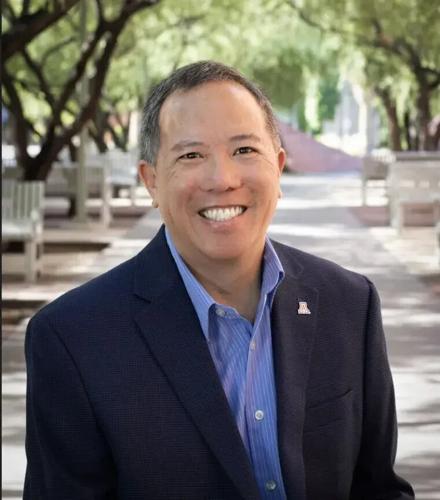
Elliot Cheu, the University of Arizona’s chief information officer, is leading a controversial proposed change to the university's email policy.
The university, through spokesman Mitch Zak, refused the Star’s request to interview UA Chief Information Officer Elliot Cheu, who is leading the email policy change and will be in charge of employees’ compliance with it.
Zak did not respond to the Star’s questions on when the policy change was conceived, what the UA wants to achieve with the change, and what administrators' response is to faculty concerns.
“The proposed new university email policy combines information from two previous email policies — Use of Email for Office Correspondence with Employees and Electronic Mail Policy — which will be repealed if the policy is approved,” Zak told the Star in an email.
What’s the policy change?
The proposal, which was sent for a 30-day university-wide review on April 1, says the UA can “permit the inspection, monitoring, or disclosure of email when:”
- It’s required by or consistent with applicable law or policy, including Arizona Public Records law, the Family Educational Rights and Privacy Act or FERPA, or any issued court order;
- There is “reasonable suspicion” that violations of law or university policy have occurred or may occur; or,
- If it’s for “time-dependent, critical operational needs of university business” if the UA determines the information can’t be found as readily through other sources.
The policy change says, in such instances, the UA will try to inform the email users before any inspection, monitoring or disclosure of email. The only times such notice won’t be given is when notification will be detrimental to investigating if laws or university policies have been violated, it says.
“Users are required to comply with University requests for access to and copies of emails when access or disclosure is required or allowed by applicable law or policy, regardless of whether such emails reside on a computer housed or owned by the University,” reads the policy change. “Failure to comply with such requests can lead to disciplinary or other legal action pursuant to applicable law or policy, including, but not limited to, appropriate University personnel policies or codes of conduct.”
Even before this proposed change, UA’s current established email policy stated that the confidentiality of university email cannot be assured and so users should be extremely careful while using it to communicate confidential personal, financial or sensitive matters. It also already includes the strict prohibition of illegal activities such as obscenity, child pornography, threats, harassment or theft.
Lack of input, vagueness cited
Cheu, the UA chief information officer, was scheduled to attend the Faculty Senate meeting Monday — the last meeting of this academic year before school is out for the summer — to provide more information on the policy change.
When he didn’t attend, faculty senators voted to table considering the policy change until the fall semester, by a tally of 30 votes in favor, five in opposition and three abstentions.
“I fail to understand why a policy that affects the faculty so egregiously is just allowed to be implemented without true faculty input, looking at our First Amendment rights and university policy,” Lucy Ziurys, a UA professor of chemistry, biochemistry and astronomy, said at the meeting. “This is dictatorship. This is someone imposing their will on the faculty with no discussion, no reasonable discussion.”

Leila Hudson, chair of the Faculty Senate at the University of Arizona, writes an end-of-semester message of goodbye to her students on the last day of classes as they take an exam on May 6. The UA’s administration is proposing a change to university email policy that Hudson and other faculty leaders say jeopardizes academic freedom.
While the policy change was sent out to receive open feedback from university employees, UA Chair of the Faculty Leila Hudson also expressed disappointment that faculty were not included in the process of creating and finalizing it.
“The university does not actively engage the elected representatives of the faculty, through Faculty Senate or any other elected or appointed faculty body, in the sponsorship and crafting of policy. And it’s a problem,” said Hudson. “It’s in that context that the email policy has caught people’s attention.”
Hudson said the email policy immediately raises “numerous and loud concerns about its vagueness” and “its potential for abuse.”
“There are many details that many people have questions about, specifically concerns about privacy and concerns about vagueness in definitions and concerns about traps that might be selectively activated for faculty members under certain circumstances,” she said.
The faculty Committee of Eleven letter said the policy change requires the following revisions:
- “Mandatory evidentiary standard:” This should be required instead of just ”reasonable evidence;”
- Documentation and transparency: The UA should document who authorizes access to an employee’s email, the basis for the access and who selected and interpreted the emails;
- Academic freedom and constitutional review: It should be determined that emails sought for review aren’t protected academic expression or protected speech;
- Anti-fabrication provision: The policy shouldn’t allow selective quotation from emails that distorts meaning, omits the larger context and misrepresents communications; and,
- Notice requirements: Where access occurs without prior notice, prompt written notice must follow, stating scope, purpose and intended use.
‘A police state,’ ‘intellectual theft’
Ziurys told the Star the policy basically allows anyone to look into anyone’s email and allows the UA administration to selectively pick out and isolate comments.
“This is the kind of thing when people selectively go through people’s email and pick what they want to attack other people,” Ziurys said a day after the Faculty Senate meeting. “That’s really what a police state does. And it seems like our administration wants to create that kind of atmosphere here.”
Downing said of the “reasonable suspicion” aspect of the proposed policy change: “What establishes ‘reasonable suspicion’ could be anything.”
“It could be a rumor, it can be just a feeling, and so that makes the employee very vulnerable,” Downing said. “The second part of that policy that really was terrifying is that the supervisor can give disciplinary action without any definition of a hearing or evidence. The key part of the evidence, and this is what bothers me, is not ‘reasonable suspicion,’ is there’s no need to preserve the context of the email.”
Downing said the university, for instance, could look into one employee’s correspondence with a colleague spanning over 100 emails, and pull out one sentence from all of them without keeping the context. This could lead to serious disciplinary action, up to losing your job, and this is “grossly unfair and dangerous,” he said.
The Committee of Eleven letter said the policy change goes against the Arizona Board of Regents policy that establishes freedom of inquiry, academic freedom, and faculty participation as governing obligations at the state's three universities, which it oversees. The letter said the change also goes against the University Handbook for Appointed Personnel academic freedom protections as well as constitutional free speech protections.
The letter said another issue with the policy change is its “elastic misconduct standards” where broad categories for staff conduct, such as “unprofessional behavior” or “discourtesy” are listed and will be used during reviews.
Ziurys mentioned that emails of researchers like hers contain confidential information on research that they share with their peers and colleagues, and also when they do peer reviews for national research agencies or journals. With this policy change, findings that are meant to go to an agency or journal can suddenly be spread across faculty, she said.
“People’s scientific ideas can be stolen or communicated to other people or taken from one faculty member that they (UA administrators) dislike and given to another faculty that they like so they can write a proposal,” Ziurys said.
Reporter Prerana Sannappanavar covers higher education for the Arizona Daily Star and Tucson.com. Contact her at psannappa1@tucson.com or DM her on Twitter.

Prerana Sannappanavar
Higher Education Reporter


 Faculty concerned about changes to U of A admissions policy