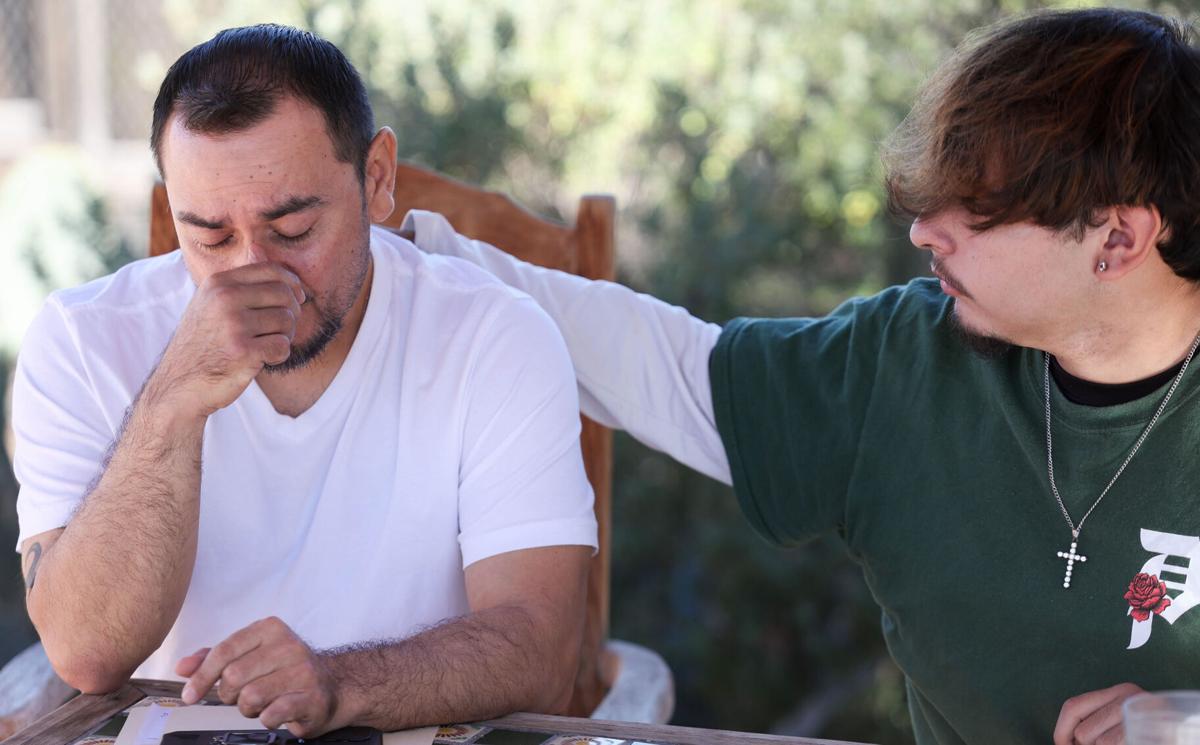
Undocumented members of a longtime Tucson family say they feel like they're being "hunted," after both parents were detained by immigration agents within weeks of one another. One of their adult daughters, brought to the U.S. when she was 2, is now in hiding at a friend's house, her location unknown even to her family.
"I never imagined living with this kind of fear," said Stephany Leal, 25, who's studying to be a Spanish-English medical interpreter, while also learning American sign language. "I know in this life I'm capable of doing so many things, and I have so many plans. But this of course was never my plan."
Her parents Nelson Leal, 47, and Erika Flores, 46, have no criminal records, after decades raising their three children in Tucson. After leaving Hermosillo, Sonora, in 2004 with their twin daughters, the family overstayed their U.S. tourist visas, a civil offense.
People are also reading…
One day before Leal was released on bond, after three weeks in ICE detention in Florence, immigration agents arrested his wife while she was driving in Tucson.
When Leal got news of Flores' arrest on Nov. 13, while still at Florence Correctional Center, he said it was the worst moment of his life. He went into his cell and screamed and cried, until his fellow detainees stopped him, fearful he could jeopardize the release they'd just been celebrating, he said.
Leal begged an ICE officer to keep him in custody, in place of his wife, he recalled in an interview with the Star.
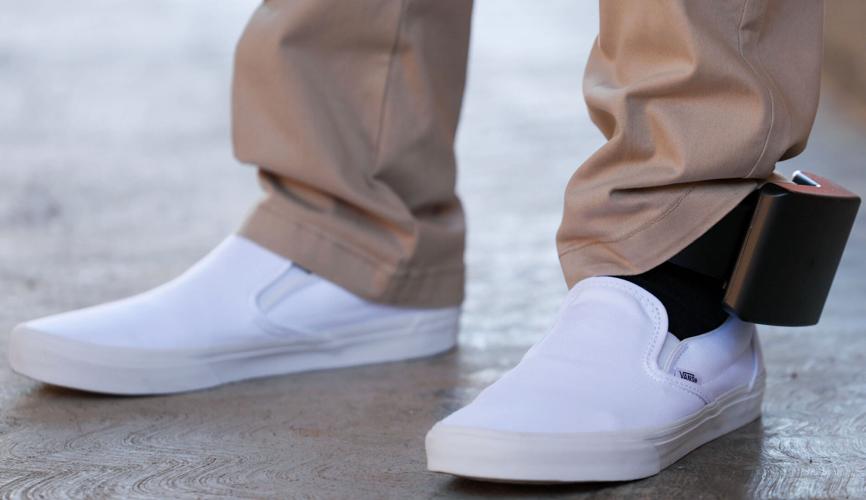
"That was the worst thing that ever happened to me," he said, speaking to the Star in west Tucson on Wednesday, a black GPS ankle monitor strapped to his left leg.
"I was expecting to see my wife the next day," he said. "I was devastated. My heart was breaking," knowing what his wife would experience in detention.

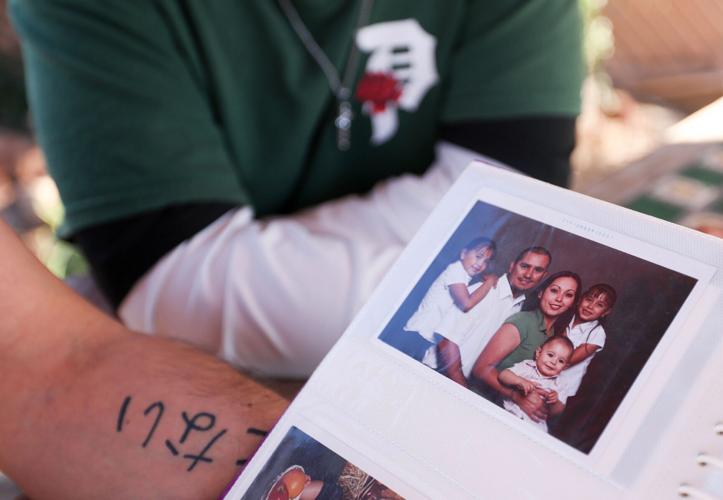
Longtime Tucson residents Nelson Leal and Erika Flores are pictured with their young children in this old family photo taken in Tucson. Family friend Raul Quintana says he wishes he could ask ICE, "Why them? Why harass them? They’re good people. ... They’re just trying to live their lives. They’re not hurting anybody."
Flores is now detained at Eloy Detention Center. During her arrest, she made a brief frantic call to her daughter Brithany Leal, Stephany's twin sister.
It was less than a month since Brithany, 25, received a similar, devastating call from her father, after his Oct. 20 ICE arrest.
"I was like, 'No, no, no, don't let me go through this again,'" Brithany said of her mother's Nov. 13 phone call. "For innocent families to be put through this trauma — because it is traumatizing — it's not right. Immigrants are not animals. They’re hunting us, as if we were prey or something. But we're humans. We’re all humans."
Stephany believes ICE was actually targeting her when they arrested her mother, who was driving Stephany's white Honda Civic at the time.
"I'm hiding out. I haven’t been home since my mom was taken," said Stephany, who said she feels like a "fugitive," despite never having committed a crime. She feels constantly unsafe and also guilty that her mom was detained, instead of her.
"It does take a psychological toll on you," said Stephany, who works as a lash technician while studying at Pima Community College. "I'm trying to remain strong. But that guilt that it should have been me, and also (the worry of) what if I'm next?"
Tucson childhood
Flores and Leal, whose tourist visas expired around 2014, first came to the U.S. with their 2-year-old daughters through the U.S. port of entry in Nogales.

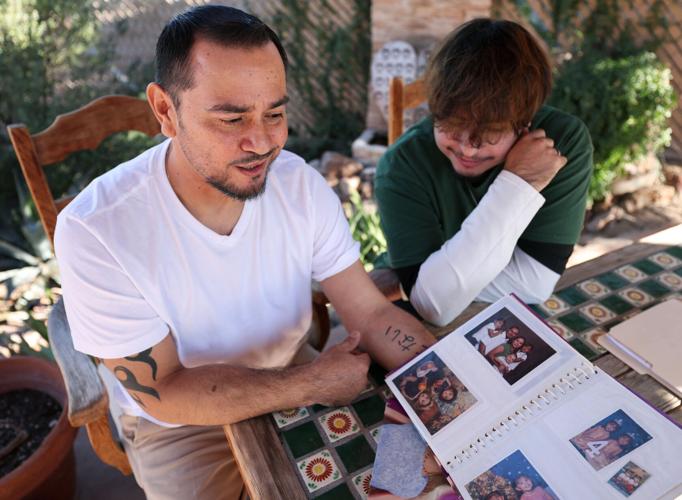
Nelson Leal, left, looks through family photos with his 19-year-old son Nelson Leal Jr., a U.S. citizen. The father and son are extremely close, Leal said, and even more so since ICE began targeting their family.
The girls were unable to apply for protection under the Deferred Action for Childhood Arrivals program, known as DACA, because by the time they qualified in age, President Donald Trump had closed the program to new applicants, during his first term in office, Brithany said.
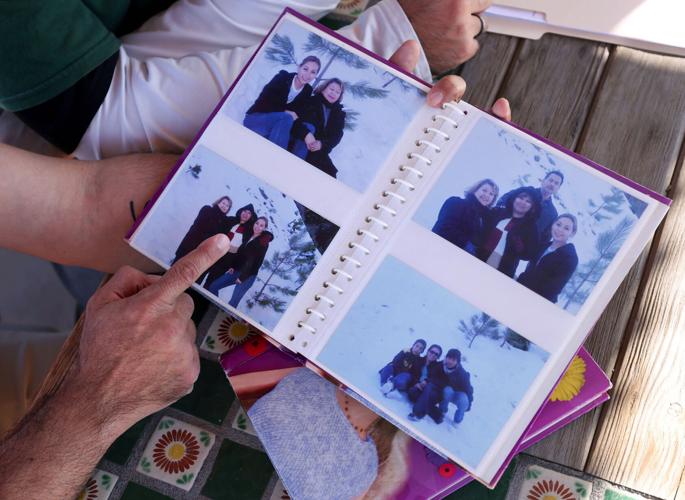
In the winters, Leal and Flores would often take their girls, and later their little brother, up Mt. Lemmon to go sledding. They'd attend the Pima County Fair and take special trips to Funtasticks amusement park, near the Tucson Mall, Leal recalled as he paged through an old photo album.
His son, Nelson Jr., was born in Tucson in 2006 and graduated from Pueblo High School last year. A U.S. citizen, the 19-year-old has been deeply affected by ICE's targeting of his family, his sisters said.
"It's definitely taken a toll on him," Stephany said. "My dad and brother are very, very best friends. Now that my dad is out, my brother has been able to take that weight I had on my shoulders about everything. He’s taken it on himself now, because he knows I'm in danger now."
Nelson Jr. has been watching the family's home surveillance footage, even losing sleep over it.

Nelson Leal wears an ankle monitor after being released from ICE detention on bond. One day before his release, scheduled for Nov. 14 after three weeks in ICE detention in Florence, immigration agents arrested his wife while she was driving in Tucson. "I was devastated. My heart was breaking," knowing what his wife would experience in detention, he said.
Nelson Jr. said he's observed strange vehicles outside their home — both before and after his parents' arrests — which the siblings believe belong to ICE agents surveilling their home, possibly looking for Stephany.
On their close-knit street, "we're very aware of whose car is whose, so when we see a car that’s very unfamiliar, it's very noticeable," Stephany said.
Thanks to a flood of community support, the family quickly raised the money for Leal's release on a $20,000 bond, an enormous sum for the family.
They're now trying to gather more funds for Flores' bond, which they hope will be granted during her first immigration court hearing, set for Tuesday, Nov. 24, according to the family's immigration attorney Jose Luis Chaidez, of Phoenix.
The family's other priority is keeping Stephany out of ICE custody.
"My dad is out. We’re trying to get my mom out," said Brithany, who lives in another state with her U.S. citizen husband. "We cannot afford, financially or emotionally, to go through this a third time."

Nelson Leal, 47, looks through an old family photo album, displaying photos of his family in the snow on Mt. Lemmon, and describing the lives he and his wife have built in Tucson since arriving from Sonora in 2004, on tourist visas. Those visas expired in 2014 but the family remained in the U.S., which is a civil infraction.
ICE spokesman Fernando X. Burgos confirmed Leal and Flores were arrested for immigration violations, in a Thursday email. He did not respond to the Star's query about why ICE was expending so many resources detaining, and apparently surveilling, a family with no criminal history.
He also ignored the Star's questions about why Leal and Flores had to be held in ICE detention at all, rather than given a notice-to-appear in immigration court, which is a civil, administrative body.
Burgos denied widespread reports that ICE agents are seeking to meet aggressive arrest quotas.
"ICE does not use arrest quotas," Burgos said in the email. "ICE enforces federal immigration law and makes enforcement decisions based on the facts and circumstances of each case."
In May 2025, homeland security advisor Stephen Miller, who is now White House chief of staff, said ICE had a target of 3,000 arrests daily, in order to reach Trump's mass-deportation goals, though DHS later backtracked from the statement.
Holding it together
Immigration judges have been granting bond more often in recent months, but are setting extremely high bond amounts, said Tucson immigration attorney Luis Campos, who is not involved in Leal or Flores' cases.
A bond of $20,000 for a man with no criminal history, strong community ties and a U.S. citizen child is shocking, Campos said. In normal times, Leal's bond would likely have been set closer to $2,000, he said.
"The bond amounts are almost prohibitive; $20,000 is not normal," Campos said.
It's also a reflection of some immigration judges' deference to the Trump administration, Campos said.
Immigration judges are employees of the U.S. Department of Justice, which immigrant-rights advocates say makes the immigration courts inherently biased toward the executive branch and the U.S. Department of Homeland Security.
"It's evidence of how DOJ judges are collaborating with DHS, and with this president," Campos said. "They’re taking their marching orders, and they don't want people released."
Brithany said her family has been heartened by the support from friends and neighbors, and even strangers. They created two GoFundMe pages, after their parents' arrests.

Nelson Leal and Erika Flores took their three children to Disneyland in 2007. Brithany, front left, and her twin sister Stephany, front right, were celebrating their 6th birthdays. Their little brother Nelson Jr., in his father's arms, was about 1 year old.
"It was always just the five of us, my mom, dad, sister and brother," Brithany said. "It's been really beautiful to see the people and the strangers that have reached out and are standing behind us. We've only really had each other. Now we have strangers who are also fighting alongside us, and helping us."
Brithany lives out of state with her husband, a U.S. citizen and active-duty Army soldier and their almost 2-year-old son. She's in the process of obtaining lawful permanent residency, also called a green card, through the marriage.
But she's scared ICE may now be tracking her, seeing how her family has been targeted.
"I do find myself more on edge whenever I'm driving by myself. I'm just like constantly checking my mirrors and making sure I'm not being followed," she said.
Brithany has Type-1 diabetes and her life depends on access to her insulin, she said. She knows that ICE detainees have their medication taken from them upon arrest. Many don't receive those medications for days, if at all, once in ICE detention facilities, she said. For her, that would be life-threatening.
"When I say I'm scared, I am scared for my life," she said.

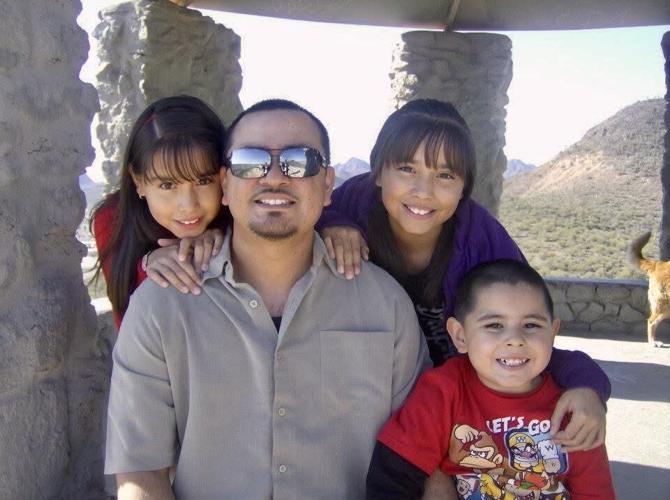
Nelson Leal is pictured in 2011 on "A" Mountain in Tucson, along with his 10-year-old daughters Brithany, left, and Stephany, and his 5-year-old son Nelson Jr., at right.
She worries her almost 2-year-old son might witness ICE agents arresting her, and then never see her again.
'Our family is breaking'
At Florence Service Processing Center, Leal said he was held in a filthy, freezing-cold room with more than 40 people and no beds, only metal benches where people slept in shifts. His time there "was the worst day of my life," up until that point, he said.
The second worst day happened weeks later, on Nov. 13, one day before his release on bond. Leal called his daughter to coordinate their reunion and learned his wife had just been detained. Leal started panicking, Brithany recalled.
"He said it was terrible, inhumane conditions, and he did not want that for any of us," she said. "If it was going to happen to any of us, he’d rather it be him than his family. ... My dad had to find it in him to keep it together, before he was released. He said, 'We're going to get her out.'"
Back home, Nelson Jr. was juggling calls from his sisters. During one call, Stephany began crying as the reality sank in that her mom had been detained.
"She kept saying, 'It's my fault. It was supposed to be me,'" Nelson Jr. said.
Leal beams with pride talking about his children. Turning the pages of an old scrapbook, he pointed to his giggling daughters in matching Snow White outfits for their 3rd birthday, their first birthday in Tucson. Another year they both dressed as Cinderellas.
Leal said he met his wife when he was 18 and she was 17. Immediately, he said, "I knew she'd be my girl for life."
In the years since, they'd been saving to buy a home and had just been approved for a loan, days before his arrest upended their family, Leal said.
"It's something we were dreaming of for 28 years. ... After everything was so perfect, now everything is so hard," he said, his voice breaking with emotion.
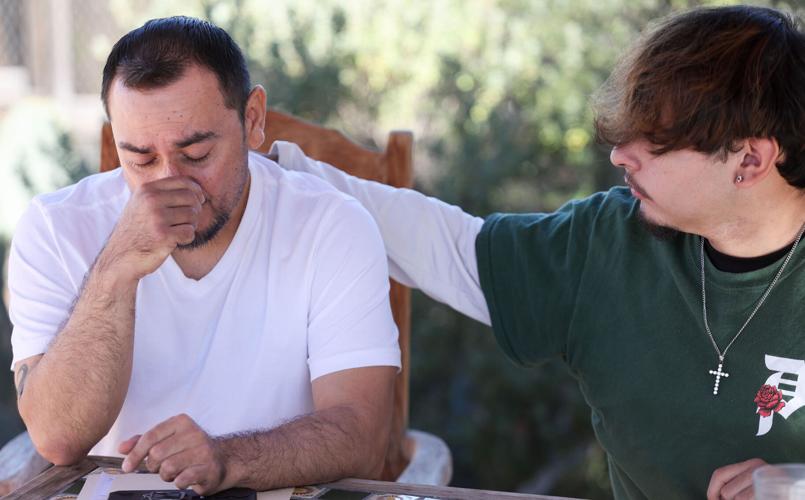
As Leal's eyes filled with tears, Nelson Jr. leaned in to console him, rubbing and patting his father's back until Leal could speak again.
"Now, I think it was a bad decision to come here," he said. "We feel like our family is breaking."
The father and son have always been close, and they're now relying on each other more than ever, they say.
"I need him and he needs me," Leal said. "We're alone in the house; it's just me and him. No mom, no sisters. Every time the phone sounds, we're just expecting we'll get a call to tell us my daughter got detained by ICE. That hurts a lot."

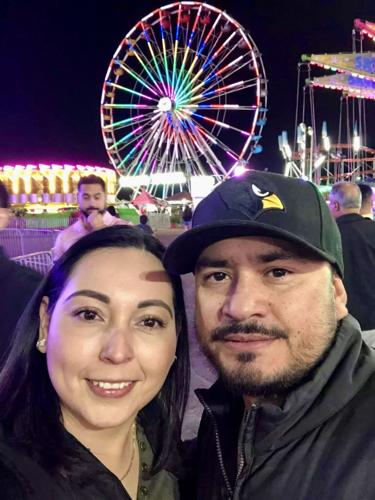
Nelson Leal, now 47, said he knew the moment he met Erika Flores, when he was 18, that "she'd be my girl for life." The couple are pictured here in April 2025 at the Pima County Fair.
The father and son began karate lessons together in 2016, when Nelson Jr. was about 10 and dealing with bullies at school. Leal enrolled in the class with his son, to make him feel more comfortable.
In the years that followed, Nelson Jr. grew into a confident and strong young man and took up playing football, Leal said. Leal continued with karate for years longer, eventually becoming a volunteer teacher at the same studio.
He earned a black belt in January, along with his friend Raul Quintana, a Mesa native and veteran of the U.S. Marine Corps. The two became close as they learned karate with their sons over the past decade.
Quintana, a respiratory therapist in Tucson, recalled Leal's pride any time he brings out family photos, especially of his grandson.
"Watching him, it's just awesome. It's like nothing else matters when he's looking at his grandson," said Quintana, who is 39.
When Quintana heard Leal had been arrested, he and his wife wrote letters to ICE on his behalf, and encouraged friends to do the same. When he learned weeks later Flores had been arrested, too, he couldn't believe it.
Quintana said he wishes he could ask ICE, "Why them? Why harass them?"
"They’re good people. They don't get in trouble with the law or anything like that, so why?" he said. "They’re just trying to live their lives. They’re not hurting anybody."
ICE enforcement ongoing
Leal said he was a dedicated worker at the landscaping company where he worked for years. He'd show up 30 minutes early each day and was proud when he was promoted to foreman, about three years ago. He's had to stop working since his arrest.

Nelson Leal and his wife Erika Flores have been together for 28 years, ever since they met as teenagers in Hermosillo, Sonora. The couple, pictured here at the Pima County Fair in 2022, came to Tucson with their 2-year-old twin daughters on tourists visas in 2004.
Leal said he doesn't know how he got on ICE's radar after so many years in Tucson. He believes the agents specifically targeted him when they blocked in his vehicle Oct. 20 as he drove to work under dark skies, just after 6 a.m.
Though enforcement operations have been "stealthier" in recent months, ICE enforcement is definitely still ongoing in Tucson, with an estimated two arrests or so per day, said Dugan Meyer, a volunteer with Tucson "Rapid Response" network, a community coalition organized by Coalición de Derechos Humanos.
Organizers have been trying to document and track ICE enforcement incidents in Tucson. But it's become more challenging since the enforcement tactics shifted in the spring to quicker, targeted arrests, Meyer said. That's likely in reaction to the public backlash to the violent and deadly encounters seen in places like Minneapolis last winter.
Agents have been making arrests quickly, often during traffic stops, and volunteer observers can rarely make it to the location in time to document them, he said.
Rapid Response volunteers are getting lots of reports of unmarked ICE vehicles doing surveillance in Tucson, particularly at apartment complexes and mobile home parks, Meyer said. When observers visit the areas, residents often say they've been seeing suspicious vehicles there for days, he said.
"We're trying to get word out about the (Rapid Response) hotline, so we get those calls sooner," he said.
Meyer said Rapid Response is hoping to hold more trainings, and encourage more volunteers to get involved.
Campos said it's a discretionary choice for ICE to detain people with no criminal record or prior removals. That's a choice that appears to be driven by politics and to some extent, financial considerations for the private-sector companies that contract with ICE to detain immigrants, he said.

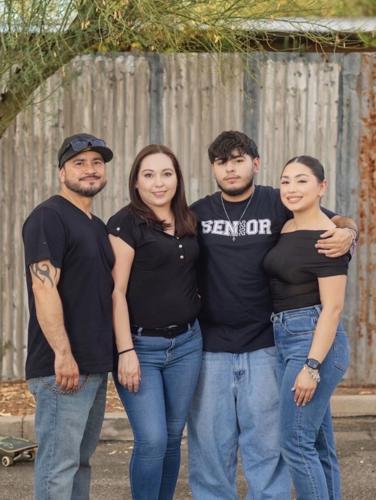
A Tucson family, pictured here in 2024, said they feel they're being "hunted," after ICE arrested both parents, despite neither of them having a criminal history. Nelson Leal is pictured at left, beside his wife Erika Flores. Their son Nelson Jr., 19, stands beside his sister Stephany, 25, at right. Stephany's twin sister Brithany lives out of state.
Detaining non-criminals "was rarely the practice before," he said. "I think it's part of the bigger drive to detain: to make sure beds are filled, to make sure more facilities are built and to make sure pockets are lined."
Most ICE detainees are held in for-profit facilities.
"We're just numbers for them," Leal said. "We're just money for them."
Stephany said the language ICE uses to talk about immigrants is both cruel and misleading.
"I hate the term 'alien.' I am not an alien. I'm a person," she said. "I'm a person who has dreams and goals in the future that I'm working toward, just like anyone else my age."
From her hidden location, Stephany said she misses both of her parents deeply. She hadn't seen her dad for three weeks, before her mom's arrest forced her into hiding.
"I could be 48, I could be 60, and I would still need my parents. It's hard not knowing when we’ll all be together again," she said. The daily fear is "physically exhausting and mentally exhausting. All we can do right now is pray and stay strong through all of it."
Contact reporter Emily Bregel at ebregel@tucson.com. On X, formerly Twitter: @EmilyBregel

Emily Bregel
Border reporter


 Arizona ICE detainee wakes, still critical; future uncertain