Lonness divides her life into four main acts of violence.
Content warning: This article contains graphic descriptions of domestic violence. If you are experiencing violence and need help, go to www.thehotline.org, call (800) 799-7233 or text “start” to 88788.
Each incident she wasn’t surprised to experience. Maybe if she was a cisgender woman — someone who is assigned female at birth and identifies as that assigned sex — she would have been lucky enough to have experienced only one or two violent attacks.
After all, most women who have experienced homelessness report experiencing violence from strangers.
But Lonness is an intersex trans woman — something that seems to make angry people even angrier and violent people more violent, she said.
People are also reading…
“I knew when I started transitioning, I didn’t need beauty tips. I needed to learn how to protect myself,” said Lonness, now 43. She understands living a life in fear of violence and reckoning with the impact that leaves. In this report, Lee Enterprises omits full names of violence victims to protect their safety and identity.
Lee Enterprises Public Service Journalism Team surveyed 150 women at daytime and overnight homeless shelters across the Pacific Northwest. A majority — 57% — said they had been physically or sexually assaulted at some point while experiencing homelessness, often after leaving an abusive home. And of the 10 transgender and nonbinary women who participated in the survey, all said they experienced that violence.
Since 2015, transgender homelessness rose 217% nationwide, compared to 14.5% for cisgender people, according to the 2024 State of Homelessness Report compiled by the National Alliance to End Homelessness.
Many young people are kicked out of their homes by their families when they come out. Some people are discriminated against in the workplace or harassed so severely that work becomes emotionally harming, and others get turned away for housing because of their identity, advocates said. Oftentimes, people experience a combination of barriers that begin to snowball.
Lonness was abandoned at 12 by her mother, who hoped the separation meant Lonness wouldn’t experience the growing violence at home. She was thrust into the Louisiana foster care system until she was released by the state at 16.

The Marie Equi Center is a health care and housing nonprofit for trans and queer people in Portland. In addition to addressing housing instability and gender-affirming care, the center hosts community events, such as a planned queer prom in their gym where guests typically shoot basketball to relieve stress.
While she’s no longer unhoused, she spent seven years, spread through various moments of her life, living outside in parks and makeshift shelters.
As an adult, she “did a Hail Mary” and left everything behind to move to Seattle, she said.
“Things were getting really bad in the south,” she said. “Violence was increasing against trans people. Hurricane Katrina messed up my job and ruined my trailer. I saw that as an opportunity to find a place that had rights for someone like me.”
Initially a guest herself, Lonness now volunteers at Elizabeth Gregory Home in Seattle, a day center for women that largely serves people experiencing homelessness and those in poverty. The nonprofit attracts trans women because its workers are known to not tolerate any kind of hate that might permeate other gender-specific homeless shelters.
“Everyone has come from other places,” she said. “About 80% of the trans people we serve here come from other states, largely red states.”
Lonness has experienced cisgender women becoming angry at her presence at other women’s centers. While she doesn’t identify as a man, when she stayed at men’s or co-ed shelters in the past it often led to extreme harassment or violence due to her gender identity.
“We just end up being sad shells moving around in ‘women’s spaces’ where we feel like we don’t belong,” Lonness said. “But at Elizabeth Gregory, they made us feel like we were supposed to be there and that we were not a burden.”
Offering safety and acceptance is an obvious way to make housing insecure women of all gender identities feel welcome. But there are other ways nonprofits can offer trauma-informed resources and spaces, like comfortable chairs or spaces where women can sleep during the day after staying awake all night for safety, Lonness said.
Connor Magee, volunteer and community relations manager at Rahab’s Sisters, a women’s day center in Portland, said trans women are much more likely to report that losing connections with family who did not accept their gender identity was a significant factor in becoming houseless. Offering a space that provides a safe community is key to helping people heal.

Leaders of the The Marie Equi Center, a Portland health care and housing nonprofit for queer and trans people, have sought to provide a calming, supportive space. They believe providing gender-affirming care is one step in creating stabilization for their guests as they work to address other needs.
While Rahab’s Sisters provides services often not found at other shelters — including prosthetic body parts and binders, which are tight garments to flatten the chest, for trans individuals — it also hosts community gatherings to foster new friendships like karaoke and art nights.
“In our clothing boutique, we not only stock warm winter jackets but designer dresses and high heel shoes,” Magee said. “We want to affirm people’s full humanity and full life and gender.”
Prosthetics and binders typically aren’t approved purchases under many funding grants, so Rahab’s Sisters must rely on private donors and community support for such items.
On the other side of Portland, The Marie Equi Center began as a health care nonprofit for trans and queer people. They believe connecting people to hormone replacement therapy will allow them to start feeling more comfortable in their bodies, letting deep-rooted fears and anxieties go to start addressing other stabilizing resources they may need.
As community needs shifted, housing services became a central focus. From the beginning, though, they have always employed majority queer and trans people, said director Katie Cox.
“Folks coming in being able to see their identity reflected in their service providers is a big deal,” Cox said. “And being a center created by queer and trans people, for queer and trans people, is a big deal too.”
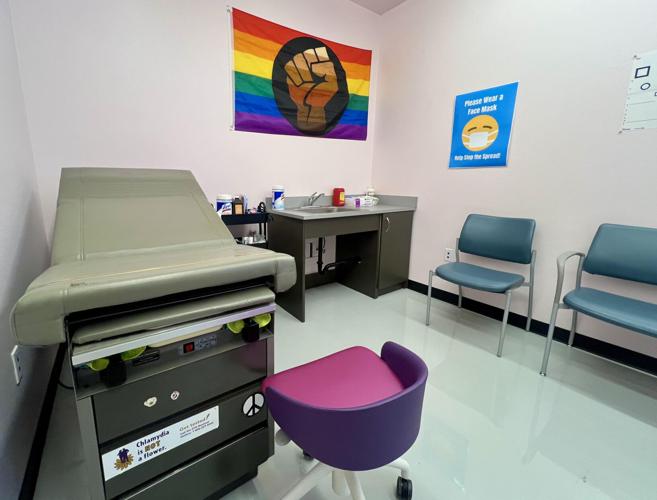
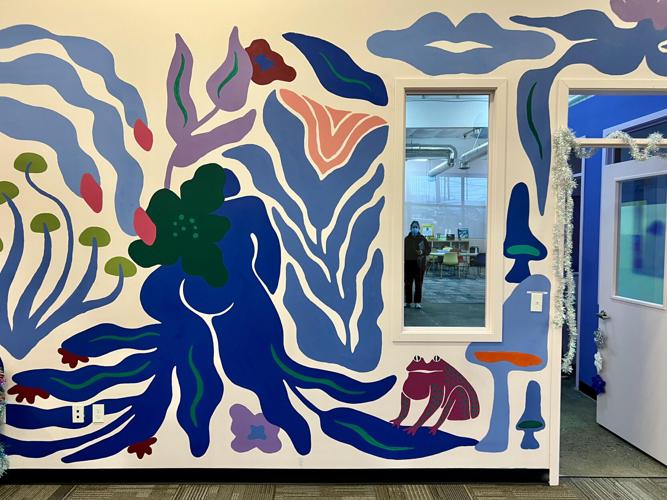
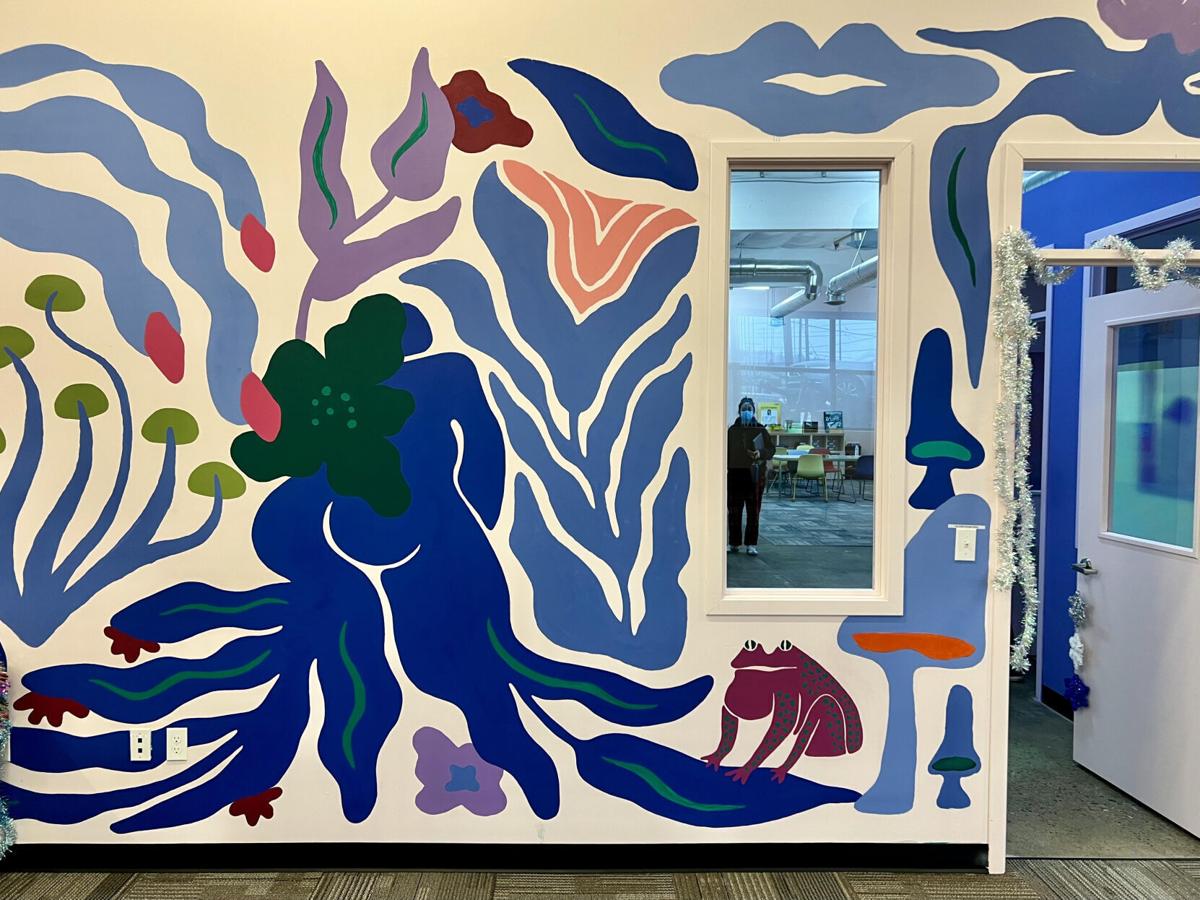
Many organizations have been throwing around the phrase “trauma-informed design” as talks of progressive spaces and services rise to the top of conversation. But truly creating a safe space requires more than nice murals on the walls.
“Lots of folks in our community have experienced trauma along the way,” Cox said. “It was an important piece for us to think about how people with different abilities and body sizes might move through our space.”
Their team purchased furniture with high weight limits and without restricting arms. They used paint colors that were calming and provided low stimulation. Lights aren’t bright and many are dimmable. It is cozy and homelike, not sterile.
“We wanted this place to be so unapologetically queer and trans that it makes straight people, or people who may not be friendly to our community, uncomfortable,” Cox said.
But as support staff work with guests at The Marie Equi Center to access housing, workers worry about what their guests may encounter outside of its safe walls. Finding an inhabitable, affordable apartment often feels like an insurmountable task. Finding housing that is completely safe for trans people, particularly women, is largely impossible.
“Will they be safe?” Cox asks. “We never have good answers to those questions. Where folks end up depends on availability, and we can’t control who else is in the building … But we do know we need a housing project that is queer and trans specific … and we need to figure out how to establish a queer and trans 24-hour shelter, because many folks won’t access shelter because they don’t feel safe.”

Nicole Hayden is an investigative journalist on the Lee Enterprises Public Service Journalism Team. Do you have a domestic violence, restraining order, housing or related legal story you believe needs to be investigated? Contact Nicole at Nicole.Hayden@lee.net.

The Marie Equi Center in Portland used trauma-informed design to create a calming, safe and affirming space for the queer and trans people it serves.
Nicole Hayden can be reached at nicole.hayden@lee.net or at (810) 210-1561.