President Donald Trump has denied reports claiming the United States is running low on military weapons and munitions.
The war on Iran severely depleted key United States missile stockpiles and left the nation and its allies in a vulnerable position for potentially years to come, several experts and reports say.
U.S. missile stockpiles were low before President Donald Trump and ally Israel launched the war on Feb. 28. But five months of fighting in the Middle East have left the nation's missile inventory depleted to the point where analysts feel they could soon be exhausted.
"This really has long-term strategic implications for the United States," Kelly A. Grieco, a senior fellow at the Stimson Center, told USA TODAY. The center is a think tank focused on issues of global peace. "It’s going to take years to get back up to the levels we had before we started this war, and that prewar level was already too low."
A USA TODAY look at of the nation’s missile stockpiles came as the president claimed in a Thursday social media post that "the U.S. has massive amounts of 'munitions,' especially of certain types."
People are also reading…

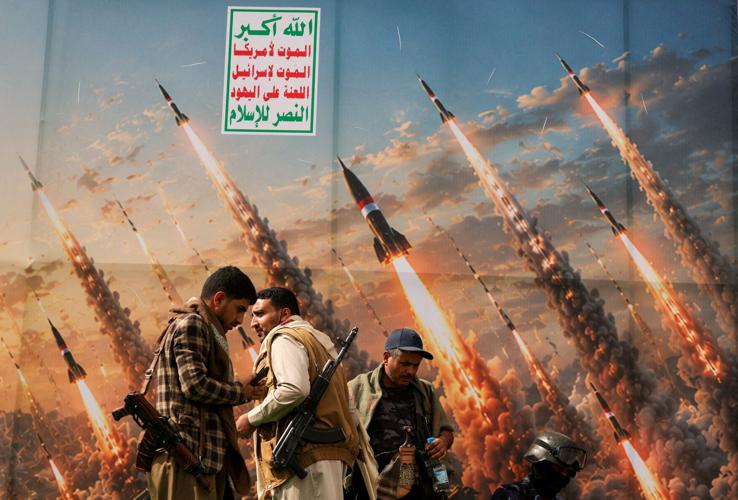
Houthi activists stand on a platform against a banner depicting Houthi missiles at an anti-Saudi rally in Sanaa, Yemen, on July 31 amid an escalation with Saudi Arabia.
Later in the day Trump told reporters in the Oval Office that the U.S. has "a virtual unlimited supply" of missiles. He added the caveat that for certain missile types supply is "tighter."
The president’s comments and early morning social media statement follow a Center for Strategic and International Studies shortage analysis, a Washington Post report on Trump clashing with defense officials over stockpile issues and a Reuters report that the U.S. has nearly exhausted key munitions.
Pentagon officials slammed the reported shortages as "false."
"America’s military remains the most powerful fighting force on earth. We have everything required to strike at the time and place of the President’s choosing," Pentagon spokesperson Sean Parnell said in a statement.

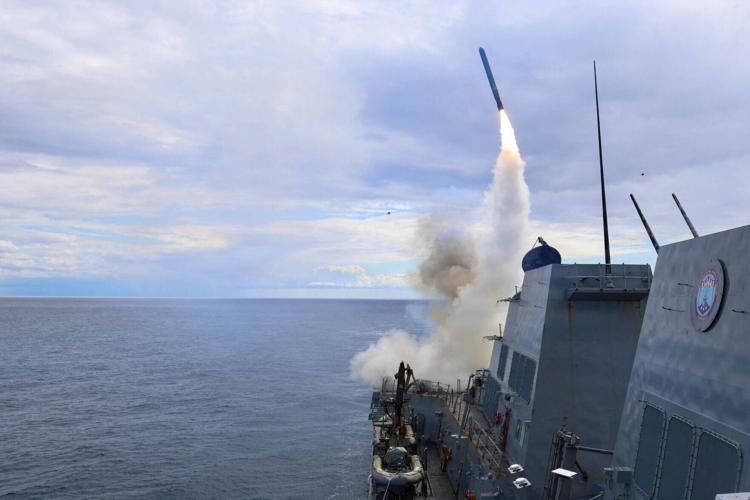
The U.S. Navy Arleigh Burke-class guided-missile destroyer USS Thomas Hudner fires a Tomahawk land attack missile March 1 in support of an Operation Epic Fury attack on Iran.
What munitions are low?
The war on Iran has depleted some of the U.S. most important munitions, experts estimated based off military disclosures of attacks on the Islamic republic. Among them: Patriot and THAAD defense missiles and long-range ground attack Tomahawk missiles.
According to the Center for Strategic and International Studies analysis, the U.S. has used about half of its Patriot and THAAD inventories and a third of its Tomahawk inventory over the course of the war. The center is a Washington, D.C.-based think tank that focuses on national security issues.
Mark F. Cancian, the lead author of the analysis, estimated the U.S.’ remaining inventory could be exhausted if the war drags on for several more months.
"For a war against Iran, we could continue that for some time, for months," Cancian said. "But my suspicion is the Joint Chiefs of Staff sees us at a danger point for conflict with China, where we’d need all these missiles, and that’s why we’d call this a window of vulnerability."
United States' missile stockpile estimates are based on missile procurement numbers in federal budget documents compared against public disclosures regarding their use in the war, experts said.

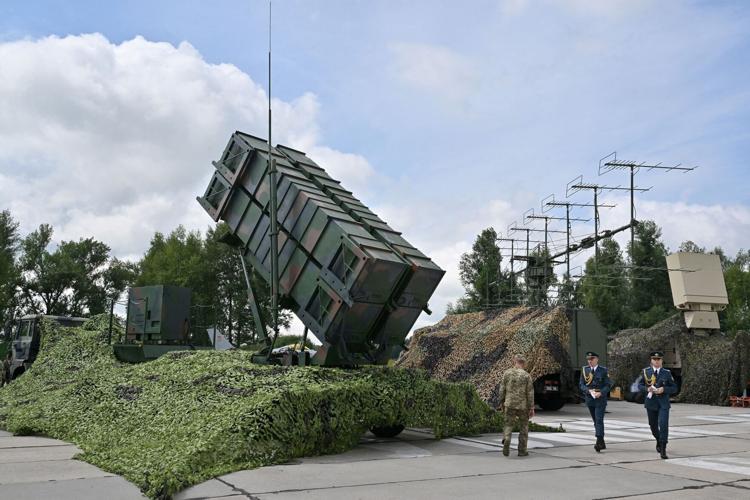
Ukrainian servicemen walk past a Patriot air defense system at an undisclosed area in August 2024.
Impact on U.S. allies
U.S. missile shortages are already becoming a factor in Ukraine’s war against Russia. Ukraine is one of several American allies that rely on U.S.-made systems for defense.
On Thursday, Trump blamed some of the stockpile depletion on Ukraine. The U.S. gave the country about 600 defense missiles since Russia invaded in 2022.
President Volodymyr Zelenskyy warned Aug. 1 that the country was out of Patriot missiles, and that same day Ukrainian air defenses were able to stop just one out of 27 Russian attack missiles.
Other allies who could be affected by the shortage include Japan and Taiwan, as well as the Gulf states fighting off Iranian attacks.
"If the fighting starts up again and the Iranians keep firing missiles at the Gulf states then they’ll be screaming for additional missiles," Cancian said.
Refilling the U.S. missile stockpiles will take years due to manufacturing constraints, a handful of experts said.
According to the strategic studies center analysis, the nation will not be back at pre-war defense missile levels until the middle of 2029 and at pre-war Tomahawk missile levels until 2030 or 2031.

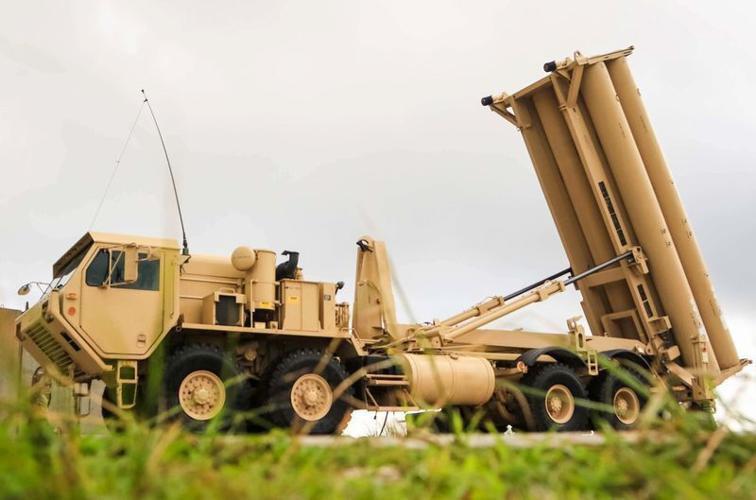
A U.S. Army Terminal High Altitude Area Defense weapon system is seen Oct. 26, 2017, on Andersen Air Force Base, Guam.
Why is there a shortage?
There are many reasons for the shortage in munitions.
Among them, the missiles are difficult to manufacture, supply chain squeezes can interrupt production and the U.S. has not faced an adversary that could meaningfully strike back for decades, so the nation hasn't needed as many missiles. Missile production decisions are also made years in advance.
Another factor in defense systems, including Patriot missiles, is that typically two to three interceptor missiles are fired at every attack missile. Iran is estimated to have fired well over 1,000 attack missiles over the course of the war.
U.S. stockpiles were low before the war as well, lawmakers said.
"Our stockpiles of critical defense articles have fallen to dangerously low levels," House Armed Services Committee Chairman Mike Rogers, R-Ala., said in a March 4 statement, just a few days into the conflict. "The consequences are clear. There are growing doubts about our ability to sustain a protracted fight against China."
Years of the U.S. fighting in unofficial wars have also hurt supply.
These include, according to strategic studies center estimates, hundreds of defense missiles used by the Biden administration in fighting the Houthis in the Red Sea and dozens of attack missiles used to attack Iran last year, the raid to capture Venezuelan President Nicolas Maduro and in the Christmas Day attacks on ISIS in Nigeria.