

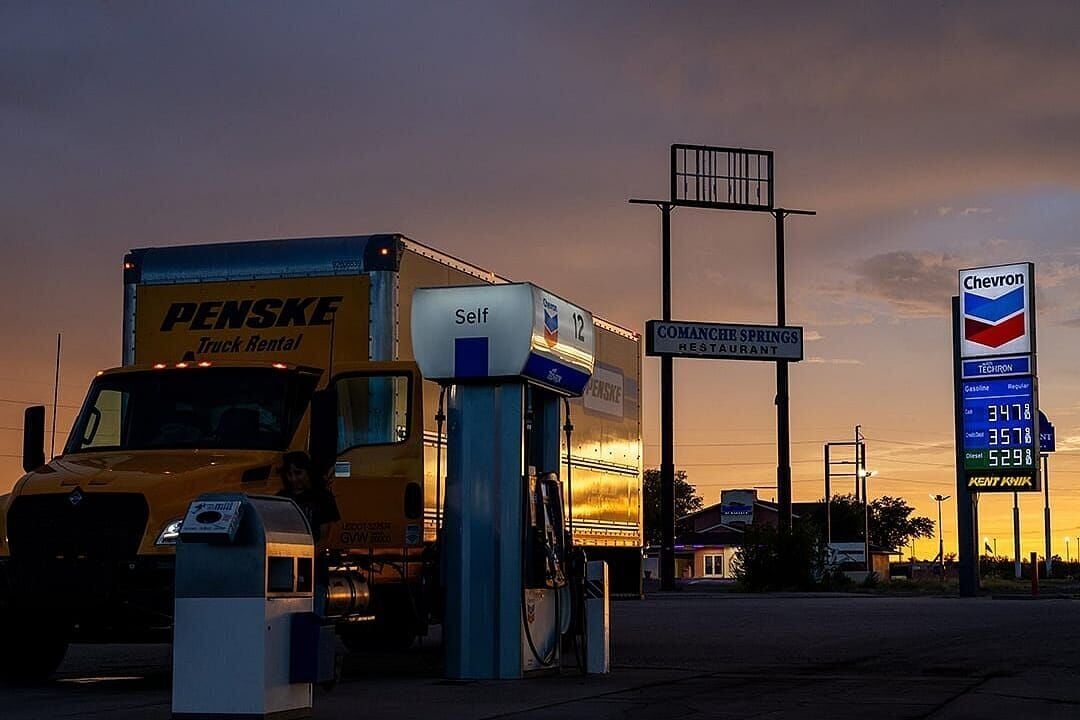

4 ways to stretch your gas budget as prices rise
Gas prices are taking a bigger bite out of household budgets than they were a year ago. According to the U.S. Energy Information Administration (EIA), the national average retail price for regular gasoline was $4.157 per gallon for the week of Sept. 7, 2026, compared with $3.192 per gallon for the comparable week in September 2025 — an increase of nearly 30%.
For drivers who rely on their cars for commuting, school drop-offs, appointments and everyday errands, that increase can quickly show up in the household budget. CreditFresh research has also found that gas and transportation are a significant source of seasonal budget pressure for consumers.
People are also reading…
People are already stretched thin
Gas prices didn't spike in a vacuum. They went up on top of grocery bills that are already higher than they used to be, rent that hasn't come down, and a general cost of living that's been putting pressure on household budgets for a couple of years.
So when gas got expensive this spring, for a lot of families, it was the thing that pushed an already tight budget over the edge. The survey reflects that: people who named gas as their top expense were also the most likely to say they were cutting back on dining out, scaling down summer plans, and switching to cheaper brands at the grocery store to make ends meet.
Why gas is so hard to plan around
For many households, driving is part of everyday life. Commuting, school and activity drop-offs, appointments, groceries and family responsibilities can all require time on the road. And unlike some expenses, gas isn't always something you can simply cut or skip — you still need to get where you're going whether or not the price at the pump is convenient.
That's why gas prices tend to put pressure on everything else. When a non-negotiable expense goes up, something else has to give. For most people right now, that's dining out and travel.
4 ways to stretch your gas budget
You can't control the price per gallon, but you can control how much you're using and what you're paying for it.
1. Combine errands and plan your route
The biggest lever many drivers have is reducing the number of separate trips they take. Try combining errands, school pickups and grocery runs into one loop instead of making several separate drives. The Federal Trade Commission notes that several short trips from a cold start can use twice as much fuel as one trip covering the same distance once the engine is warm.
2. Compare prices before filling up
Where you fill up can also make a difference. Compare prices at stations along a route you already plan to travel using tools such as GasBuddy, AAA or other gas-price apps. Avoid driving several extra miles solely to save a few cents per gallon, since the additional fuel and time could outweigh the savings.
3. Share or replace some trips where practical
If you have a commute or another recurring drive, consider whether some trips can be shared or replaced. Carpooling with a coworker, coordinating school or activity drop-offs with another parent, taking public transit, or walking or biking for short trips where practical can reduce the number of miles you drive on your own.
4. Help your car use fuel more efficiently
A few smaller habits can help your vehicle use fuel more efficiently. The U.S. Department of Energy says aggressive driving — including speeding, rapid acceleration and hard braking — can lower gas mileage by up to 30% at highway speeds and up to 40% in stop-and-go traffic. Keeping tires properly inflated can improve gas mileage by an average of 0.6% and, in some cases, as much as 3%. Check your owner's manual or the tire-information placard for the recommended pressure.
And if higher gas costs are making the rest of your household budget harder to manage, it can be useful to understand your options before an unexpected expense adds more pressure.
A personal line of credit, for example, may help if you need something to lean on if costs stack up in ways you didn't plan for.
Gas prices can move up and down from week to week, but you don't have to control the price at the pump to look for savings. Planning trips, comparing prices and using fuel more efficiently can help make transportation costs a little easier to manage within your budget.
Methodology
Survey information is based on aggregated customer responses collected by CreditFresh. Results are for general informational purposes only, and may not reflect all customers.
Disclaimer: Information in this article, including references to third parties, is for informational and educational purposes only and does not constitute endorsement or individualized financial or legal advice.
This story was produced by CreditFresh and reviewed and distributed by Stacker.


