PORCUPINE, N.D. — Corrine Kopp doesn’t want to hear any more apologies.
“‘I'm sorry, I'm sorry, I'm sorry,’” Kopp said during a recent interview, repeating the phrase she’s heard over and over again in the eight years since a Bureau of Indian Affairs officer shot and killed her common-law husband and the father of her three children on the side of a highway on the Standing Rock Indian Reservation. “I'm so sick of those words.”
What Kopp wants instead is justice for what she believes was an unwarranted and illegal killing.
But Kopp’s long battle to hold accountable the government and the officer who shot her husband, Ryan Gipp, for that perceived injustice ended in defeat last week.

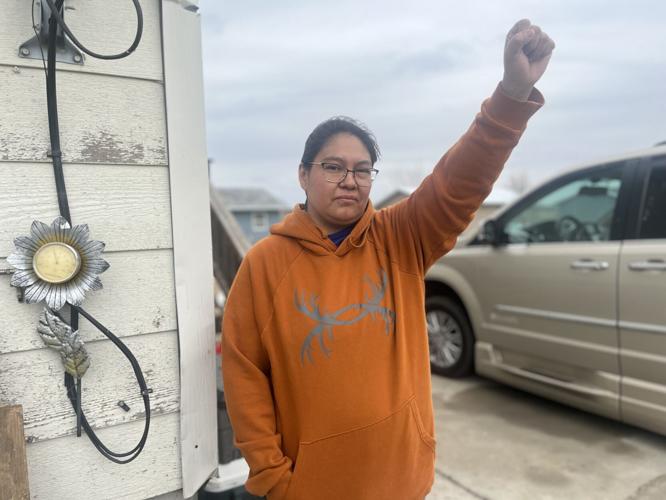
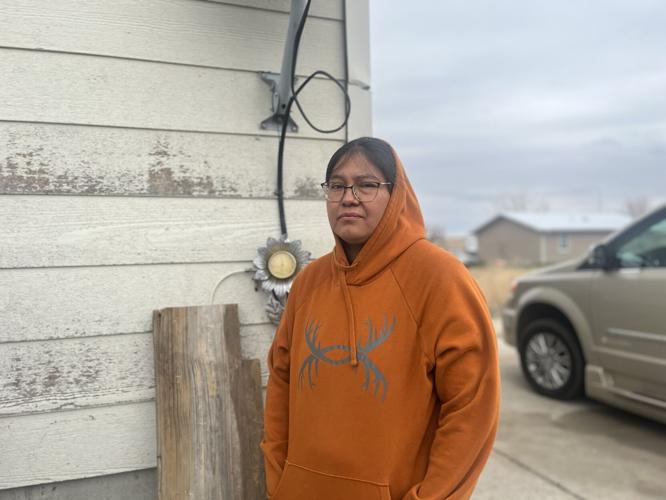
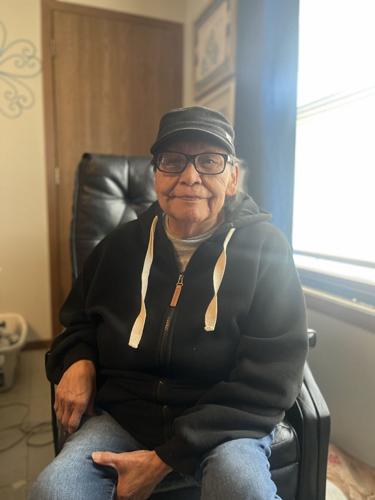
Corrine Kopp is photographed April 26, 2025, in Porcupine, North Dakota, on the Standing Rock Indian Reservation, where her husband Ryan died in an encounter with a federal police officer in 2017.
The 8th U.S. Circuit Court of Appeals found that BIA Police Officer Raymond Webb’s decision to fire 17 rounds at Gipp in roughly four seconds on the night of Oct. 23, 2017, was “reasonable” and that the United States is therefore not liable for his death.
People are also reading…
Webb’s attorney declined to comment for this article.
The appeals court decision maintained that Webb’s use of deadly force came after Gipp’s “actions became increasingly erratic and aggressive,” turning a situation that was “dangerous” into one that was “potentially deadly” for police.
Kopp and other members of Gipp’s family argue, though, that the opposite is true: that Gipp tried to diffuse the situation before it turned fatal.
After all, they noted and the court acknowledged, Gipp threw the only firearm in his possession – a shotgun – out the window of the car his elderly father was driving before police pulled them over.
He did so because he was afraid of the police, “because you never know if they're gonna beat you up or kill you,” said Roberta Gipp, Ryan’s mother, who was also in the truck when police pulled them over.
“Generally, everybody's scared of the cops,” Roberta added.
Webb – who has been charged with, but not convicted of, multiple violent crimes over the past two years – is currently employed as a BIA police officer on Standing Rock.
Fear of reservation law enforcement is neither uncommon nor unfounded, according to a recent Lee Enterprises Public Service Journalism investigation.
The investigation probed data from the U.S. Centers for Disease Control and Prevention that found Native Americans and Alaska Natives died in law-enforcement encounters at more than five times the rate for whites and nearly triple the rate for Blacks as of 2021. In 2022, the most recent year for which data exists, rates for Native Americans declined somewhat but remained higher than they were for all other races.
‘No one around’
Oct. 23, 2017, started out like a normal fall day, according to Roberta Gipp.
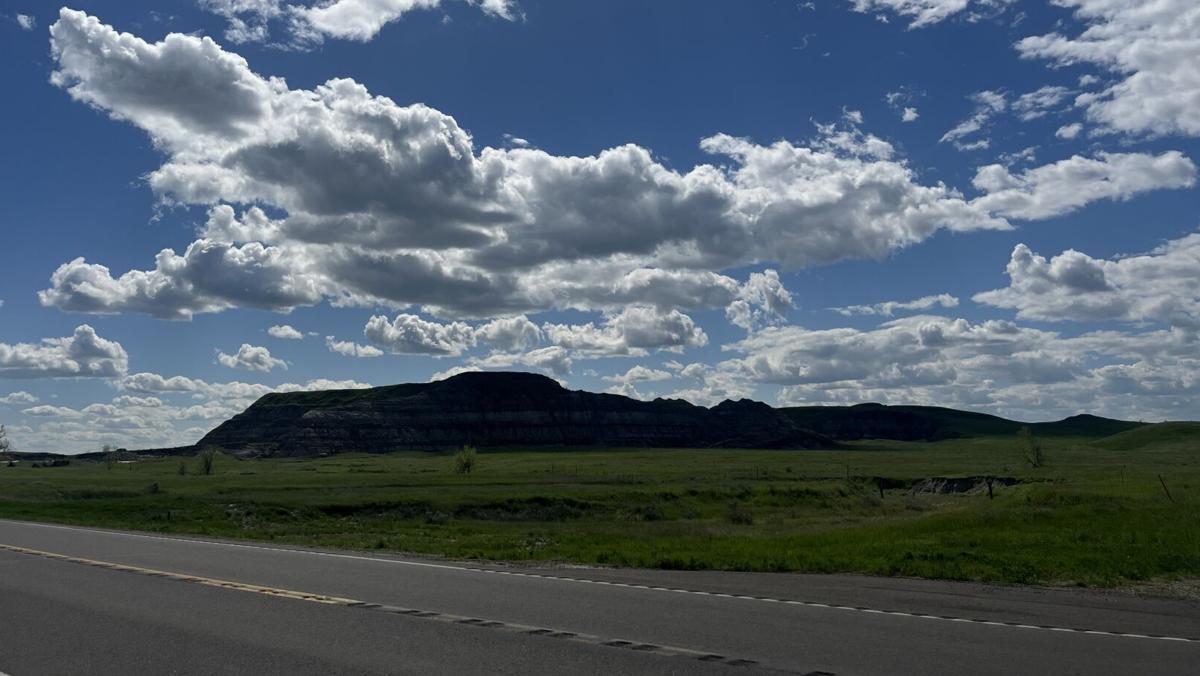
Ryan wanted to go with her and his father, George Gipp, to see an aunt who had recently returned home to Fort Yates, the tribal headquarters of the Standing Rock Sioux Tribe, whose reservation spans 2.3 million acres that straddle the North Dakota-South Dakota border.

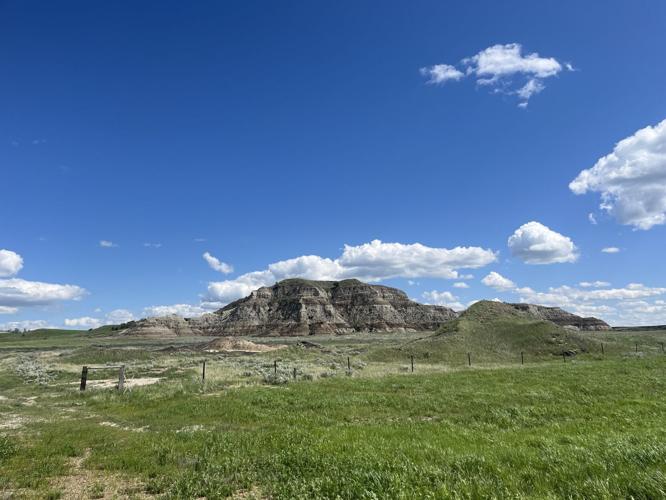
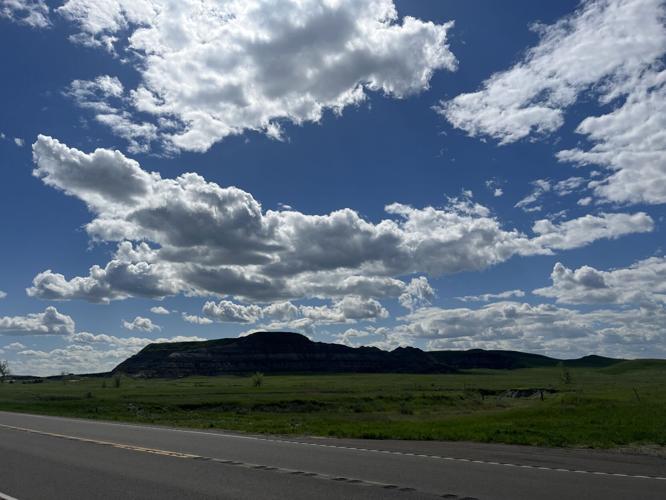
The Standing Rock Indian Reservation spans 2.3 million acres that straddle the North Dakota-South Dakota border.
Her son brought his shotgun along in case he saw some turkeys on the drive, Roberta Gipp said. But the birds, she recalled, “all flew away.”
When she stopped at a Fort Yates gas station for a Red Bull, Ryan did something she wishes he hadn’t: He got out of the backseat to unload his shotgun. But in the process, the gun somehow went off.
“But there's no one around,” Roberta said. “No cars, no people. Nobody around. Just the lady in the gas station.”
Assuming everything was fine, Roberta took the wheel and drove off in her Ford Crown Victoria.
But as they headed down the highway, they saw a BIA vehicle going the opposite direction, with its emergency light flashing.
After the cop “whips around in a U-turn,” Roberta said her son “opens the window and throws his shotgun out.” But while Ryan Gipp may have hoped getting rid of the gun would diffuse the situation, it didn’t.

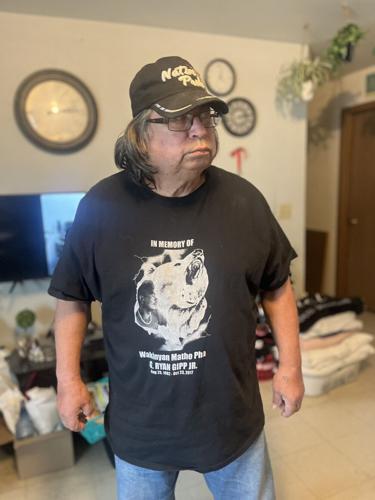
George Gipp wears a shirt memorializing his son, Ryan, who was fatally shot by a a BIA police officer on the Standing Rock Indian Reservation in 2017.
Once Roberta had pulled over to the side of the road, Webb got out of his vehicle with his “service rifle drawn,” court documents say, and “began ordering the driver, Roberta, to roll down the window and throw out the keys.”
Roberta and George both “complied” with commands from Webb and Officer Gary Sandland Jr., court documents say, and were handcuffed and placed in the officers’ vehicles.
After Ryan emerged from the Gipps’ vehicle, officer Webb tased him and shot him repeatedly.
In the eight years since, lawyers and judges have parsed the available evidence, trying to decide whether Ryan acted in a way that justified Webb’s decision to do so.
‘Eliminated’
Within weeks of her husband’s death, Kopp left her home on Standing Rock and began driving around the nearby city of Bismarck, North Dakota, in search of a lawyer who would take her case, she said.
It wasn’t easy.
As a recent Lee Enterprises Public Service Journalism Team investigation revealed, the families of Native Americans who die in law-enforcement interactions are very rarely able to find attorneys who will take their cases.
In part, this has to do with their difficulty in accessing even the most basic documents, such as police reports and autopsies, that lawyers typically rely on to decide whether to take on a case in the first place. Families told Lee Enterprises that yearslong timelines for accessing public records and incomplete responses mean families often do not receive documents in time to take action.
The Bismarck Tribune made a public records request in 2020 for documents related to the FBI’s investigation into Gipp’s death. The Tribune received some heavily redacted documents but nothing that shed additional light on the probe, and five years later the newspaper was still waiting for additional documents tied to its request.

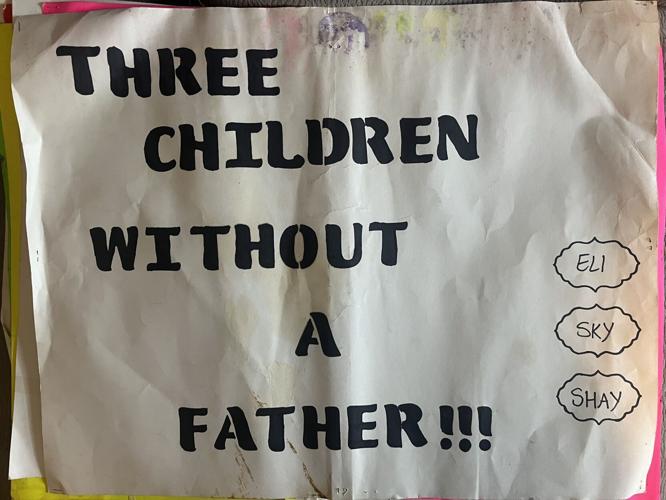
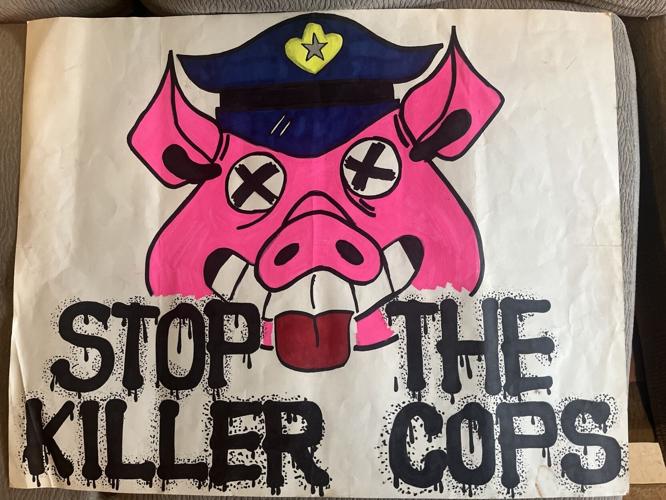
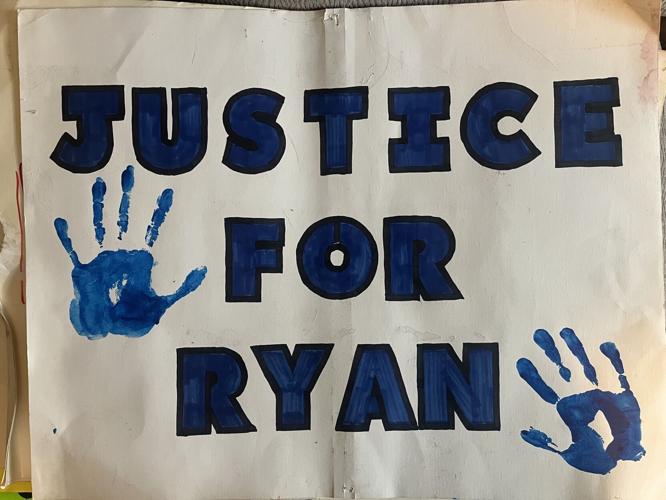
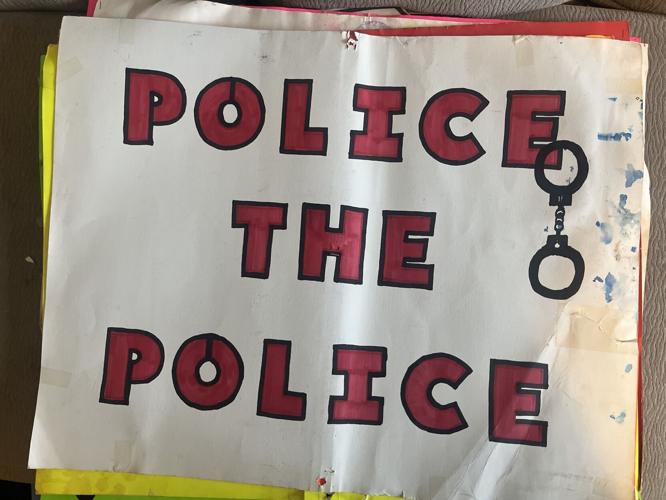
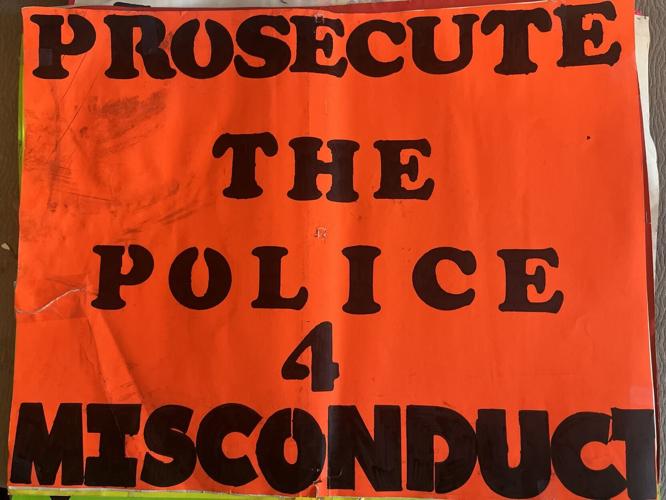
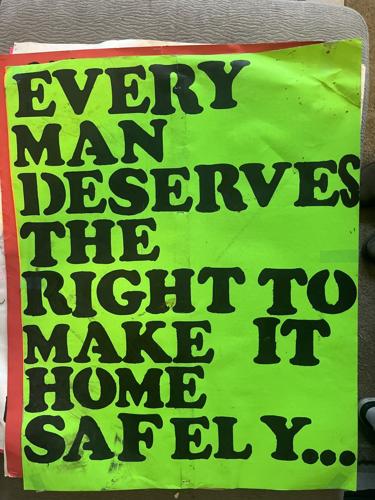
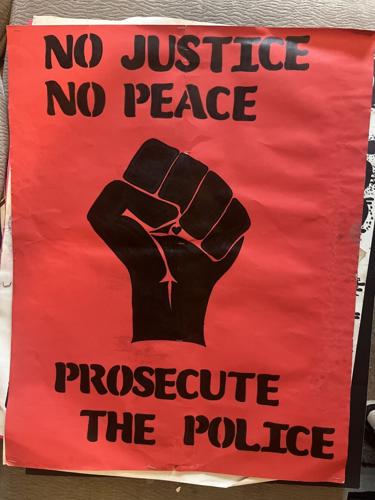
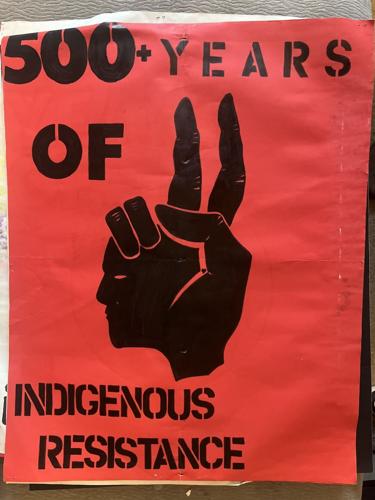
Ryan Gipp's family made signs, including this one, to protest the actions of a BIA police officer who fatally shot him on the Standing Rock Indian Reservation in 2017.
Thomas Conlin, who ultimately agreed to represent the Gipp children in their lawsuit, said he also faced challenges accessing documents in this case, in part due to “laws that allow the government to withhold certain documents and redact others.”
And because law enforcement has expansive legal rights to use force, lawsuits and criminal prosecutions against officers are difficult to win, which has a “deterring effect” on those considering legal challenges, Conlin said.
While Kopp believes Webb and Sandland should have faced criminal charges for what she describes as their “murder” of her husband, the decision about whether the officers engaged in criminal conduct was up to the then-U.S. Attorney for Nebraska, Joseph Kelly.
Asked why the matter was referred to the U.S. Attorney in Nebraska, Terry W. Van Horn, a public information officer for the U.S. Attorney’s Office in North Dakota, wrote, “When the subject of an investigation is an Officer that our office routinely worked with, the Department of Justice typically assigns the case to another US Attorney’s Office for review and or prosecution, and that is what occurred in this matter.”
In a May 2018 letter, Kelly, who is now Nebraska’s lieutenant governor, notified the FBI “that no federal criminal charges will be filed against Officer Raymond Webb. Our office agrees with your office that the evidence is not sufficient to warrant criminal prosecution.”
Despite obstacles, Kopp ultimately found attorneys to help her pursue a civil lawsuit against the police and the government.
One of those attorneys was Conlin, who said he was compelled to take on the case despite the challenges because “what happened was, simply, wrong.”
“There was no good reason to shoot Ryan; he never threatened anyone. He ran and hid out of fear for his life after he was tasered for no reason,” Conlin wrote in an email response to questions. “We wanted to give his family a chance, and we were concerned they would have a hard time finding an attorney willing to take on the risk and expense.”
In January 2020, Conlin helped file suit against Webb, Sandland and the United States on behalf of Kopp and Gipp’s three children, Elias, Skyla and Shayla Gipp.
Sandland was dropped from the lawsuit after it was determined he had not fired his weapon.
The complaint argued that Ryan was “unarmed and non-threatening” when Webb shot him.
“Despite his compliance with all instructions given to him,” the complaint reads, “the officers tasered Ryan Gipp without warning. Ryan Gipp, stunned from being tasered posing no threat of danger to the officers or anybody nearby, stumbled into the roadside ditch.”
With “absolutely no justification,” the lawsuit alleged, “Webb then shot Ryan Gipp, causing his death.”
That account was based, in part, on video and audio footage captured by the officers and obtained by the Lee Enterprises Public Service Journalism Team.
In a four-second clip from a camera integrated into the Taser, Ryan Gipp appears calm before the electrified darts shoot out with a loud sound.
After the Taser goes off, Gipp can be seen fleeing from police.
A half-hour of footage from the second officer’s dash cam helps place that moment in greater context, beginning with Sandland driving to the scene, where George Gipp was taken into custody.
Ryan Gipp is then shown emerging from the backseat of his mother’s vehicle, picking up her keys, lingering by the car while apparently speaking to officers, and walking slowly toward them.
After that, the video shows a partial and obstructed view of Ryan Gipp standing in front of the other BIA police truck, where the Taser can be heard deploying. Gipp can then be seen running behind Webb’s police vehicle and out of view of the camera. Webb gives chase with a handgun aimed, while Sandland goes to the other side of Webb’s vehicle with a rifle.
While the video did not capture a view of the officers or Ryan Gipp after that, it did record Webb twice yelling for Gipp to give him hands before he fired his gun “a total of 17 rounds being fired in roughly 4 seconds,” court documents say.
Those shots can be heard but not seen on video, as neither officer was wearing a body camera, and Webb’s apparently “malfunctioning” dash camera did not record anything, said Conlin.
After Ryan Gipp had been shot, Webb took a series of photographs of Gipp facedown on the ground, handcuffed, his clothes torn, bleeding from numerous bullet wounds. Lee Enterprises is electing not to publish those photos due to their graphic nature.
‘Reasonable and justified’
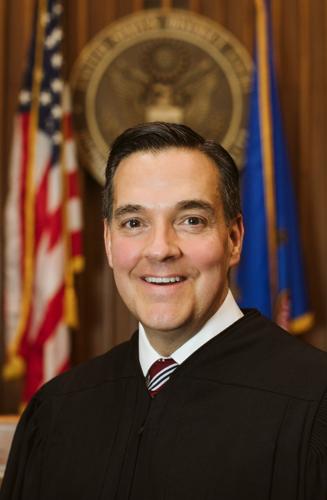
Early last year, Daniel Traynor, a federal court judge in Bismarck, delivered an initial verdict in the Gipp children's lawsuit. He dismissed it, finding in favor of the government’s contention that Webb’s “use of deadly force was reasonable and justified.”
In explaining that decision, Traynor cited video footage and officer statements to argue that Gripp was defiant as he emerged from his parents’ vehicle.
Traynor also accepted Webb’s claim that he “saw something heavy in Ryan’s pocket” and “believed it could be a gun.”
Traynor wrote that he believed the officers’ allegation that Ryan “took a bladed stance” and “balled his right hand into a fist” as Webb was about to handcuff him.

U.S. District Judge Daniel Traynor
Traynor found it reasonable, he wrote, for Webb to taser Ryan twice, even though Webb “provided inconsistent testimony when questioned about when he deployed his taser.”
Initially, Webb said he tasered Ryan because he had started to flee. Later, however, Webb and Sandland “stated Ryan ran after Officer Webb deployed his taser,” Traynor wrote. Video footage corroborates this second version of what occurred.
Traynor also described Ryan as “running,” not “stumbling,” away before hiding behind Sandland’s police cruiser.
And Traynor found Webb credible when he claimed that he “still believed Ryan had a firearm” in the pocket of his sweatshirt and “observed what he believed to be Ryan chambering a round into a firearm while fidgeting with his hoodie pocket.”
“Officer Webb states he saw Ryan draw something out of his hoodie pocket and was positioning himself to shoot at Officer Sandland,” Traynor wrote. “In response, Officer Webb fired his service rifle at Ryan until he believed the threat posed by Ryan was eliminated, resulting in a total of 17 rounds being fired in roughly 4 seconds.”
The appeals court essentially agreed with Traynor’s decision, stating that “the officers did not have a duty to warn (Gipp) before using the taser” and that the use of deadly force was reasonable because “Ryan had already resisted arrest, shaken off two taser shots, crouched behind a truck, and pulled what looked like a gun from his hoodie pocket.”
But when Sandland handcuffed Ryan and rifled through his front hoodie pocket, he didn’t find a gun. He found a socket wrench.
In a pants pocket, Sandland found a folding knife. On the ground, he saw a shotgun shell and a lighter.
‘Fear and confusion’
Conlin, the Gipps’ attorney, said that he finds the courts’ determinations flawed.
“The sad thing is that the decisions of the trial court and court of appeals do not make it clear that the only evidence of Ryan as ‘threatening and pulling something that looked like a gun’ from his hoodie as he crouched in self-defense behind a squad pickup come from the officer who fatally shot Ryan, who certainly had plenty of motive to make up this evidence to justify what he did,” Conlin wrote in his response to questions from the Lee Enterprises Public Service Journalism Team.
“This is the crux of why the decisions of the trial judge and the Court of Appeals are so contrary to our legal standards,” Conlin continued. “The law says that you must take all inferences in plaintiff’s favor. The courts did just the opposite.”
Conlin also argued that Ryan Gipp’s behavior was never threatening.
“As you know, Ryan had no weapon when he was shot,” Conlin wrote. “‘Erractic’ is not the same thing as ‘threatening,’ a point the judges missed. Someone can act ‘erratically’ out of fear and confusion, with absolutely no intention to harm anyone. Here, law enforcement (and the courts) ignored this distinction.”

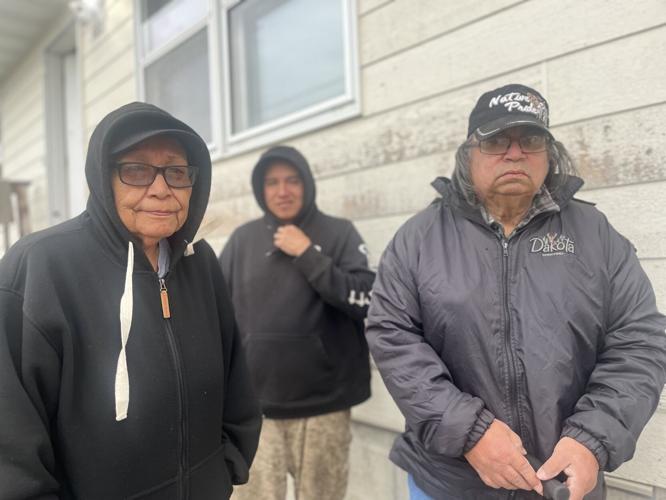
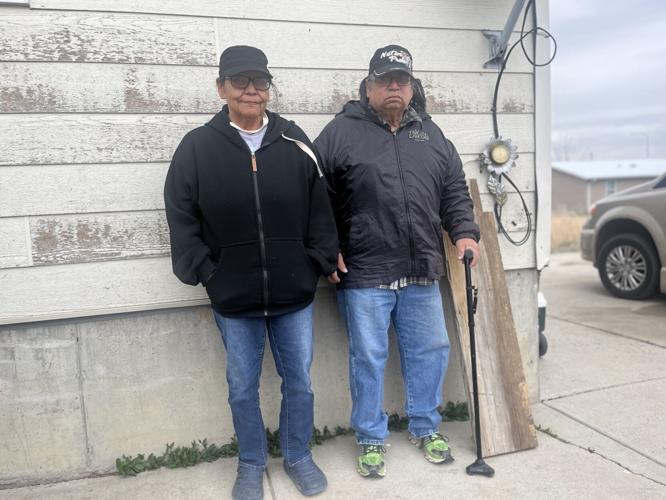
Roberta and George Gipp are photographed with their son-in-law, Clarence Carry Moccasin, center, on April 26, 2025, in Porcupine, North Dakota, on the Standing Rock Indian Reservation.
‘A Whole Bunch of Gunshots’
Roberta and George Gipp saw this disturbing scene begin to unfold from the back of the BIA officers’ vehicles.
They said they watched their son get out of their truck. They said they saw him grab Roberta’s keys. They contend they saw Ryan approach the officers, get tased, and go behind Sandland’s cruiser.
The Gipps lost sight of him then, they said, but they heard what happened next.
“I just hear a gun go off,” Roberta said. “And I can't see. … And I didn't know how much, but there was a whole bunch of gunshots.”
“And they sent us to jail,” George said.
“They took us to jail and held us in there,” Roberta said.
For that whole night, George and Roberta said, they were confined to jail cells in Fort Yates, confused about what they were being charged with and fearful about the fate of their son.
They weren’t the only ones left confused and afraid the night that Ryan Gipp was killed.
‘Hold on’
Kopp remembers exactly when the call came in: at 9:08 p.m. on Oct. 23, 2017.
It was Ryan’s sister, Candace Gipp. She was calling from the Indian Health Services hospital in Fort Yates, with news that “something’s wrong with Ryan” and that she wasn’t allowed to see him, Kopp recalled.

Corrine Kopp is photographed April 26, 2025, in Porcupine, North Dakota, on the Standing Rock Indian Reservation, where her husband Ryan died in an encounter with a federal police officer in 2017.
Kopp thought he was sick, but she felt a fear that she still can’t explain.
“And I don't know where that came from, I just kept saying, 'I'm coming. I'm coming. Hold on, hold on,'” she said.
But when she got to the hospital, Kopp said, she was told to wait.
Despite her efforts to force someone to tell her more, Kopp said, it wasn’t until about eight hours later that a pair of FBI agents came and told her she could see Ryan.
“And here they just (expletive) pulled out this gurney with a body bag on it,” Kopp said.
Kopp was still “in disbelief,” but she couldn’t deny that this was her husband.
There was a tag attached to the bag, and Ryan Gipp’s name was written on it.
It was morning before she found out George and Roberta were in jail, Kopp said.
And it was only when they were brought before a judge who told them he was “sorry for their loss” that George and Roberta said they learned their son was dead, they said.

Ryan Gipp's family made signs, including this one, to protest the actions of a BIA police officer who fatally shot him on the Standing Rock Indian Reservation in 2017.
‘Crime of violence’
The loss of Ryan and their inability to hold anyone accountable has left the Gipp family feeling anger and pain, fear and distrust. But they did believe one thing had changed in the eight years since Ryan was killed.
“With Webb, they got rid of him,” George Gipp said.
But Webb is not gone from BIA law enforcement department on Standing Rock.
In an email response to questions, Joshua Barnett, a BIA public affairs officer, wrote that Webb currently works as a police officer on the reservation.
But over the past two years, records from the U.S. District Court for South Dakota indicate that Webb has faced numerous charges for allegedly committing violent crime on the reservation.
In December 2023, Webb was indicted for assault with a dangerous weapon, assault resulting in serious bodily injury, discharging a firearm during a federal crime of violence and possession of an unregistered firearm for an incident that allegedly occurred on Standing Rock earlier that year.
In May 2024, Webb was indicted for kidnapping, also on the reservation.
But a federal District Court Judge in South Dakota judge granted a motion from prosecutors to dismiss that kidnapping charge in October of last year. Soon after, a federal jury found Webb not guilty of all charges in the first case.
Jason Rumpca, the lawyer who represented Webb in those cases, declined to answer questions for this article and said that his client also “respectfully declines to comment.”
Asked whether Webb was “ever the subject of disciplinary actions for violating BIA OJS policy,” Barnett wrote that such information cannot be disclosed without “written consent from the individual whom the record pertains to.”
When asked whether Webb has had any gaps in his employment since 2017, Barnett wrote that employment dates “are not available to the public.”
‘13% of total need’
Webb is one of 16 BIA law enforcement officers who currently serve the Standing Rock Reservation, Barnett wrote.
While most tribes operate their own police departments using federal funds, the BIA directly enforces the law on 26 of the bureau’s agencies, nearly all of which are reservations, including Standing Rock, according to data the bureau provided to Lee Enterprises in 2023.
Funding and staffing for law enforcement on tribal land is woefully inadequate, as even the BIA itself has found.
In its most recent report on such issues for Congress from 2021, the bureau reported that total law enforcement needs for tribes amounted to $1.7 billion — but that only $256.4 million was spent.
“Overall, Indian country BIA public safety and justice is funded at just under 13% of total need,” the report said. It also said that just 3,781 people were employed in these positions as of 2021 and that “an additional 25,655 personnel are required to adequately serve Indian Country.”
The Lee Enterprises Public Service Journalism Team’s recent investigation found that such woeful underfunding and understaffing has contributed to high rates of fatal law enforcement incidents on tribal lands.
That investigation also found that a lack of accountability and oversight in the case of such deaths exacerbates distrust between Native Americans and law enforcement.

Roberta Gipp, photographed on April 26, 2025, said her son Ryan threw a shotgun out of her car's window before police pulled them over because he was afraid of the cops. Minutes later, a BIA officer shot at her son 17 times, killing him.
‘What I Want’
As their lawsuit slowly made its way through the courts, Ryan Gipp’s family tried to channel their anger and sadness into creating change on the Standing Rock Reservation.
“After his funeral, for his sister's anger, grief, healing part of it, she started connecting with Native Lives Matter, and we did protesting,” Kopp said. “We did marches. She set all those up through her connections, and then that path kind of took place. A lot of activism.”
While those efforts were cathartic, the family said they have not brought about substantive change they want to see or the accountability and justice they hoped to find in court.
Asked if he will pursue further appeals, Conlin said he and his clients “are considering our options right now.”
Roberta Gipp said that even if the suit had been successful, she wouldn’t have been satisfied.
“They can't give me what I want,” she said. “That's my son back. It's the only thing I want, and they can't give it to me.”
“I miss my son every day, even though it's eight years,” Roberta added, through tears. “I miss him.”

The Standing Rock Indian Reservation spans 2.3 million acres that straddle the North Dakota-South Dakota border.

Roberta and George Gipp are photographed April 26, 2025, in Porcupine, North Dakota, on the Standing Rock Indian Reservation, where their son Ryan died in an encounter with a federal police officer in 2017.

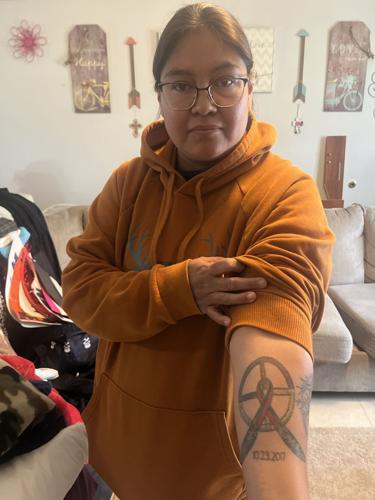
Corrine Kopp shows a tattoo memorializing her common law husband and the father of her children, Ryan Gipp, who was killed by a BIA police officer in 2017.

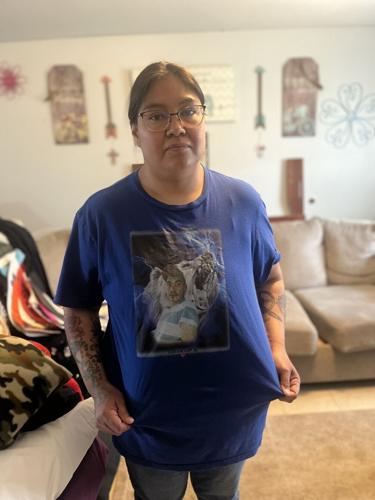
Corrine Kopp shows a shirt memorializing her common law husband and the father of her children, Ryan Gipp, who was killed by a BIA police officer in 2017.

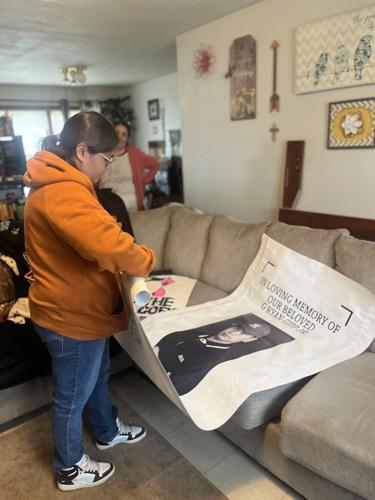
Corrine Kopp rolls up a sign memorializing her husband and the father of her children, Ryan Gipp, who was killed by a BIA police officer in 2017.

Ryan Gipp's family made signs, including this one, to protest the actions of a BIA police officer who fatally shot him on the Standing Rock Indian Reservation in 2017.

Ryan Gipp's family made signs, including this one, to protest the actions of a BIA police officer who fatally shot him on the Standing Rock Indian Reservation in 2017.

Ryan Gipp's family made signs, including this one, to protest the actions of a BIA police officer who fatally shot him on the Standing Rock Indian Reservation in 2017.

Ryan Gipp's family made signs, including this one, to protest the actions of a BIA police officer who fatally shot him on the Standing Rock Indian Reservation in 2017.

Ryan Gipp's family made signs, including this one, to protest the actions of a BIA police officer who fatally shot him on the Standing Rock Indian Reservation in 2017.

Ryan Gipp's family made signs, including this one, to protest the actions of a BIA police officer who fatally shot him on the Standing Rock Indian Reservation in 2017.