Nearly 30 years after leaving the deliberation room, Erin Reilly Lee can easily recall what it felt like to climb into the cooler that had once held Anne Marie Fahey’s body.
Lee and her fellow jurors had heard wealthy lawyer Thomas J. Capano testify during his closely watched murder trial that he had gently placed Fahey’s body in the cooler after his other lover fatally shot the 30-year-old scheduling secretary for Delaware’s then-governor in 1996. Once sequestered in a Delaware hotel, the jury wanted to know if that was possible.
Lee, who was just a few years younger and a few inches shorter than Fahey, felt all eyes on her and decided to see if she could fit into the makeshift coffin, a moment that she has said left her in tears.
“I think I even said then it was like a darkness that I've never felt or known, and that's just the best way for me to describe it,” she said. “But it was also very emotional.”
People are also reading…

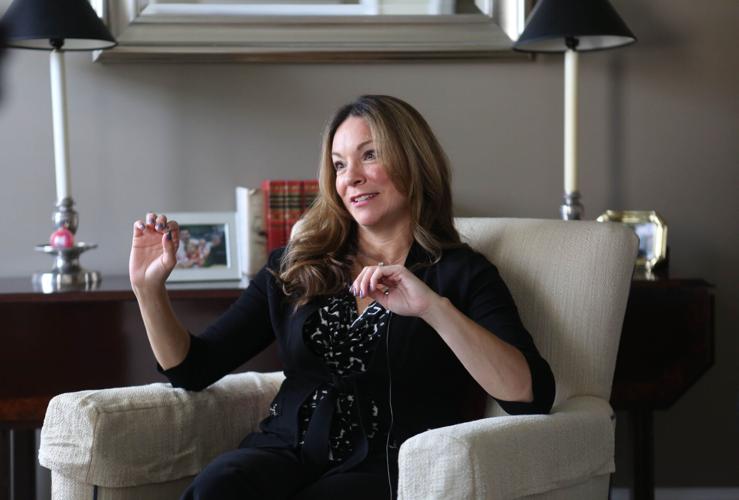
Erin Reilly Lee, who served as juror number 8 on the Tom Capano murder trial, recalls the experience in 2017.
Lee said she hasn’t been following the case of Lindsay Clancy, the Massachusetts mother accused of strangling her three young children to death, but she knows it must have been difficult for the jurors to bear witness to heart-wrenching evidence and face intense public scrutiny after failing to reach a unanimous verdict. Experts say Clancy’s trial has highlighted the toll that stepping up to perform this integral civic duty can take – and the critical need for stronger support systems for jurors in all kinds of cases.
“We’ve plucked individuals out of their everyday lives and we’ve asked them to grapple with evidence and testimony that could be triggering and may not seem triggering on its face,” said Jawwaad Johnson, director of the Center for Jury Studies at the National Center for State Courts. “It doesn’t have to be a capital murder trial that leads folks to need some sort of aftercare.”
Why jury duty can cause a cascade of stress
Most Americans say serving on a jury is part of what it means to be a good citizen, according to a 2017 survey from Pew Research Center. While the chances of being selected as a juror are relatively low, nearly 10% of people admitted they've lied to get out of jury duty, most commonly because of the financial burden, in a 2024 survey from a Bar exam prep website.
Anxiety can begin brewing from the moment someone is called for jury duty, Johnson said, a phenomenon he’s dubbed “summons anxiety.” Before voir dire even begins, potential jurors may stress about the possibility of spending days or weeks away from their responsibilities at work and at home while being paid very little.
“We found through some of the research that we've done that all jurors experience some level of anxiety,” Johnson said.
In the toughest cases, jurors have to pay close attention to evidence and testimony that can be gruesome, complex and conflicting, said Monica Miller, a professor and director of the judicial studies program at the University of Nevada, Reno. That can take a toll: A 2016 review of research on juries found as many as 50% of jurors had trauma-related symptoms, which for some persisted for months.
Multiple Clancy jurors have spoken out about how painful they found the evidence, particularly the 911 call made by Patrick Clancy after finding his wife, who had slashed her wrists and neck and jumped out of a second-story window, leaving her paralyzed, and later his children, who were strangled in the basement of their home.
Juror Kellie Farina described the anguished call as "the most horrific thing” in an interview with NBC10 Boston.
"It's something that I will never not hear if I think about it," she told the outlet. "When we we heard it again in the jury room, we were we were crying again. We were just like, 'My God!' The desperation, the despair in his voice was. ... It's something that will stick with me."
In addition to being “psychologically isolated” because they are unable to discuss the case throughout the trial, in rare cases jurors may also be physically isolated through sequestration, Miller said. For some, deliberations are the most stressful part of the process, Miller said, as holdout jurors may feel immense pressure to change their vote and bring the case to an end.

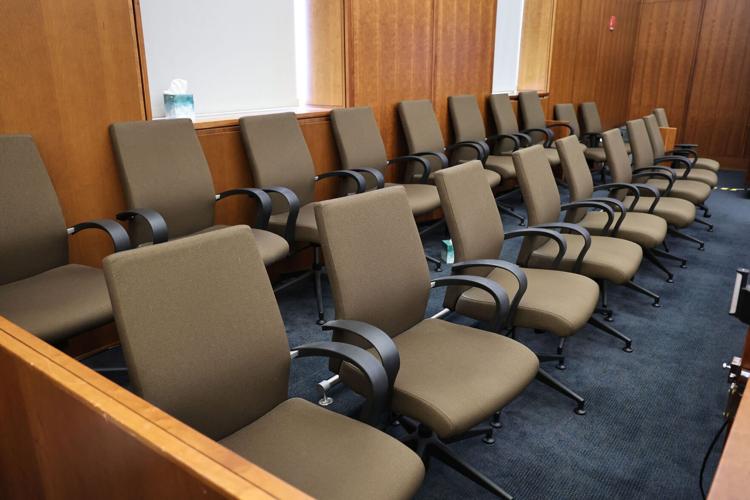
The Plymouth Superior Court jury box from the Lindsay Clancy murder trial is seen Aug. 25 in Plymouth, Mass.
What courts are doing to help
A juror’s troubles may not be over even after a verdict is reached. In high profile cases, jurors may worry about being identified and criticized for their decision, either by those directly connected to the case or the public, Miller said.
Clancy’s trial captured intense local and national attention, sparked deep divides and led to the arrest of one woman who was accused of photographing jurors. Sullivan indefinitely impounded the names of the jury amid intense speculation about the identify of the holdout juror in the case. But the judge's order has not prevented Clancy jurors from speaking out about their experience, leading to national scrutiny of the holdout juror.
Jurors may also agonize over whether they made the right decision or feel persistent guilt over the defendant’s impending punishment – or lack thereof – even if they believe they made the right call. Members of a jury may notice they’re struggling immediately after they leave the courtroom or days, weeks and even months later, Miller said.
“After the trial, a lot of jurors think ‘okay, whew it’s over. I can get on with my life,’” she said. “But sometimes they don’t move on as quickly as they think, they can have very mild symptoms of post-traumatic stress, have anxiety, be overwhelmed, have intrusive thoughts, hypervigilance or they might just feel numb to everything.”
Federal courts have led the way in providing mental health support for jurors. After weeks of painful testimony in the 2015 Boston Marathon bombing trial, for example, the judge extended jurors' service for 90 days to make them eligible to receive counseling through the court’s Employee Assistance Program.

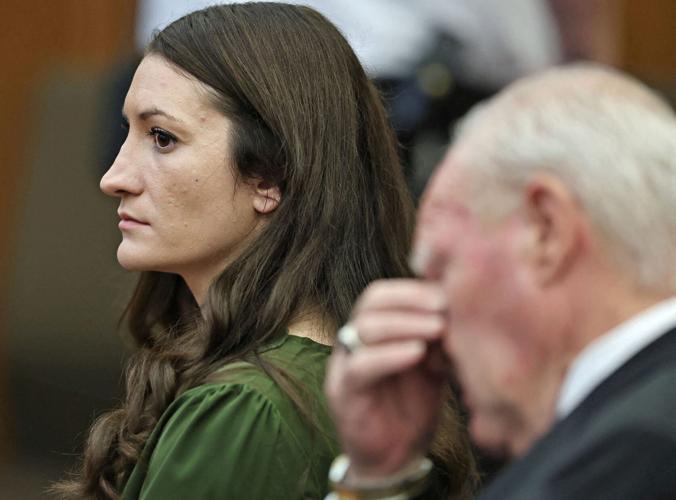
Lindsay Clancy watches jury members as Judge William Sullivan polls them on Aug. 31 at the Plymouth Superior Court in Plymouth, Mass.
Memories of a murder trial
Lee, the juror from Delaware, ultimately couldn’t fit inside the cooler. The pivotal moment in deliberations cast doubt on Capano’s testimony and helped the jury decide to convict him of first-degree murder on Jan.17, 1999. Capano died in 2011 while serving a life sentence.
Lee recalled looking differently at coolers at the beach or near the water for a short time after the trial and even getting recognized as a juror in the small community. She also remembers the deep sympathy she felt for Fahey’s family and the weight of the decision she had to make.
“I did take it very seriously,” she said. “And that’s why it just stays in your head.”
Lee said she hasn’t been called for jury duty since that trial, but she still believes it’s an important civic duty. If she had to, she’d get back in the jury box.

Academic studies show that as many as half of all jurors experience trial stress, and states are examining programs in Massachusetts and Pennsylvania as models for providing mental health support.