Ian Hassell quit his job at the Central Intelligence Agency in the fall of 2013 with an audacious goal: dismantling an underground economy of illicit massage parlors engaged in sex trafficking.

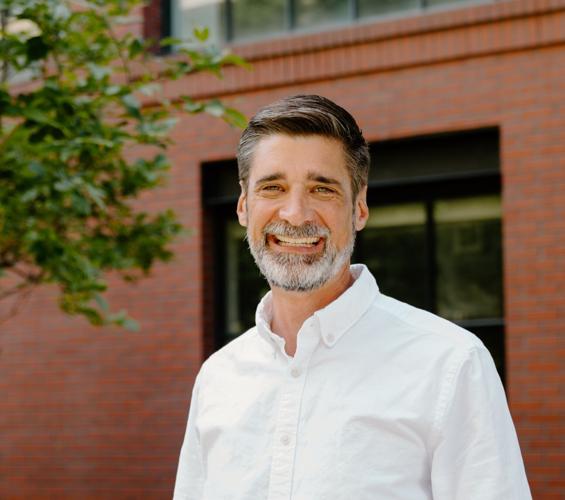
Ian Hassell
He and a fellow CIA friend traded covert overseas missions for stakeouts of illicit parlors in strip malls and late-night runs to literally look over the shoulders of the people who were working for the sex-trafficking operations.
Their aim, which mirrored their work in intelligence, was to gather data on this secret world and then convince authorities to hold the owners of the businesses accountable.
Hassell admits he came from the spy world of the CIA, where "enforcement of laws is, or even the following of laws, perhaps, is not really our main concern, but more like getting results. We just think differently about how you solve hard problems."
People are also reading…
More than a decade later, Hassell remains confident that his goal of shutting down each illicit spa in the U.S. will become reality — even as his research found that these parlors far outnumber McDonald's restaurants nationwide.
Hassell created one of the nation's most unique nonprofits to achieve his goal. He calls it The Network, a name that reflects a complex world in which bad actors overseas and domestically work in concert to exploit naïve women migrating from countries such as China and South Korea.
With most speaking limited English and facing scarce job prospects, these women are funneled into a world where they are often forced to live on-site and perform sex acts.
Eventually, Hassell and his companion, Sam Donnelly, who had worked at the anti-terrorism unit Delta Force, scraped information from explicit advertisements on the dark web to assemble a database of what they believed is nearly every illicit parlor in America — 16,800 in all.
They know that prosecutors can't bring charges against all of them. Sex trafficking cases are challenging to prosecute, so they've come up with a playbook to shut these businesses down through other means.
"Everybody knows trafficking thrives because it makes money," Hassell said in an interview. "So what if you could make it unprofitable? Would traffickers voluntarily stop?"
How it all began
Hassell's quest began when he was shopping for a church in Northern Virginia. Gary Haugen, founder of International Justice Mission, was speaking at one church about human trafficking around the world and his organization's steps to combat it. It was an awakening for Hassell, who had no idea what women were experiencing.
"About 20 minutes, I just noticed my body, like physiologically, was reacting to this talk. My heart was pounding out of my shirt. My palms are sweating," he recalls. "I'm incredibly angry.
"But I walked out of that church, and I remember saying to my ex (his wife at the time), 'Hey, this is going to sound kind of crazy, but I think that's what I'm going to do for the rest of my life.'"
He didn't tell anyone at the CIA the next day, still thinking it might be stupid to leave what he called "the best job in the world," one he held for about nearly a decade.
Although Hassell says there's little he can reveal about his time at the CIA, he stated that his duties included utilizing his engineering and networking background to help design and plan operations aimed at attacking or disabling enemy networks.
He began researching how to run a nonprofit, and a couple of years later, ran into an old childhood friend, Sam Donnelly.

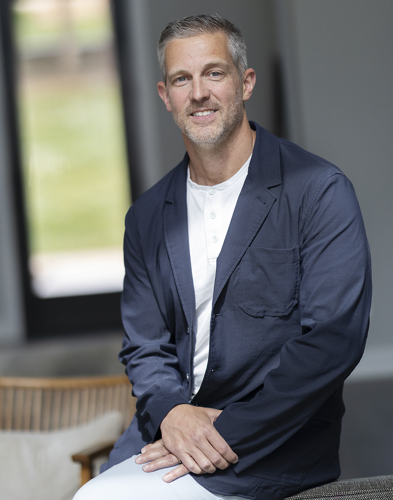
Sam Donnelly
As kids in Roanoke, Virginia, the two used to build forts and play Army. Ironically, Donnelly would later graduate from West Point.
When they met again at the CIA, Donnelly was a rising star in an elite Army counterterrorism unit known as Delta Force.
Hassell told him about his desire to end sex trafficking, and Donnelly was instantly on board.
The pair quit their jobs and started a nonprofit, not really knowing what they were doing.
From the start, the two thought the key was to find a way to make life difficult for parlor owners. They also had to raise funds to cover the costs of their work.
Initially, Hassell says they were able to scrape together about $100,000 a year. One of their early funders was Glenn Youngkin, now governor of Virginia but who at the time worked for the private-equity firm, The Carlyle Group.
They were introduced through a mutual friend.
At the time, there was limited knowledge about illicit massage parlors, so Hassell and Donnelly decided to approach it the way they were trained. They became spies.

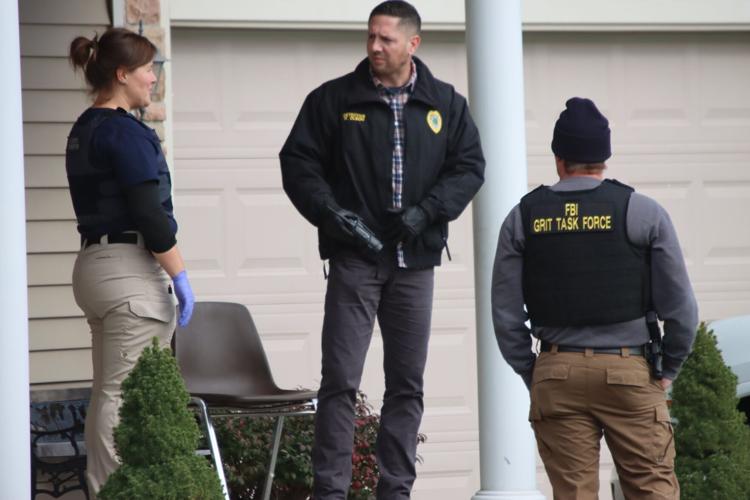
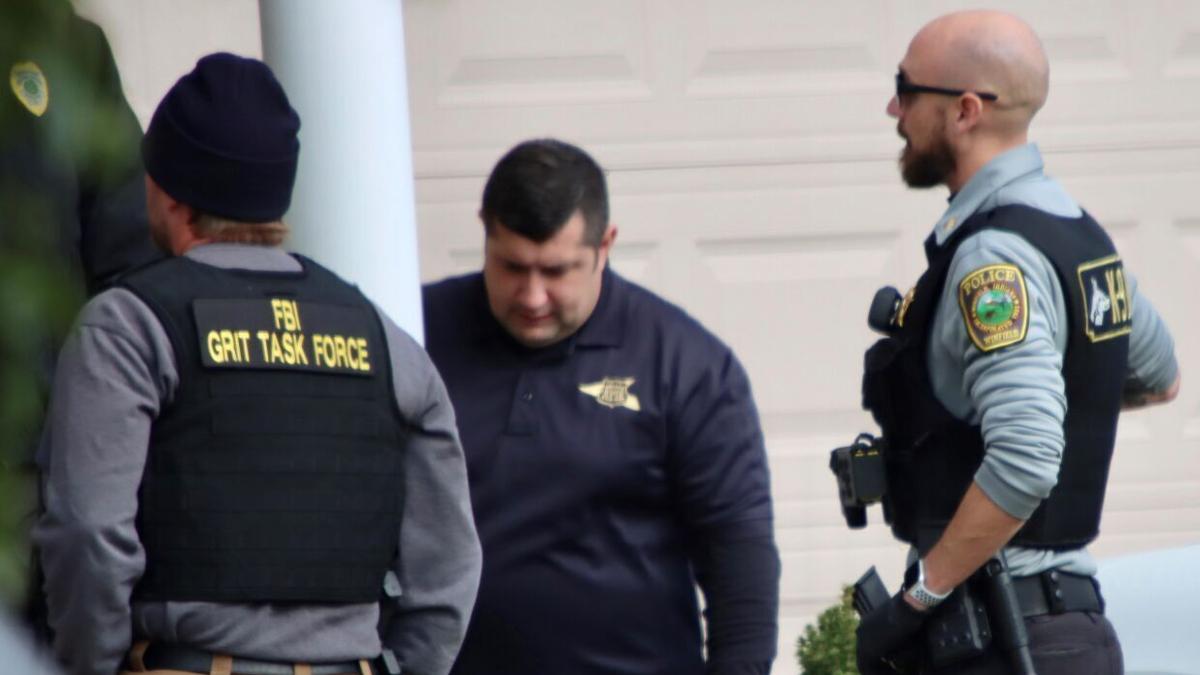
Federal, state and local law enforcement agents raid a home a Northwest Indiana home in November 2023. The owners of the house face charges accusing them of sex trafficking through illicit massage parlors in the region.
While shifting through online forums of men seeking prostitutes, they noticed a post about a man who supposedly owned multiple parlors. That detail — one person linked to several locations — suggested a network rather than isolated shops.
To test their theory, they headed to New Orleans. They rented a car, parked across the street from dubious massage parlors and watched. Soon, they discovered a pattern. Middle-aged white men would show up, go inside and come back out in about half an hour. This seemed like the pattern of a sex buyer.
"One evening, this older Asian guy pulls into the parking lot,” Hassell said. “He goes inside, but he leaves in under five minutes. And that was out of pattern. So we were like, well, that's interesting. Let's follow him."
The man went from spa to spa, an observation that suggested he was an insider. The team dubbed the man "Weasel" and tried to collect as much information as possible.
They noticed him going from bank to bank and would even peek over his shoulder at the ATM to see what he was writing on the deposit slip. Weasel went to Western Union to make money transfers and drive women from one location to another, even crossing state lines.
Hassell surmised Weasel was part of some interstate network.
They ultimately identified 13 locations in the network and managed to force six or seven of them out of business "using some creative means," Hassell said.
"We tried a lot of stuff back in those days, which is why I'm reluctant to kind of put out in public and connect me, my face with that," Hassell said, "because there might be some people there that remember me and (wouldn't be) very happy with what we were doing."
Sophisticated approach
Today, The Network operates sophisticated data collection systems. It harvests ads, scrapes review boards and tracks shell companies.
That intelligence forms the basis of "landlord engagement" — a strategy of alerting property owners that their tenants are engaged in commercial sex.
By pressuring landlords to terminate leases, the group claims that eviction rates average 55 percent nationwide, with some jurisdictions reaching as high as 100 percent.
Crucially, the tactic avoids the years-long investigations required for criminal prosecutions.
"Kansas had maybe 90 illicit massage businesses," Hassell recounted from a prosecutor there. "He told his boss it would take 12 attorneys 10 years to shut them all down. We can help get it done in six months."

Signs hang in the window of an Northwest Indiana massage parlor raided and closed down by police in November 2023. Owners of the former business are accused of running an illicit sex trafficking business there.
Not every state embraces the approach. In Virginia, Attorney General Jason Miyares initially welcomed it enthusiastically, but Hassell said in a May interview that Miyares hasn't followed through on the strategy.
A spokesperson for Miyares, however, shared a letter that Miyares sent on August 5th to the landlord of a massage parlor in Falls Church, Virginia. The local prosecutor dropped a prostitution charge related to an investigation of Rose Spa, also known as L Health Inc. However, Miyares asked the landlord to evict the business. Now, Miyares was asking the landlord to evict the parlor leasing the property.
"As Attorney General, I have made anti-human trafficking initiatives a priority of my administration," the letter stated. "I therefore ask for your assistance in investigating whether the tenant or the tenant of your property are operating an illicit massage business, and if so, that you take immediate action to end any prostitution activity occurring on your property."
The letter worked. The landlord told The Washington Examiner that he evicted the business.
Miyares's office said it couldn't comment on any other ongoing investigations.
Likewise, Hassell was thrilled by Virginia Gov. Youngkin's reaction in personal conversations.
"He's been very, very supportive of combating this issue in the Commonwealth," Hassell said.
But Hassell, until recently, said Youngkin's staff didn't seem to be following through. That changed in September, when they reached out to The Network to discuss plans.
In larger states like California and Texas, the balance of power between local prosecutors and state attorneys general has complicated efforts, Hassell said.
And some in law enforcement remain skeptical.
"Old-school policing is about perp walks and prosecution stats," one officer told Hassell in a strategy meeting. "That doesn't match the scale of this problem."
Today, The Network has significantly more funding, with $2.4 million in 2023 from donations and grants. Donnelly has left the staff but remains on the board of directors.
The staff is small, but it has attracted highly paid specialists, many of whom have backgrounds in intelligence or law enforcement. The group's spokesperson worked until recently as a communications director for the CIA.
The Network has built a reputation for being the leading authority on illicit massage parlors.
Despite challenges, Hassell says The Network has tested its model in nearly 30 jurisdictions, with durable results: 89 percent of shuttered parlors never reopen under the same ownership.
The group is now researching other strategies for eradicating illicit massage parlors.
"We're not a replacement for prosecutions or rescues," Hassell insisted. "But we are a complement. Our job is to take away the profits. If we can starve the industry, we can end it."
The group is exploring additional strategies to achieve this goal by 2030.