OMAHA, Neb. — Erin Gibbs was sent to Boys Town at age 12, hoping to find a stable home within the iconic Omaha-area enclave for troubled youths.

Erin Gibbs poses for a portrait on her terrace in Omaha on Thursday, Aug. 7, 2025. Gibbs, 50, filed a lawsuit in February alleging sexual abuse when she was a resident at Boys Town from 1988 to 1991.
What she found, she alleged in court, was years of sexual abuse by one of her “family teachers,” the married couple assigned to oversee her housing unit in the residential program designed to emulate a family home.
In court filings, Gibbs said that from 1989 to 1991, one of her new family teachers groomed, groped and ultimately raped her.
Decades later, when Gibbs, now 50, sued the man and the institution she says failed to protect her, an Omaha judge dismissed her case and barred her from bringing it to court again.
The reason? A strict Nebraska statute of limitations, which ultimately protected one of the state's most renowned charities from facing the claims of an alleged survivor ready to speak.
People are also reading…
The World-Herald spoke with Gibbs, two of her former housemates and one other former classmate, all of whom said they were aware of the abuse decades ago. They saw changes in her, they said.
Gibbs said she's struggled for decades, but eventually, and with the help of therapy, she realized it wasn't her fault.
In September 2024, Gibbs told her story to the Boys Town Police Department, the main reporting agency for the Village of Boys Town, Nebraska, a self-governing, self-policing village independent from the city of Omaha.
Five months later, in February, Gibbs hired a lawyer and sued her former family teacher and Boys Town, alleging Boys Town's negligence allowed her to be abused for years and that the youth services charity took steps to conceal the abuse.
In Nebraska, though, civil lawsuits alleging a third party is liable for child sexual abuse face a strict time limit. Gibbs had surpassed the 12 years after her 21st birthday that the statute permits.
Boys Town's attorney never filed a defense on the merits of the case, focusing their arguments on the statute of limitations. Boys Town spokesperson Kara Neuverth told The World-Herald that, after nearly 40 years, Boys Town has no evidence to substantiate Gibbs’ claims.
A World-Herald review of legal filings shows that since 2000, Gibbs' is the third case alleging sexual abuse at Boys Town that was dismissed because of a statute of limitations. Other cases have been dismissed on other grounds or lost at trial.
Gibbs didn't get the chance to be heard at trial. Because the judge dismissed her case with prejudice, she is barred from pursuing the case in the future.
Gibbs said that's why she's written letters to the Nebraska state Legislature's Judiciary Committee advocating for legislative change — so that in the future, survivors can have their day in court.
“Who can put a time limit on when you’re ready to talk about something like that and when you realize it’s damaged you?” she said.
Legislators move to eliminate the statute of limitations
The tendency for victims to come forward later in life was one reason Nebraska Sen. Rich Pahls, who represented District 31, introduced in 2022 a bill to remove the statute of limitations for holding private third parties liable for child abuse.
In a judiciary committee hearing on Pahls' bill, Shaun Dougherty, president of the Survivors Network of those Abused by Priests, said statistics show the average age at which survivors of child sexual abuse will come forward is 52 years old.
"I believe that our laws should reflect the data," he said in the hearing, according to a transcript.
But Pahls fell ill, missing the last few weeks of the 2022 session, and any further action on the bill was indefinitely postponed for the session. Pahls died a week after the session ended.

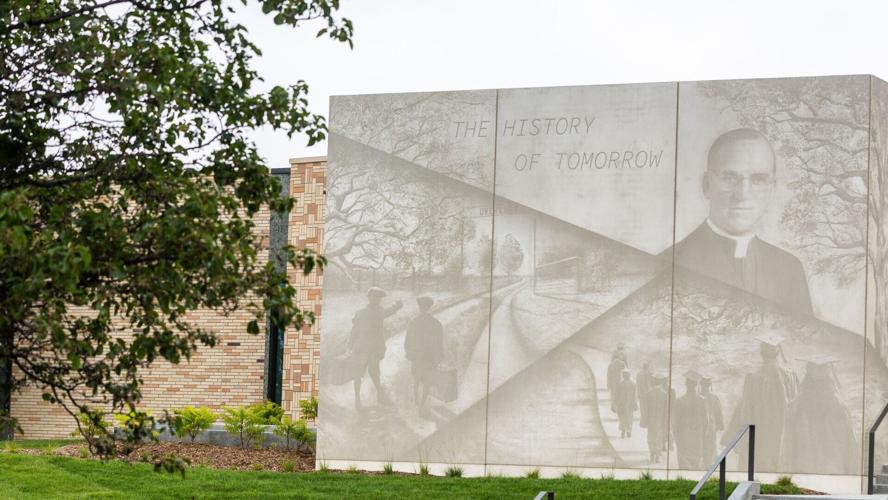
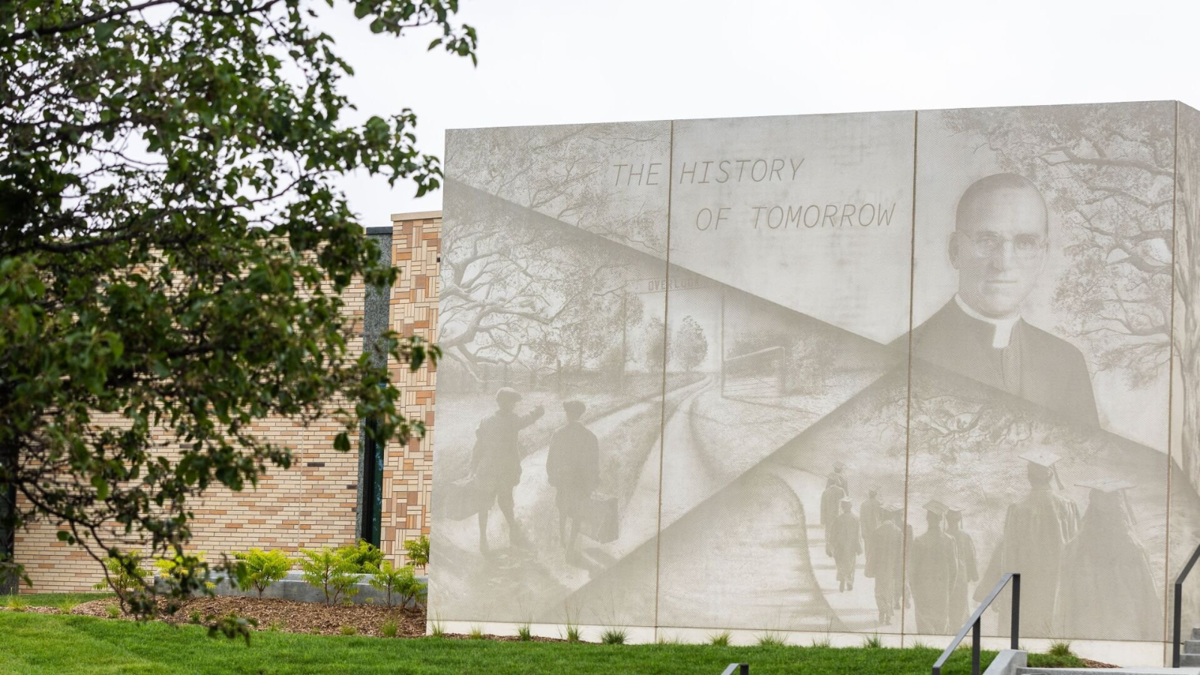
The Boys Town Education Center in west Omaha.
Passionate about survivors' rights, Sen. George Dungan, of Lincoln's District 26, revived Pahls' effort when he introduced in 2023, and again in 2025, bills that would have eliminated the statute of limitations for future civil claims of child sexual assault against all defendants, with the exception of public employees.
Dungan’s bill would not change anything for people like Gibbs, for whom the statute of limitations has already expired, but it would remove the time limit in future cases.
The most recent version of the bill did not make it out of the Judiciary Committee during the long 2025 session, but Dungan said he hopes the committee will continue to discuss it in the 2026 session. If it fails, Dungan said he will continue bringing the issue to the Legislature until the statute of limitations is addressed.
"When you look a survivor in the eye and they say that they think, moving forward, other people should have the opportunity to have their day in court, it's really humbling," he said. "It's something that I'm really passionate about. So I'm going to keep trying to get this across the finish line, and I just hope that my colleagues on the Judiciary Committee understand the importance of it."
Dungan, an attorney and former deputy public defender, said opponents worry that eliminating the statute of limitations would lead to a rash of frivolous lawsuits. But Dungan said the burden of proof is still on the plaintiff to show that an entity should be held liable for an alleged wrongdoing, and the court system is designed to discern if a lawsuit is frivolous.
“For a very long time, survivors have not heard or had their voices heard in society,” Dungan said. “And a lot of times when you have organizations or entities that have a lot of power and have a lot of money, it makes it really easy to silence people who are trying to have their stories being told.”
Former Boys Town resident says family teacher repeatedly raped her
Gibbs said she enjoyed her early days at Boys Town when she arrived in 1988. She excelled in school, volunteered and participated in extracurricular activities and even posed for photographs used in Boys Town advertisements.

The sign located on Dodge Street for Boys Town on Thursday, Aug. 7, 2025.
Sarah Mohn, who was friends with Gibbs when they were both Boys Town residents, told The World-Herald Gibbs was very "straight-laced" at first.
Suddenly, Mohn said, Gibbs started getting into trouble, running away and attempting suicide. Mohn said that's why, when Gibbs told her in the early 2000s that her male family teacher used to take her into the garage of their house at Boys Town to have sex with her, Mohn believed her "100%."
The lawsuit Gibbs filed in the District Court of Douglas County describes a year-long process of “grooming,” during which the Boys Town employee normalized inappropriate behaviors, leading to touching Gibbs sexually.
In the 2024 Boys Town police report, Gibbs said her former family teacher sexually assaulted her for the first time when he groped her in a Boys Town van while they were alone and stopped at a light. She told The World-Herald this happened in 1989.
In her complaint, Gibbs said she was terrified and "in extreme pain" when, just before her 14th birthday, he forced her to have sex with him. She said the husband and father of two then complained about the mess and ordered her to wash the bloody sheets.
Gibbs said in her complaint that as the alleged rapes continued, he threatened to report Gibbs at school for having sex to keep her quiet and promised to leave his wife and marry her when she was older. She told The World-Herald this led to her developing an attachment to him.
No record could be found in the state court database of her alleged abuser having a lawyer or filing a response to Gibbs' allegations. On Sept. 7, the case against him was also dismissed because the court found he was never served.

Looking south east towards Boys Town on Thursday, Aug. 7, 2025.
The World-Herald’s multiple attempts to reach Gibbs' former family teacher via phone, email and family members were unsuccessful.
Because the man was never charged with a crime or found liable for sexual abuse, The World-Herald did not name him in this story.
No statute of limitations precludes criminal charges related to child sexual abuse. The only statutes of limitations related to child abuse apply to civil lawsuits.
Gibbs said when she reported last year to the Boys Town Police Department that a Boys Town employee sexually abused her while she was a minor resident, the police chief told her, without explanation, they wouldn’t pursue the case.
Boys Town police provided to The World-Herald a redacted incident report detailing Gibbs’ allegations but did not respond when asked why the case was closed and denied a request to obtain reports describing the department's investigative efforts.
In response to a public records request, the Boys Town Police Department said no other records regarding alleged sexual abuse of Gibbs by the family teacher exist from 2002 to the present day. The department said records prior to 2002 are not kept electronically and fulfilling the request for any incident reports alleging sexual abuse of Gibbs prior to 2002 would cost $9,749.06 and take nine months.
A clerk at the Douglas County Attorney's Office said their office was never referred a case in which Gibbs' former family teacher was a suspect.
How does Nebraska law compare to other states?
It's unclear why Nebraska settled on the age of 33 to limit civil suits against third parties to child sexual abuse.
Dungan, the state senator from Lincoln, said it seemed lawmakers “literally just picked a number.”
"These are issues that affect people right now, today, who are trying to have their day in court and have their stories be told, and it's frustrating that they can't do that by virtue of the Legislature creating this arbitrary line in the sand," Dungan said.
While the federal government has no statute of limitations on civil action arising from child sexual abuse, states and U.S. territories have limits ranging from one year after the abuse to no limit at all.
According to data from CHILD USA, a think-tank focused on ending child abuse and reforming statute of limitations laws, Nebraska is one of nine states that enforce a stricter statute of limitations on lawsuits against third parties.
While most of those states make exceptions for certain situations or "discovery," meaning the clock starts when the plaintiff realizes the abuse and the damage it caused, Nebraska does not.
Most states don’t differentiate at all between the perpetrator and negligent third parties when it comes to civil case law.
“It really is just problematic to me that we do create that delineation, because I think it creates this arbitrary protection for those entities when, as long as the case can be proven, they should be held as responsible as the individual,” Dungan said.
Dungan said the ability to sue negligent third parties can allow survivors to receive compensation for damages that the direct abuser may not be able to provide, and it can encourage problematic organizational practices to change.
“Suing one individual doesn't always change the systemic problem,” he said. “And if you have a systemic issue with an institution turning a blind eye and not stopping this kind of stuff from happening when they should have known or had known that it's occurring, I think it's problematic.”
Spokespeople for Boys Town told the World-Herald they have confidence in the precautions taken to protect children from harm.
"I understand the seriousness of any allegation involving youth safety," Joni Wheeler, a Boys Town parent and chair-elect of the Boys Town Board of Trustees, said. "I can say with confidence that Boys Town is deeply committed to creating a safe and supportive environment for the youth it serves."
Women say they saw the signs as kids
Deborah Frieze, 52, told The World-Herald she witnessed inappropriate touching between Gibbs and their former family teacher when she lived with them at Boys Town between 1989 and 1991.

Looking south east towards Boys Town on Thursday, Aug. 7, 2025.
"I lived in the house with her, and it was our male family teacher," Frieze said. "And she was terrified."
Frieze said he would slap Gibbs’ butt and kiss her in front of others at home as if it were normal. Frieze also said that when she woke up early, she sometimes found Gibbs and the man, then in his 30s, sitting close together in his office before he’d jump up and shut the door when she walked in.
Frieze said that while they were Boys Town residents, Gibbs told Frieze that their family teacher had taken her virginity.
About a month before her graduation, Frieze said she confronted the man, and he took the two girls into the basement and demanded to know what proof Frieze had while he stood behind Gibbs, who was "ghost white."
"Erin wouldn't say anything because I think she was terrified of him," Frieze said.
Frieze said she was punished for making the accusation.
“Those family teachers, they have a lot of power to keep your mouth shut,” Frieze said.
A suicide attempt
During the summer of 1991, Gibbs, while still a resident at Boys Town, tried to kill herself by injecting an entire bottle of insulin.
She said she left a suicide note in her locker addressed to the family teacher, but the note "mysteriously disappeared."
Gibbs said after she received hospital treatment for the attempt, she spent the summer with her grandmother in Oregon.
In Gibbs' complaint and police reports, she said Boys Town did not allow her to return after her suicide attempt. She told The World-Herald she moved back in with her mother to attend her senior year of high school in Yutan.
After Frieze graduated in the early 1990s, she said Gibbs showed up at her apartment and told her the reason she tried to kill herself was because their family teacher was raping her.
Frieze said two or three years later, detectives investigating the abuse contacted her with questions about the relationship between Gibbs and her family teacher, but Frieze said she doesn't remember what organization the investigators represented. She said she assumed they were Omaha police detectives.

Erin Gibbs poses for a portrait on her terrace in Omaha on Thursday, Aug. 7, 2025. Gibbs, 50, filed a lawsuit in February alleging sexual abuse when she was a resident at Boys Town from 1988 to 1991.
The Omaha Police Department has no record of any such investigation. She said the detectives told her they would not pursue the case, citing a seven-year criminal statute of limitations. Frieze said she didn't ask many questions at the time but now wonders about the statute of limitations they described and how it would have applied in 1992 or 1993 to Gibbs' case, in which the alleged abuse occurred less than seven years prior.
Frieze said a priest who served at Boys Town also contacted her during this time.
In 1995, Gibbs said she disclosed the abuse to that same priest, who she said instructed her to "go into the church and repent."
Gibbs said that for the next 20 years, the priest continued to contact her, inquiring about her finances and sending cash and checks, always with the instruction to repent.
She said she found this confusing — he seemed to care, and the money assisted her, particularly given her challenges with trauma, diabetes, blindness and raising children.
While Gibbs said she picked up the checks at the Boys Town Police Department and signed a form to retrieve them, Boys Town Police Chief Adam Gill said in response to a public records request that he was unable to locate any record of such payments.
Gibbs now interprets the priest's conduct as meant to conceal the abuse and delay her reporting until the civil statute of limitations expired. Her allegations against Boys Town included "fraudulent concealment," which she used to challenge the statute of limitations defense.
In May, the judge in Gibbs' case indicated she intended to dismiss the case due to the statute of limitations issues raised by Boys Town attorneys. Gibbs filed a motion to dismiss the case without prejudice so she might be able to refile in the future if the statute of limitations laws change. While the most recent bill in the state Legislature would not apply retroactively to Gibbs' case, she said she thought it possible that, someday, a law could pass that would apply to her case retroactively.
Describing the lawsuit as "frivolous" because Gibbs was aware of the statute of limitations, Boys Town asked the court to dismiss with prejudice and hold Gibbs liable for their legal fees and court costs. The judge granted both requests, ordering Gibbs to pay Boys Town's nearly $10,000 in legal fees.
Gibbs said she was shocked and disappointed at the judge's ruling.
“I feel like my whole entire life, since I was 18 and said something for the very first time, I've been given up on.”
Photos: Boys Town through the years

This run-down Victorian Mansion at 25th and Dodge Streets in Omaha was the first home of Boys Town when it was founded in 1917. The mansion no longer exists.

If Father Flanagan hadn't been on a bus with Catherine Shields in 1917, there may have been no Boys Town. Shields overheard Flanagan telling mortician Leo Hoffmann that he had several homeless boys he wanted to help but nowhere to put them. Shields, pictured here, holds an orphan from Boys Town on the porch of the second location of Boys Town, the German American Home. She later became Flanagan's executive assistant for nearly 30 years.

Records don't include the names of these first five arrivals to Father Flanagan's Boys Home in 1917. Records do show that the number of boys increased rapidly after Flanagan opened the doors to the Victorian home at 25th Dodge streets, pictured in this photo.

Santa is welcomed to Boys Town by Father Edward Flanagan on December 16, 1926.

October 16, 1927, was the City Sandlot Championship game between the Omaha Prints and the Brown Park Merchants. The game drew over 4,500 spectators because of two famous players, Babe Ruth and Lou Gehrig. Known as "Bustin Babe" and "Larrupin Lou", the two New York Yankees were on a barnstorming tour across the United States. The Babe played for the Parks and Lou for the Prints, but unfortunately the game was stopped because of darkness after a 10 inning 1-1 tie. Gehrig and Ruth spent an exhaustive two days in Omaha making publicity stops. Father Flanagan and the Boys Town Band, led by Captain Joseph Benesch, greeted the two heroes when they visited Boys Town.

An unnamed orphan, representing the children at Boys Town, is shown welcoming noted guests to the annual Christmas party on Dec. 26, 1935. From left: Senator Edward R. Burke, Aileen Cochran, the boy, Governor R.L. Cochran, Bishop James Hugh Ryan and Father E.J. Flanagan.

From left: Mayor Fiorello La Guardia, Dan Kampan and Father Flanagan in 1936.

Mgr. Edward J. Flanagan surrounded by some of his boys on Nov. 22, 1937, after Flanagan was elevated to the rank of domestic prelate.

Maureen O'Sullivan, Spencer Tracy, producer John Considine and Mickey Rooney pose for pictures on the train to Omaha in 1938.

This statue was used for the fade-in scene of the movie "Boys Town". Left to right: producer John Considine, Monsignor Flanagan and director Norman Taurog, on May 18, 1938.

Colleen Margaret Corcoran became the first girl citizen of Boys Town on January 23, 1940. She was born to the wife of the Boys Town's athletic director, Kenneth Corcoran.

Boys file past the casket at Father Flanagan's funeral, held May 21, 1948 at Boys Town. Flanagan died on May 15 in Berlin, Germany.

The 1,260 seat Boys Town Music Hall was inaugurated in 1949 and remains in use today.

This story ran March 7, 1949 in the Indianapolis News. The photo caption reads: "Judge Joseph O. Hoffman shakes hands with 14-year-old Charles Manson and wishes him good luck on his trip to Boys Town. For the boy it's an answer to a dream."

1951 PHOTO: Lela Kragh Lillethorup, a fifth-grade teacher at Boys Town, displayed the Amazing Stinko plant there in the early 1950s. She was with Mike Palu, left, and John Shepherd.

Arthur Mason with the Boys Town ball of stamps in 1953. He and stamp center curator D.O. Barrett were the ones who built the stamp ball in 1952-53.

An NCAA cross country champion, Charles Deacon Jones set the American record in the steeplechase in 1957 and competed in the Olympics in the 3,000-meter steeplechase in 1956 and 1960. However, his first rewriting of the record books came while representing Boys Town where he set a national high school record in an AAU meet in St. Louis, Mo. Jones was the Nebraska high school Class A champion in the mile run and anchored Boys Town's champion mile relay team. He played outfield on Boys Town's baseball team, halfback on the football team and point guard on the basketball team. He earned all-state honors in football and basketball as a senior and helped Boys Town win the Class A state basketball championship his senior year. He went on to compete in track and cross country at the University of Iowa.

Luci Baines Johnson, daughter of President Johnson, visits Boys Town while in Omaha for a barbecue sponsored by the Young Citizens for Johnson and Humphrey. Jack Kelly, 17, Mayor of Boys Town (right) shows her the famous homeless statue with Gene Gordon on Oct. 24, 1964.

Seeking new efforts for troubled youth are, from left, Msgr. Nicholas H. Wegner, Archbishop Daniel Sheehan and Leo Daly, Jr., on May 3, 1972.

Boys Town as seen in 1983.

Banner proclaiming "There is no such thing as a bad girl" decorates Boys Town's new five-home residence building for girls on April 7, 1989. Residents Lakisha Gamble, 12, left foreground, Stephanie Pruit, 12, and Kim Simpson, 18, are pictured with family-teacher Pernell Gatson and his wife, Kim.

Undated photo of boy scouts with troupe wagon No. 1 of the Father Flanagan's Boys' Shows.

If Father Flanagan hadn't been on a bus with Catherine Shields in 1917, there may have been no Boys Town.

Catherine Shields overheard Flanagan telling mortician Leo Hoffmann that he had several homeless boys he wanted to help but nowhere to put them. She told Flanagan about a house at 25th and Dodge Streets, and Boys Town had its first location, pictured here. She later became Flanagan's executive assistant for nearly 30 years.

Shields told Flanagan about a house at 25th and Dodge Streets, and Boys Town had its first location.

Shields later became Flanagan's executive assistant for nearly 30 years.

Father Edward Flanagan on the steps of his house.

George Romney campaigns at Boys Town on February 10, 1968.

Photo of Joe Marsh as a 9-year-old boy with Robert F. Kennedy at Boys Town.

Monsignor Wegnar (left) and George Romney smile during Romney's campaign visit to Boys Town on February 10, 1968.

The boys and Father Flanagan taking part in a parade through Omaha streets in this undated photo.

Spencer Tracy and Mickey Rooney in a still from "Boys' Town.