With one of the highest rates of student homelessness in the nation, Oregon school districts struggle to address unhoused students' needs and ensure they graduate on time.
That struggle is financial: High housing costs and antiquated funding models that leave Oregon school districts with less funding to support unhoused students than in eastern states, make it challenging to see meaningful gains each year.
That outdated funding comes from the $126 million McKinney-Vento Education for Homeless Children and Youth funding, which President Trump wanted to cut this school year. He was overruled thanks to bipartisan support in Congress, but the money is only guaranteed through the next school year.
In Trump's 2027-28 budget, he once again proposes steep education cuts, including eliminating McKinney-Vento funding. Oregon already struggles to help homeless students graduate. This potential cut would be devastating, school officials throughout the state say.
People are also reading…
Oregon falls in the lower half of states for the percentage of unhoused students who graduate, with just 61% of homeless seniors graduating, according to 2022-23 federal data, the most recent report available.
Even if the McKinney-Vento fund continues to receive bipartisan support, Oregon will continue to struggle without inventive solutions. The schools across the country that are breaking graduation rate records for their unhoused students don’t just rely on government funds — they pad those evaporating monies with large donations from their communities.
An alternative K-12 school model in San Diego and a robust nonprofit with a large education component in Denver are able to offer complex and unique services and spaces that take the students’ traumatic experiences into consideration.
This is because private funding comes with fewer strings attached. Instead of only being able to use funds for groceries for the student, for example, they can also use the funds to buy comfortable furniture that students can nap in during the day or expand housing, medical or mental health services.
Investing in spaces
The San Diego School and nonprofit, Monarch School Project, funds 90% of its budget with private donations, and the Denver nonprofit, Urban Peak, relies on private donors for 65% of its budget.
If a student shows up late to class at Monarch School in San Diego, they are not met with a tardy slip, a lecture, detention or embarrassment. Instead, they are met with a “we’re happy you’re here,” and asked what they need to help be engaged and focused in class. Dry clothes? Food? A morning nap?
The school has showers, napping areas and laundry machines in addition to behavioral intervention, mental health services and college and career training.
“We meet students where they are at,” said Erika Malone, Monarch School senior director of Learning and Engagement. “We use a strength-based and trauma-informed approach so students feel safer and will be more transparent about their needs and more proactive in communicating those needs in the first place.
"It helps break the barrier for both students and families’ by empowering them to advocate for what they need.”
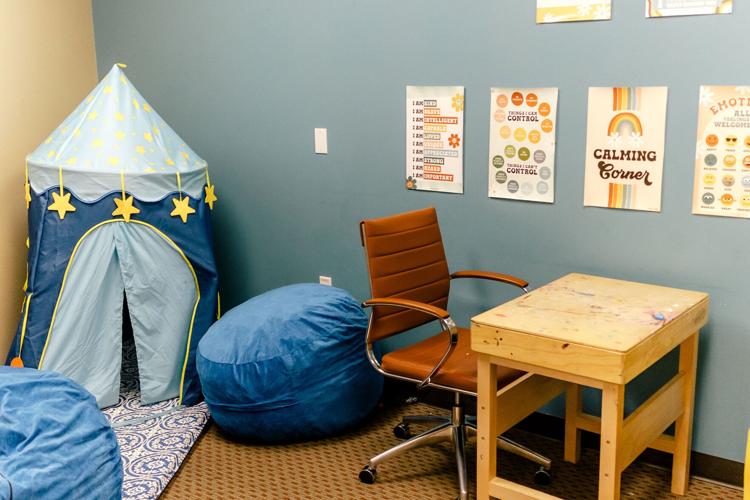
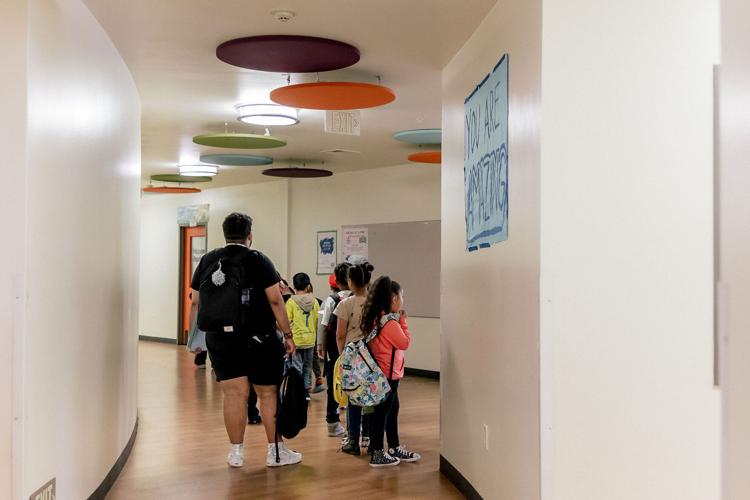
A trauma-informed space is a physical space designed to be soothing and create feelings of safety and predictability. This can include things like private nooks to decompress, natural light and plants. But it can also include more structured planning, such as clear directional signs and exits to reduce moments of anxiety and feeling trapped.
Malone said Monarch staff engage in restorative practices, which means the school offers a high level of support but also expects a high level of accountability with families. The goal is to have families participate in the growing and healing process, participating in job assistance programs, mental health classes, paid parent volunteer opportunities and monthly family dinners.

Students participate in an after school program at Monarch School Project in San Diego.
The school’s robust funding allows for three staff members who just focus on attendance in addition to a Family Engagement team solely focused on working with the immediate families of participating students.
Most schools nationwide have one person or less keeping track of attendance for hundreds of students and perhaps one McKinney-Vento staff member trying to juggle extreme needs of students across multiple schools with little resources.
Monarch also has three full-time therapists and between seven to 12 clinical therapy interns through local university partnerships. Often, schools struggle to have a single therapist on site.
It takes about $5.5 million to run the Monarch School Project and serve its 300 students. Less than 1% of that funding comes from government resources, about 90% comes from private donors. The rest comes from various grants for which the school competes.
“I have a lot of empathy for schools that don’t have the level of resources that we do,” Malone said. “But one thing schools could focus on is strengthening community partners. In addition to our robust private funding, we would not be Monarch without the number of community partners we have who donate services ranging from providing tennis and pickleball lessons, STEM workshops, to Thanksgiving dinner to academic tutors. We invest significant time and energy into building those partners.”
A place that heals
The goal is to make Monarch a place students and families want to be despite significant barriers. It is not just a school, but a safe place that heals.
Each Monday morning comes with warm coffee and donuts for parents. Each week offers parents joyful activities, like a karaoke day for the caregivers. Each classroom has a trauma-informed space for students who are overwhelmed and need to decompress. The formula involves empowerment, strength-based healing, trauma-informed staff, and joy.

A clinical therapy room at Monarch School Project in San Diego offers a trauma-informed safe space for students to receive support.
Offerings are determined based on feedback from families. Events that ask parents and students what they need and want drive the school’s programming and resource offerings.
Malone said that’s one thing other schools could bring to life at their sites on a variety of monthly or seasonal scales.
“Ask what caregivers and youth need. A stronger sense of community? Perhaps weekly family dinners can be hosted,” Malone said.
“Emergency funding? Instead of roller-rink parties, perhaps the parent-teacher association could fundraise to create an emergency fund families could apply for to help fill in one-time rent or utility gaps,” she suggested.
“Our emergency fund program bridges an important gap,” Malone said. “Imagine a family is doing pretty well in a stable apartment but then a crisis comes up that month. They can apply for emergency funds that month up to a designated amount. You don’t have to raise a ton of money for that assistance. You can set limits for emergency funding and still make a significant difference.”
For Monarch, the emergency fund offer doesn’t stop once students graduate.
Alumni students can access support from Monarch for 10 years post-graduation. That contributes to the school’s long-term success rate. Of the students who have graduated, 98% are stably housed.

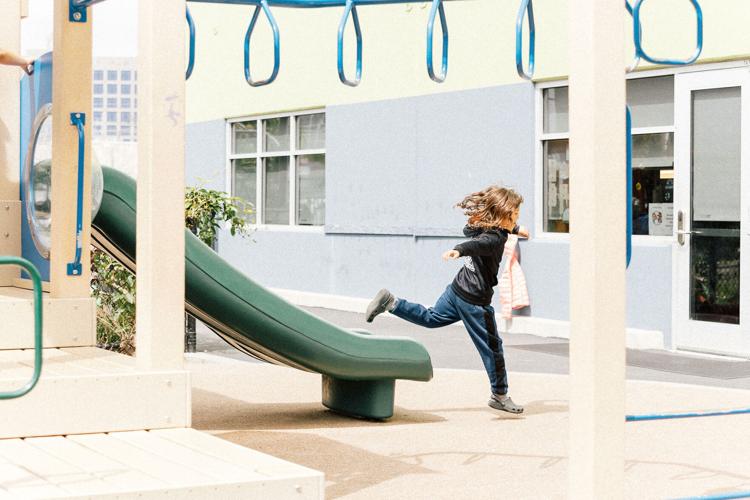
A student plays on the campus at Monarch School Project in San Diego.
“When students graduate, they face a multitude of decisions, such as college, career pathways, housing resources, and financial planning, combined with everyday hardships,” Malone said. “They have a team of people at Monarch ready to support them with navigating this new level of decision making and empowerment.
“Monarch youth commonly have to decide — do they support themselves or do they support their families? Do they go to work or go to college? We help them decide things like staying enrolled in at least one college class while working two jobs, so they continue that college goal.”
Private solutions to public problems
Further east in Colorado, another nonprofit has similarly seen success with robust private funding that has paid for school classes, extra curricular activities and spaces designed to provide soothing and healing moments. While Monarch is a school-first approach, Urban Peak in Denver offers shelter and housing first and then fills in the other resource gaps with partners.
About 65% of Urban Peak’s budget comes from private donors, said Christina Carlson, Urban Peak director. It does access federal funds through the Runaway and Homeless Youth Act and money from the Department of Health and Human Services. It also receives housing vouchers from the state and local city funds from a homeless services tax.
“Our diversification of funds has been important to our longevity and reputation,” Carlson said. “We are all working in a system that doesn’t work for youth because the shelter and housing system is designed for chronically homeless adults.
"Innovating is worth it. Diversifying funds is worth it. If we have impact on youth now, it will have an impact on our community in the long run.”
Urban Peak offers transitional shelter just for students set up like college suites, with shared dining and living room spaces. There are two floors that are divided into affinity groups such as pregnant and mothering youth.
The nonprofit also owns two apartment buildings, allowing about 120 youth to be placed in their own housing. The housing services are not time-limited and allow youth to set their own goals and priorities. About 78% of their students are engaged in ongoing education.
“We try to work with school districts closely but know that their homeless student liaisons are very overwhelmed,” Carlson said. “So we work with other organizations as well to bring in GED classes or tutoring. We have tech labs and classrooms on-site, so students can do online schools. And if students are still engaged with local school districts, we ensure the district sets up transportation for our youth.”
Urban Peak’s main building — where the affinity living suites, classrooms and other resources are located — recently underwent a trauma-informed upgrade. There are lots of windows, light and high ceilings. There are three outdoor spaces including a courtyard and terraces.
There is a specific space for minors, and the mattresses are real mattresses, not thin sleeping pads often associated with shelters. Furniture is not bolted down, so residents can move things around to their liking, Carlson said.
And the nonprofit invested in security after constantly hearing from staff and clients that safety was a top concern. Now, Urban Peak has 148 cameras monitored 24 hours a day. There is a two-door entry system and a fob system throughout the building, so people can only access the spaces they are meant to.
“The day we integrated the new safety measures, there was a culture change overnight,” Carlson said. “Calls for police went down almost 70% and when we surveyed employees, it was the first time safety didn’t come up in our top five complaints.”
Investing in trauma-informed spaces also contributed to a culture shift.
“People behave differently in dignified spaces,” Carlson said. “We aren’t doing services any different, but our building space is different. I think that really shows that space is worth investing in. It makes a long-term difference.”