Wendy Kopp was a senior at Princeton University in 1989, part of a cohort of the most recruited students in America.
She and her peers in what was widely called "The Me Generation" were being recruited by Wall Street, big banks, lobbying firms, consulting firms and Fortune 500 companies.
Kopp, who grew up in Dallas and went to good schools throughout her childhood, realized upon getting to Princeton and meeting people from less privileged backgrounds that not everyone had the same access to education she'd had. And, she said, she bristled at the characterization of her generation as selfish.

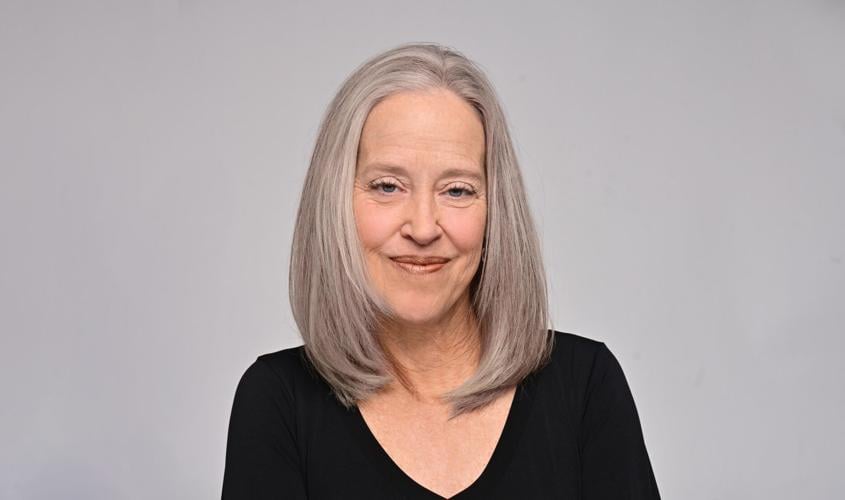
Wendy Kopp was a Princeton University senior when she conceived the idea for Teach for America. She wrote her thesis on the need to recruit top students from all disciplines to become teachers.
"I felt that was wrong," Kopp said. "I felt like I was one of many people I knew who were searching for ways to make a real difference, to tackle the inequities we saw in the country."
She did research. She wrote a senior thesis. And the idea she proposed in it led to more than 70,000 teachers being placed in classrooms across the U.S. and the world.
People are also reading…
Kopp's thesis proposal eventually became Teach for America, which is now marking its 35th anniversary. But it almost never got past her paper.
A public policy major, Kopp had heard about a teacher shortage that was particularly acute in urban and rural districts.
"I thought, we can channel all this energy and talent," she said. "The first two years out of college, what if our future leaders were teaching in these schools instead of working on Wall Street?"

While some Teach for America alumni continue their careers as teachers, others go on to become administrators or work outside education.
She wrote her senior thesis proposing a teaching corps of non-education majors, young people who could hone their leadership skills in classrooms in places where they were needed most.
Kopp came up with a plan, a budget and a proposal for seed funding. Her peers’ reactions convinced her to see it through.
"It was magnetic," she remembered. "Everywhere I went, I'd send out the thesis in school districts and potential funders, and people thought it was a great idea, but no one thought it would work. They thought, college students will never do this."

Wendy Kopp is CEO of Teach for All after founding Teach for America and leading that organization for 24 years.
It was a bit more challenging to show non-education majors that they could be teachers.
"We asked, what better leadership opportunity is there straight out of college than to lead a classroom? To put kids on a positive trajectory, and build relationships and be part of a community?" Kopp said.
In three months, 2,300 students signed up, and by the end of the first year, 3,000 people had committed to teaching for two years.
Teach for America was a reality. And Kopp, after leading it for 24 years, is now CEO of Teach for All, a global education nonprofit.
Big dreams and goals
Teach for America offers two-year, full-time, fully paid teaching positions in K-12 schools, as well as support from mentors and coaches. Recruits can teach in their own communities or elsewhere, with 40 regions nationwide. They receive health insurance and other benefits, and summer stipends, tuition grants and other aid are available. At the end of their two years, recruits may continue to work in classrooms or move on to other roles in education or outside it.
The program hasn't been without its critics: Some take issue with the model, arguing that placing inexperienced educators in under-resourced schools may not be the best way to fight education inequality. A 2022 National Education Policy Center blog lambasted the organization's training, leadership and positions on education reform.
But those inside the organization say it’s a powerful model that can change lives.
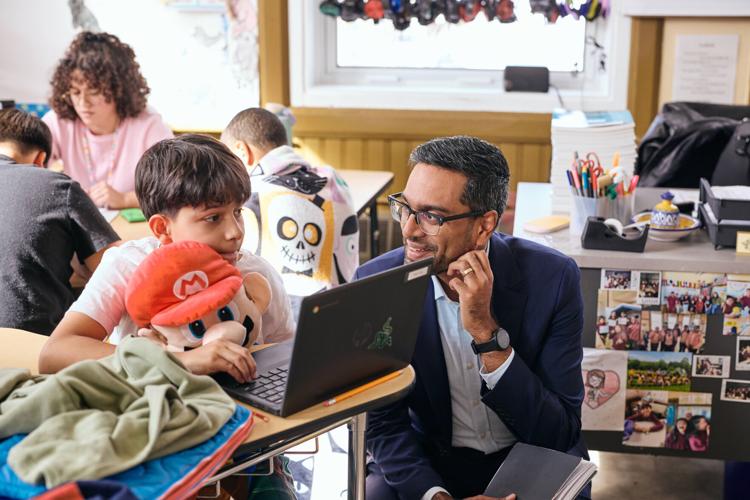
Aneesh Sohoni has been CEO of Teach for America since April 2025, but he's also an alum, having started teaching in Minnesota's Twin Cities in 2009. Initially, he'd planned to go to law school.
A political science major, Sohoni is the son of Indian immigrants and cognizant of the opportunities his parents' sacrifices made possible for him. He decided to give teaching a try.
"Once I met my students, I realized I wanted to do this for the rest of my life," he said. He met a lot of students who, like him, were the children of immigrants.

Aneesh Sohoni, right, is CEO of Teach for America. He'd once dreamed of becoming a lawyer but said, "Once I met students, I realized I wanted to do this the rest of my life."
"They had big dreams, but once I saw the obstacles in front of them, the lack of resources, you can't walk away,” he said.
He set out to be a teacher, but he learned from his students, too.
"Teaching is challenging, no doubt," he said. "And teaching in communities with the least access to resources is even more so. But there's nothing more rewarding than having this responsibility to work with students to set goals, to build relationships and to motivate them."
The support of other Teach for America recruits and the mentors was vital, Sohoni said.
"You're part of a community and you have an impact," he said. "Your typical 22-year-old college senior today came of age with social media and a pandemic and is graduating into a rapidly changing world. They crave community" and the opportunity to make a difference.
'Teaching ... is such a privilege'
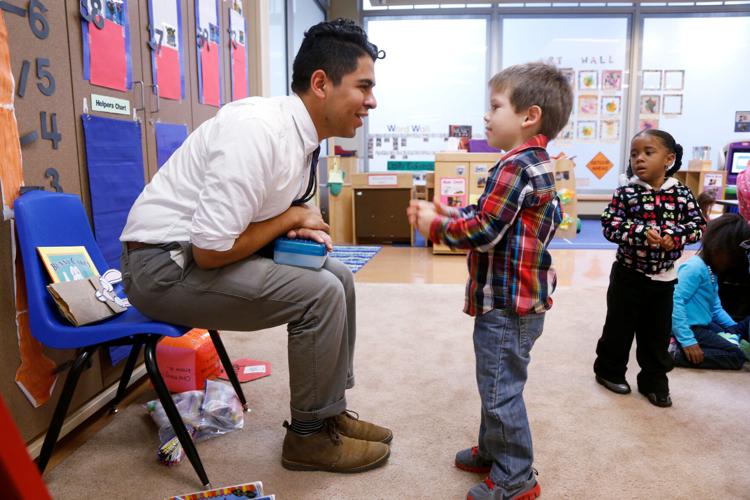
For some, what started as a two-year tryout became a passion and a calling. For Keon Davis, who teaches at Nuasin Next Generation Charter School in the Bronx, it's given him a feeling of community in his hometown.
Many of Davis' students come from low-income households, with many Black and Latino families.
"They come with a lot of emotions and needs that are outside of school," said Davis, who grew up in Harlem. He'd studied consumer behavior and marketplace studies at the University of Wisconsin-Madison but was "dreading the real world. I had no idea what I wanted to do."

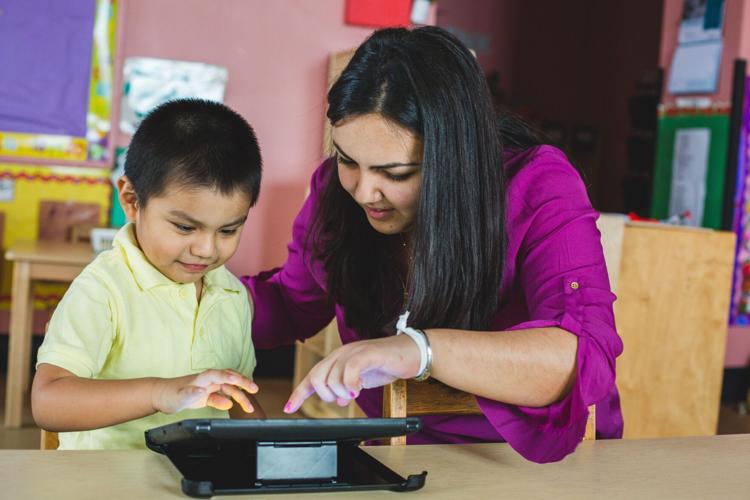
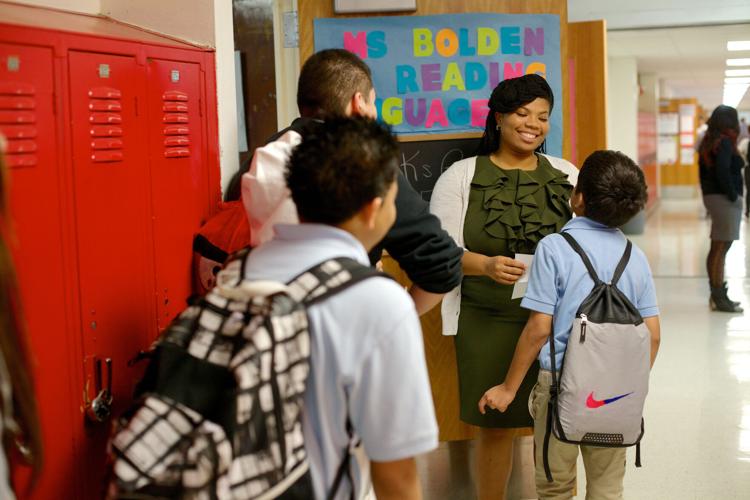
Teach for America recruits and trains people who studied for non-education careers and brings them into classrooms across the U.S.
Teaching, he said, "brought me community, growth, purpose, opportunity." It "pushes you into situations that will challenge you as a person and as a professional and make you a better person," he said.
Alejandro Diasgranados was a first-generation student at Virginia State, where he played football and studied physical therapy. He'd hoped for an NFL career, but an injury put an end to his dream. He didn't feel drawn to a career in physical therapy, though. A middle school teacher he'd kept in contact with suggested he go into teaching, which led to Teach for America.

Since its inception in 1989, Teach for America has trained more than 72,000 people to lead classrooms across the U.S. Some of them continue their teaching careers, while others apply the lessons they learned in other careers.
He started in Camden, New Jersey, before moving to Washington, D.C., where he's been for 11 years. He teaches second and third grades.
The job isn't without its challenges, he admitted: Seaton Elementary, where he teaches, is temporarily housed at Howard University, and its students speak seven different languages.
When the COVID-19 pandemic hit, many of Diasgranados’ students lacked computers at home, so he got creative and started reaching out "to everyone I could." The persistence paid off when actor and daytime TV host Drew Barrymore presented the school with 250 laptops.
"We try to get them into schooling, and keep them here," Diasgranados said. "The building is warm and they're good and they feel loved. I try to make my classes something the kids don't want to miss," with special guests, activities and learning-oriented games.
"Teaching is not a profession," Diasgranados said. "It’s my responsibility."