Flock Safety says a new update will crack down on police officers who misuse license plate reader data.
As law enforcement agencies across the nation continue to use controversial license plate readers, a leading company behind the tech says a new update is intended to crack down on police officers who misuse the data.
Flock Safety announced the news Thursday after a slew of high-profile cases that allege misuse of the system, such as police officers running searches not tied to law enforcement investigations, including to stalk or harass someone.
Flock faces mounting pushback from citizens across the political spectrum over privacy, along with instances of vandalism and protest by those who oppose how ubiquitous the cameras have become across the United States.
Critics have sprawling concerns about privacy and surveillance, but Flock is focusing on officers who misuse data in this update.

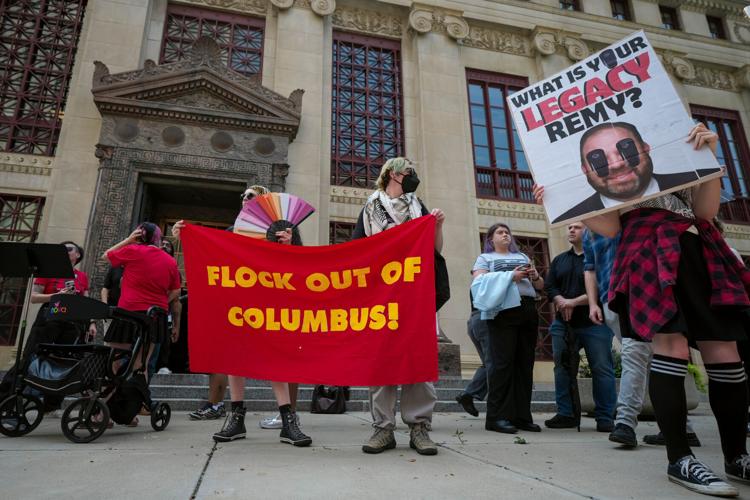
Anti-Flock surveillance protesters gather Monday outside City Hall before a council hearing on the city's Flock Safety license plate-reading cameras in Columbus, Ohio.
In an interview with USA TODAY, CEO Garrett Langley said Flock Safety is taking a stand against police abuse of power and for the privacy that citizens expect. New measures that rolled out Thursday will help put a stop to police misusing the system, and send up flags for any attempted misuse, he claimed.
People are also reading…
"You will get caught," Langley said in a message to law enforcement seeking to use Flock for unsanctioned activity.
The company's cameras are installed within the jurisdiction of more than 6,000 law enforcement agencies in the country. Flock says it has 120,000 cameras in 49 states.
They are used to track vehicles' license plates, models, makes and colors so authorities can search a database for the exact movements of any car any time it is picked up by a camera. Chad Marlow, senior policy counsel at the American Civil Liberties Union, previously told USA TODAY that the technology raises concerns about government overreach on the right, and worries about who is being targeted on the left.
"There's different reasons, but everyone is arriving at the same position, which is mass government surveillance in this country has gotten completely out of control and needs to be reined in immediately," Marlow said.

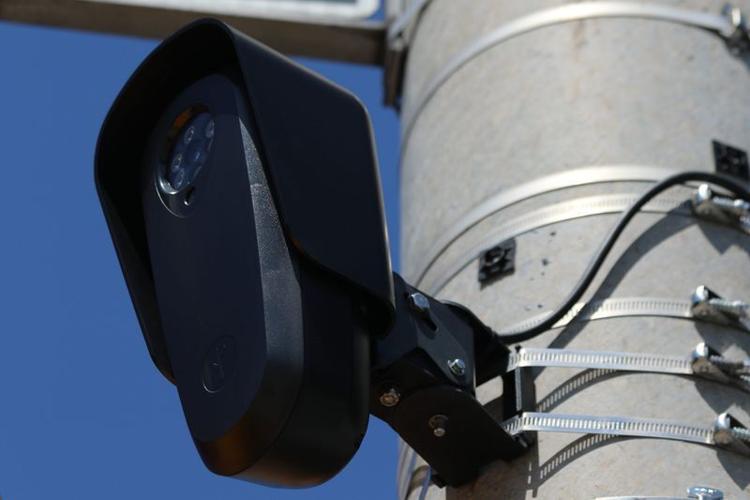
This Flock camera, at the intersection of Broadway and Exchange Street in Pawtucket, Rhode Island, is mounted on a metal utility pole, nestled amid street signs and crosswalk signals.
Misuse investigated
A Georgia police chief was arrested in November and accused of using automated license plate readers to harass and stalk people; he was found dead by suicide before he could stand trial, the Washington Post reported. An officer at another Georgia police department was also arrested for using Flock's system for non-law enforcement purposes, the Georgia Bureau of Investigation announced Aug. 7.
The city of Chandler, Arizona, announced on Aug. 7 that it will discontinue its contract with Flock after it detected an "anomaly" in the use of its cameras. The Pinal County Sheriff's Office, also in Arizona, said it also decided not to renew its contract, citing concerns about the 4th Amendment, which protects Americans against unreasonable searches and seizures.
In Apache Junction, Arizona, a police officer resigned after he was investigated for allegedly using his department's Flock cameras to track his wife and asking another department to check its system's cameras to do a welfare check on her, reported the Arizona Republic.

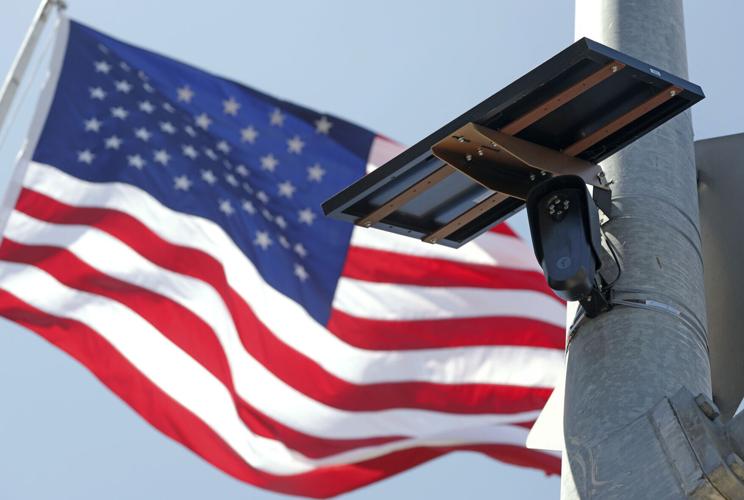
An American flag flies behind a Flock Safety camera mounted to a light pole on Aug. 3, 2026, in Burbank, Calif. (Justin Sullivan/Getty Images/TNS)
A North Carolina police officer was charged with one count of unlawfully accessing computers after allegedly using her department's license plate-reader system to look up the vehicle of her boyfriend's ex-wife 31 times, including twice while off duty, WBTV reported Aug. 5. The officer, Elizabeth Snowman, was accused of inputting bogus reasons for her searches into the system, including traffic infractions and burglary.
Another North Carolina officer faces a similar charge for conducting an unauthorized license plate search, the North Carolina State Bureau of Investigation said in July.
Langley said the identification of police misuse of Flock has gone up since earlier this year when the company rolled out its "audit assistance" tool, which flags abnormal searches by law enforcement for review. But until now, the tool was optional, and only about one-third of law enforcement clients turned it on. Going forward, it will be universally implemented, he said.
"As we now go from one-third of our customers to all of our customers having it, I think we will find new forms of abuse, program that into the system to prevent it happening again," he said.

Anti-Flock surveillance protesters gather outside Columbus City Hall before Councilmember Emmanuel Remy holds a council hearing on the city's Flock Safety license plate reading cameras on Aug. 10, 2026.
New safeguards
On Thursday, Flock Safety announced that it will implement the new features to weed out bad actors in police departments and stop the misuse of its systems. They are:
Every vehicle search will require a reason. Law enforcement personnel will have to input a specific case code tied to the investigation they are working on, and input the type of offense. For example, along with the code, they might select kidnapping or motor vehicle theft. Langley hopes this will stop officers from making up false reasons or inputting something overly vague such as “investigation.”
Audit assistance will be mandatory for all police departments using Flock. The tool flags abnormal search behavior, such as an officer repeatedly searching the same license plate day after day, or clusters of searches late at night. Users are locked out in real time until an administrator reviews the search.
Data will be retained in the system for seven days instead of 30 days, except for cases that need more time under “evidence mode,” when a search is tied to an ongoing case number.
Departments can choose what types of cases can be searched for by other departments. For example, Department A might allow Department B to search its cameras for kidnapping, homicide or theft cases but exclude Department B from searching for immigration-related offenses.