DUBAI — Details began to emerge Tuesday of the U.S. and Iran's interim agreement to end the war in the Middle East, with President Donald Trump saying it will rule out a nuclear weapon for Tehran and a U.S. official saying it allows Iran to sell oil upon signing.
The memorandum of understanding signed this week, though not yet public, extends a tenuous ceasefire announced in April by another 60 days to allow the warring countries to negotiate a permanent truce.
Under the deal, the U.S. will end its blockade of Iran's ports while Tehran will restore the passage of oil tankers and other maritime traffic through the Strait of Hormuz, which it was effectively blocked since the U.S. and Israel launched strikes Feb. 28.
Trump said the agreement states clearly that Tehran will not have a nuclear weapon and the full text would be made public in a formal setting in a few days.
People are also reading…

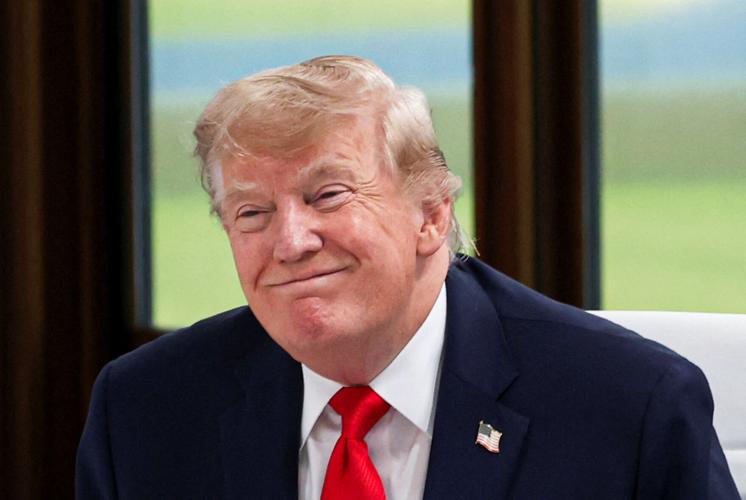
U.S. President Donald Trump reacts Tuesday during a working session with G7 leaders and outreach partners during the G7 summit in Evian-les-Bains, France.
Iran has long said that it will not develop a nuclear weapon and that its nuclear program is for peaceful purposes only.
Trump gave shifting rationales for attacking Iran, but appears to have achieved little of what he said he wanted: Iran's theocratic government remains in place, its ballistic missile program has not been dismantled, and it has not ended its support for anti-Israel militias like Hezbollah.
The accord exposes Trump to criticism from fellow Republicans ahead of midterm elections in November. Meanwhile, Iran's leaders could face renewed protests if they fail to ease economic pressures after a destructive war.
Israel didn't directly participate in the negotiations and distanced itself from both the April ceasefire and the latest U.S.-Iran agreement, adding uncertainty to whether the new ceasefire will hold.

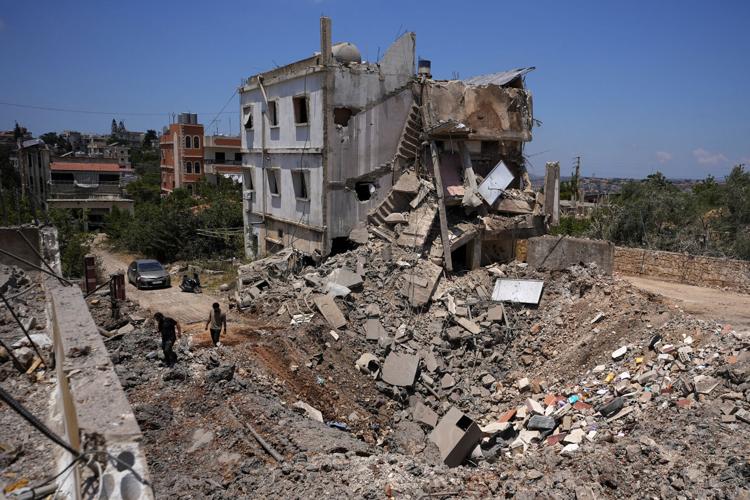
People inspect the site of a previous Israeli strike Tuesday in Kfar Sir in the Nabatieh district, Lebanon.
The war affected most countries in the region, killing more than 7,000 people, mostly in Iran and Lebanon, which Israel invaded in March after Iran-allied Hezbollah joined the fighting.
U.S. Vice President JD Vance claimed the agreement included Israel and Lebanon, contradicting Israeli Prime Minister Benjamin Netanyahu, who said on Monday that Israel is not bound by it, and will not withdraw from southern Lebanon.

A Hezbollah spokesperson told Reuters the group believed Iran would not agree to a permanent truce if the Israeli occupation was not ended.
Iran's military command, Khatam al-Anbiya Central Headquarters, warned that Israel should expect a hard response if it did not stop its attacks on southern Lebanon.
A senior U.S. official said the agreement allows Iran to immediately begin selling oil and fuel, and included banking, transportation and insurance services to facilitate the sales.
U.S. and Iranian officials say the deal could eventually deliver substantial economic benefits to Iran by lifting sanctions and unfreezing foreign assets. It could also set up a $300 billion reconstruction fund, paid for by neighboring Gulf states that host U.S. military bases and were hit by Iranian attacks during the war, if Iran complies with other terms.

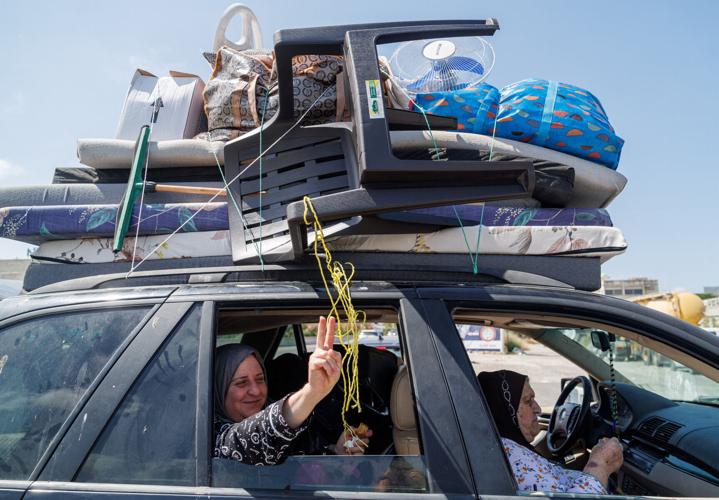
A Displaced woman flashes a victory sign Tuesday on her way with her relatives back to their homes on the highway of Sidon, Lebanon.
Talks pending
In the coming 60 days, negotiators will return to difficult issues like the future of Iran's nuclear program, which Tehran was discussing with Trump officials in February until those negotiations were interrupted by the U.S. decision to launch the war.
Two other issues that Trump and Netanyahu used to justify the war appear not to be on the agenda: ending Iran's support for regional armed militia groups and limiting its missile program.
Trump publicly criticized Netanyahu and expressed frustration at Israel's military campaign, saying on Tuesday he was "not happy" with the way Israel handled itself.
"Iran wants to get it done," Trump told reporters about the next phase of negotiations with Iran, a sentiment he has repeated since the war's earliest days. "They have to get back to business, and the relationship is now normalized, so I think it's going to go pretty quickly."
Earlier he described the deal as "a wall to a nuclear weapon" for Iran.
Iran signed an agreement to sharply curtail its uranium enrichment efforts in 2015 with the U.S. and other countries, but the agreement fell apart after Trump unilaterally withdrew the U.S. in his first term. That led to Iran creating a stockpile of highly enriched uranium that Trump says he wants removed or destroyed.
Speaking at the G7 meetings in France, Trump said he liked the idea of sending the Iran agreement to lawmakers in the U.S. Congress for review after some Republicans complained they were being left in the dark. Trump faced criticism from some lawmakers for not getting authorization from Congress for the war, which is broadly unpopular among Americans.
Oil prices slid more than 2% to new three-month lows on Tuesday, a day after tumbling nearly 5% following news of the deal, though industry officials say Middle East oil and gas output will take months to fully recover.

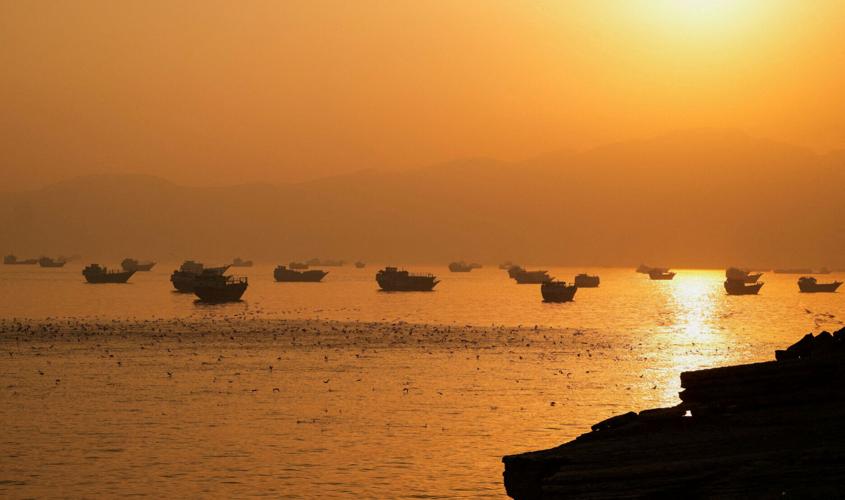
Vessels are seen Tuesday at the Strait of Hormuz from Musandam, Oman.
Caution over shipping
Both sides say the Strait of Hormuz, which normally carries about one-fifth of the world's trade in oil and liquefied natural gas, will be open from Friday, but shipping companies say they will wait to see if peace holds.
On Tuesday, Iranian state television reported operations to lift its maritime blockade, while stressing that vessels must still coordinate with Iran's Revolutionary Guards.
The U.S. said the strait would be open toll-free for 60 days and it would expect that provision to be part of a final agreement. Iran has suggested it will retain control with Oman over the strait.