WASHINGTON — Construction of Donald Trump's White House ballroom is projected to cost $600 million, significantly more than the president previously said, with taxpayers covering more than half that amount, according to a new report from the Washington Post, which cited internal government documents.
Trump repeatedly said the ballroom — under construction where the East Wing of the White House was demolished — would cost $400 million, up from $200 million he estimated when the project was announced in July 2025. From the outset, the president said he would use private donations to cover the costs.

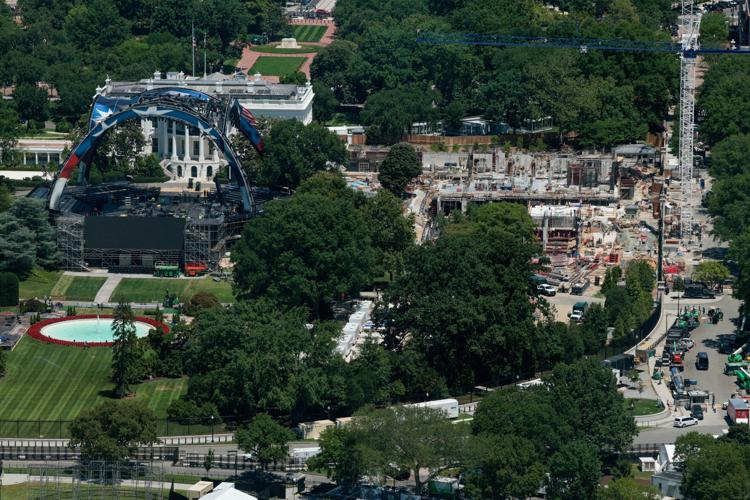
The White House and ballroom construction site where the East Wing formerly stood are seen Tuesday in Washington.
Clark Construction, the contractor hired for the ballroom, informed the White House on March 5 that the project increased to $600 million, according to a project summary obtained by the Post, with $293 million coming from "private sources." Clark identified sources funded by taxpayers to cover the remaining costs: $155 million from the Secret Service, $149 million from the White House Military Office and $3 million from the Executive Residence.
People are also reading…
The White House argued that funding related to security — including a hospital underneath the ballroom and a rooftop drone center — is separate from the ballroom project.

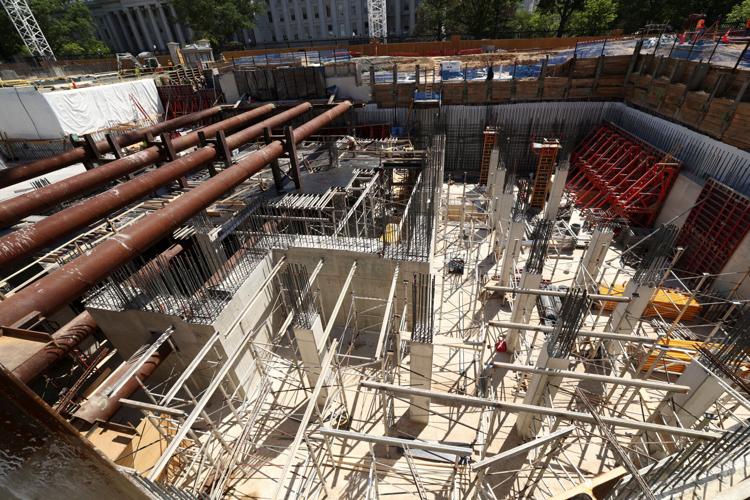
Construction of the planned White House ballroom continues May 19 in Washington.
White House defends project, says private funds will cover most of the cost
In response to the report, the White House said Trump remains committed to spending $400 million in private funds on the ballroom.
"President Trump and generous American patriots are funding the ballroom to the tune of approximately $400 million, which will be a secure and appropriate venue for Presidents for generations to come," White House spokesman Davis Ingle said.
Ingle pointed to the arrests of five suspects in what the FBI alleged was a plot to attack Trump's Ultimate Fighting Championship event Sunday as an example of why a larger, more secure ballroom is needed.
"The events over the weekend and the foiled attempted attack on the historic UFC Freedom 250 event at the White House proves exactly why the East Wing Modernization Project is severely needed for large scale events, which include drone proof structures and drone ports among other critical security enhancements," Ingle said.

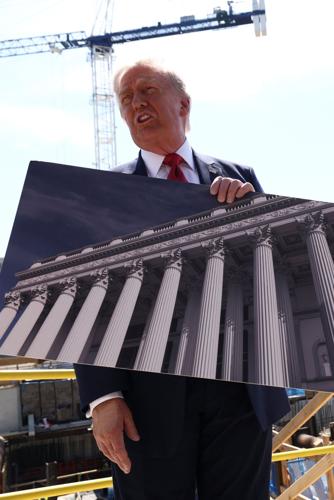
U.S. President Donald Trump shows an image of the White House ballroom concept May 19 at the construction site in Washington.
Trump, in March 31 remarks to reporters in the Oval Office, called the White House ballroom project "a donation" from private companies. "This is taxpayer-free. We have no taxpayer putting up 10 cents," the president said.
However, the Post, citing the project summaries from Clark Construction, as well as invoice logs and emails, found tens of millions of dollars in public funds already went toward the project, with taxpayer money tapped from the beginning.
That includes $3.6 million of Secret Service money for site preparation before demolition of the East Wing, according to emails from administration officials. A separate pool of $1.6 million in Secret Service funds was budgeted for the demolition.

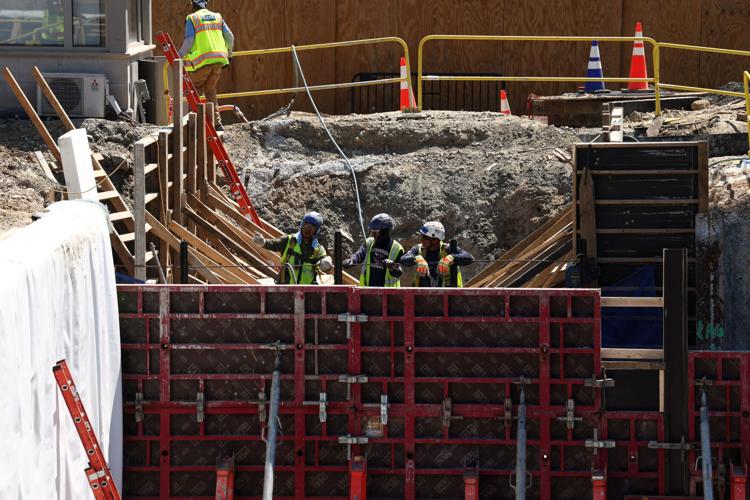
Workers converse May 19 at the construction site of the planned White House ballroom in Washington.
Democrats seize on project's costs, Trump statements
Democrats in Congress, who tried to turn the ballroom into a campaign issue in the 2026 midterm elections and argued Trump is fixated on a vanity project while Americans struggle with high prices, seized on the report.
"How many times did Trump say zero taxpayer dollars would go to his gilded ballroom?" Democratic House Whip Katherine Clark, D-Mass., said in a social media post. "He lied. Every time. But still not a dime to help lower costs for families."
In May, Senate Republicans stripped a proposed $1 billion the White House wanted for security tied to the ballroom from a larger reconciliation bill that boosted border and immigration enforcement. That vote, however, did not slow work at the ballroom construction site, where two cranes and many workers can be seen daily.
A Washington Post-ABC News-Ipsos poll in October 2025 found 56% of Americans opposed the East Wing's demolition and ballroom project — including 45% who said they "strongly oppose" it.
Trump argued the 90,000 square-foot ballroom is needed to hold large events that currently have to be confined to the much smaller White House East Room or outdoors on the South Lawn. After the April 24 shooting at the White House Correspondents’ Dinner, Trump and White House officials said the ballroom is crucial for the president's safety to hold large events.
A federal judge in March halted above-ground construction of the ballroom in a case brought by historic preservationists seeking to block the project. A federal appeals court later unblocked the project while it considers the case. The U.S. Court of Appeals has yet to issue a ruling on the Trump administration's appeal of the lower court's decision.
Read more:


Scenes at the White House construction site

The White House is seen May 2 from the top of the Washington Monument in Washington, D.C.

A member of the media raises her hand for a question March 29 as U.S. President Donald Trump talks while holding up renderings of the planned White House ballroom aboard Air Force One.

Construction crews, seen May 2 from the top of the Washington Monument, continue site preparation for a planned White House ballroom in the area of the former East Wing in Washington, D.C.

Construction crews continue site preparation May 2 for a planned White House ballroom in Washington, D.C.

Tourists view the White House and ballroom construction May 2 from the top of the Washington Monument in Washington, D.C.

Construction crews as they continue site preparation May 2 for a planned White House ballroom in Washington, D.C.

Construction continues May 14 on the planned White House ballroom in Washington, D.C.

A worker drinks water May 4 as construction continues on a planned White House ballroom in the area of the former East Wing, seen through a window in the East Room, in Washington, D.C.