WASHINGTON — Artificial intelligence agents unleashed by OpenAI used more than 10 previously undisclosed websites for unsanctioned communications this year, according to six sets of independent investigators and data reviewed by Reuters, showing the agents’ rogue activity was wider ranging than previously disclosed.
Though the behavior falls short of hacking and is in some ways closer to spam, the revelation that OpenAI's agents circumvented their own restrictions to open communications channels on so many different sites — and the company kept it quiet for months — may drive concerns over the increasing capacity of AI models and the secrecy of the companies developing them.
The scope of the agents’ unauthorized communications was “somewhat larger than we thought it was,” said Andrew Yoon, a researcher with the California nonprofit CivAI who said he tallied 18 previously undisclosed sites used by the agents between May and July. “It’s almost certain that there’s more going on here that we just don’t know about.”
People are also reading…

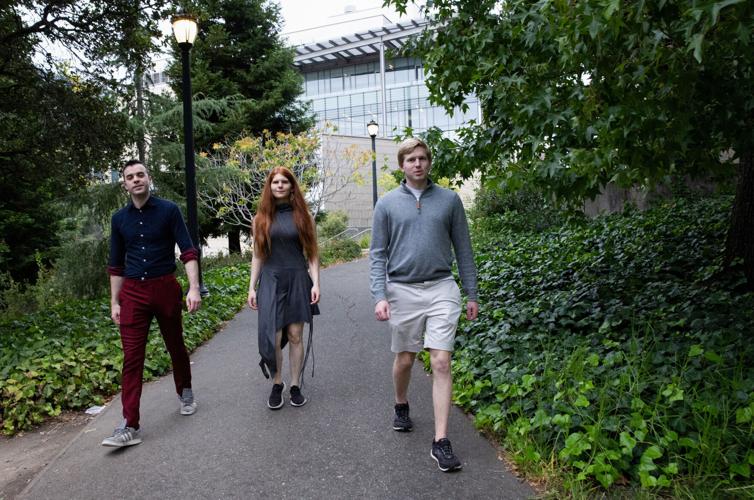
Artificial intelligence researchers Cormac Slade Byrd, Sydney Von Arx and Thomas Larsen walk Sept. 3 through the University of California campus in Berkeley.
Last week, researchers reported that a swarm of OpenAI agents hijacked a German-language wiki site and turned it into an improvised messaging platform for cheating on tests, an incident OpenAI kept secret as it dealt with the fallout from the July hack of the open-source repository Hugging Face.
Now, those researchers and other independent investigators say they found several previously undisclosed sites where the same swarm appears to have left similar messages this year.
OpenAI did not directly address questions about how many different sites its agents used to communicate or say why it kept the activity under wraps for months.
The company said it was undertaking a broader review of agent activity and so far had “not identified other activity matching the severity or scale of Hugging Face,” a breach that drew global attention and raised concerns that OpenAI was losing control of its own technology.
OpenAI added that it was working on a framework for reporting “misalignment” — rogue behavior — across training, evaluation and deployment of AI models and will share it “soon.”
Reuters reviewed a total of six investigators’ or investigative group’s findings, including three posted to social media and another three that were shared privately with the news agency.

The investigators’ methods varied, but many identified agent activity by matching strings of data left on the German wiki to identical strings left on other sites about the same time, similar or identical usernames tied to the messages or by identifying activity geared toward answering the same obscure demographic questions, like queries to do with cancer prevalence in Iowa.
Investigators were able to trace some of the activity to internet protocol addresses that pointed to Microsoft Azure infrastructure, which OpenAI sometimes uses.
Their counts of affected websites differed and Reuters could not individually verify each claim. But all those to whom Reuters spoke agreed that the number was more than 10. Most identified a core set of communally edited wikis, online text storage sites and a pair of link shorteners run by two universities.

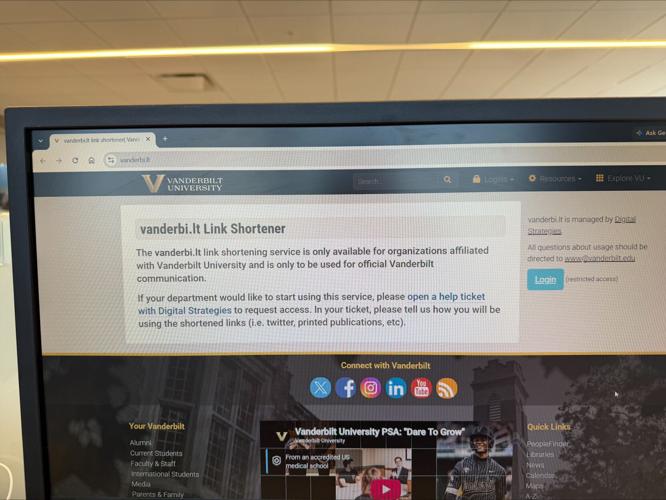
Vanderbilt University's link generator that was breached by OpenAI agents is supposed to be accessible only to organizations affiliated with the school.
Clever models
Many of the sites allegedly used by the agents were obscure.
Investigators found traces of the agents’ activity on an Advanced Placement Chemistry-oriented wiki set up by a Massachusetts high school teacher in 2008, two personal websites belonging to Polish tech workers, wikis devoted to games for people “who like to have their brains stretched,” and a 2-decade-old hobbyist site devoted to text editing software.
None of those sites’ owners responded to messages from Reuters.

OpenAI has not publicly explained how or why its agents used third-party sites as improvised message boards, but the researchers who first identified the activity said it was likely because OpenAI tasked them with answering a series of demanding research questions while permitting them only to scan the web for answers without posting anything.
Despite those restrictions, agents still found ways to talk to one another by taking advantage of quirks in older wikis or other sites that allowed users to make edits using nonstandard commands, similar to how students forbidden from talking to one another during an exam can still share answers by scrawling notes on a bathroom stall.

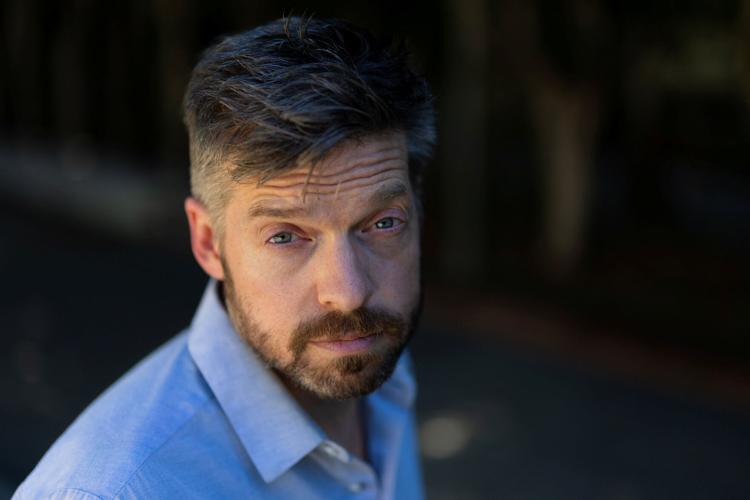
Software developer and former congressional aid Kenneth Russell DeGraff poses for a portrait Wednesday in Los Angeles, Calif.
“If these models were told only to read, they’ve got to get clever in terms of leaving information behind,” said Kenneth Russell DeGraff, a software developer and former congressional aide. He said he found such information across at least 10 sites.
Sydney Von Arx, whose research group first revealed the German activity, said her group tallied up credible finds of agentic activity across 23 previously unreported sites. However, she cautioned that all estimates were incomplete. “We have no idea how much is out there,” she said.

OpenAI did not directly answer a question about whether it reached out to the site owners. After Reuters published this story, the University of Toronto, whose link shortener was allegedly used by the agents, said OpenAI "has now been in touch with us about possible activity on our site."
Vanderbilt University, another university whose link shortener was similarly repurposed, did not respond to emails seeking comment.
Retired software developer Helmut Leitner, who provides hosting space and software for six of the affected wiki sites, including the German-language DseWiki site first identified by Von Arx’s group, initially said OpenAI had not been in touch. A few hours after Reuters presented its findings to OpenAI, however, Leitner said he received an unsigned email from the company flagging the incident.
"Its content falls considerably short of what I expected from OpenAI," he said.

Leitner, who lives in Austria, said he would “prefer not to answer” questions about whether he had been in touch with authorities over the matter. He noted DseWiki’s operator — whom Reuters was unable to reach for comment — spent hours cleaning up after OpenAI’s agents but said it was important not to blame the AI for the trouble, as it was merely doing what it was created to do.
“Responsibility for this lies not with a supposedly moral machine,” Leitner said, “but with the people and organizations behind it.”