

WASHINGTON — A divided Supreme Court took up its first examination of race in the Obama era Wednesday, wrestling with claims of job discrimination by white firefighters in a case that could force changes in employment practices nationwide.
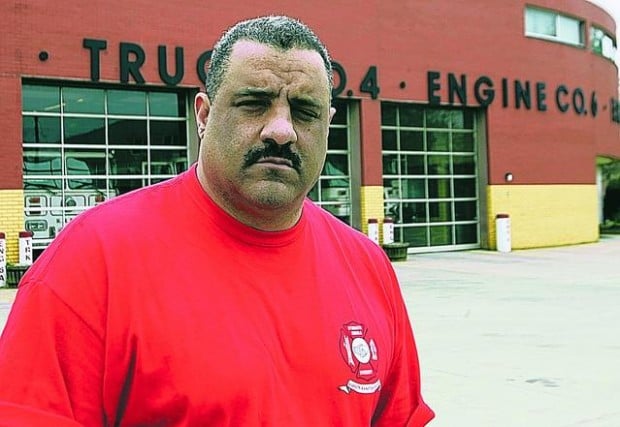
The case from New Haven, Conn., pits white firefighters, who showed up at the court Wednesday in their dress uniforms, against the city over its decision to scrap a promotion exam because no blacks and only two Hispanic firefighters were likely to be made lieutenants or captains based on the results.
As is often the case with closely fought social issues at the court, Justice Anthony Kennedy appeared to hold the key to the outcome. He seemed concerned that New Haven scuttled the test without determining that there were flaws that might have led to the racially disproportionate results.
"So shouldn't there be some standard that there has to be a significant, a strong showing after the test has been taken that it's deficient? Before it can be set aside?" he said.
People are also reading…
Kennedy often frowns on racial classifications, yet he is not as opposed to drawing distinctions on the basis of race as his more conservative colleagues.
But where Kennedy saw shades of gray, the rest of the court seemed to view the case clearly in terms of black and white.
The court's conservative bloc seemed inclined to side with the white firefighters.
"You had some applicants who were winners, and their promotion was set aside," Justice Antonin Scalia said.
Chief Justice John Roberts wondered whether the city could continue throwing out tests when it doesn't like the results. "They get do-overs until it comes out right?" Roberts said.
The liberals indicated that New Haven did nothing wrong by throwing out the test over concerns that it had an unintended but "disparate impact" on minorities in violation of the 1964 Civil Rights Act. The white firefighters said the decision violated the same's law prohibition of intentional discrimination.
A ruling against the city, Justice David Souter said, could leave employers in a "damned-if-you-do, damned-if-you-don't situation." Souter's comment reflected the concern of business interests who said in a court filing that a decision in favor of the white firefighters would place employers in an untenable position of having to choose whether to face lawsuits from disgruntled white or minority workers.
"Whatever Congress wanted to attain" in writing the civil-rights law, Souter said, "it couldn't have wanted to attain that kind of a situation."
The firefighters' dispute is one of two major civil-rights cases on the court's calendar in the next two weeks. The other deals with a key provision of the Voting Rights Act.
Underlying both cases are broader questions about racial progress and the ongoing need for legal protection from discrimination for minorities.


