


A plane flies past the harvest moon as it rises behind the Statue of Liberty in New York City, on October 1, 2020.
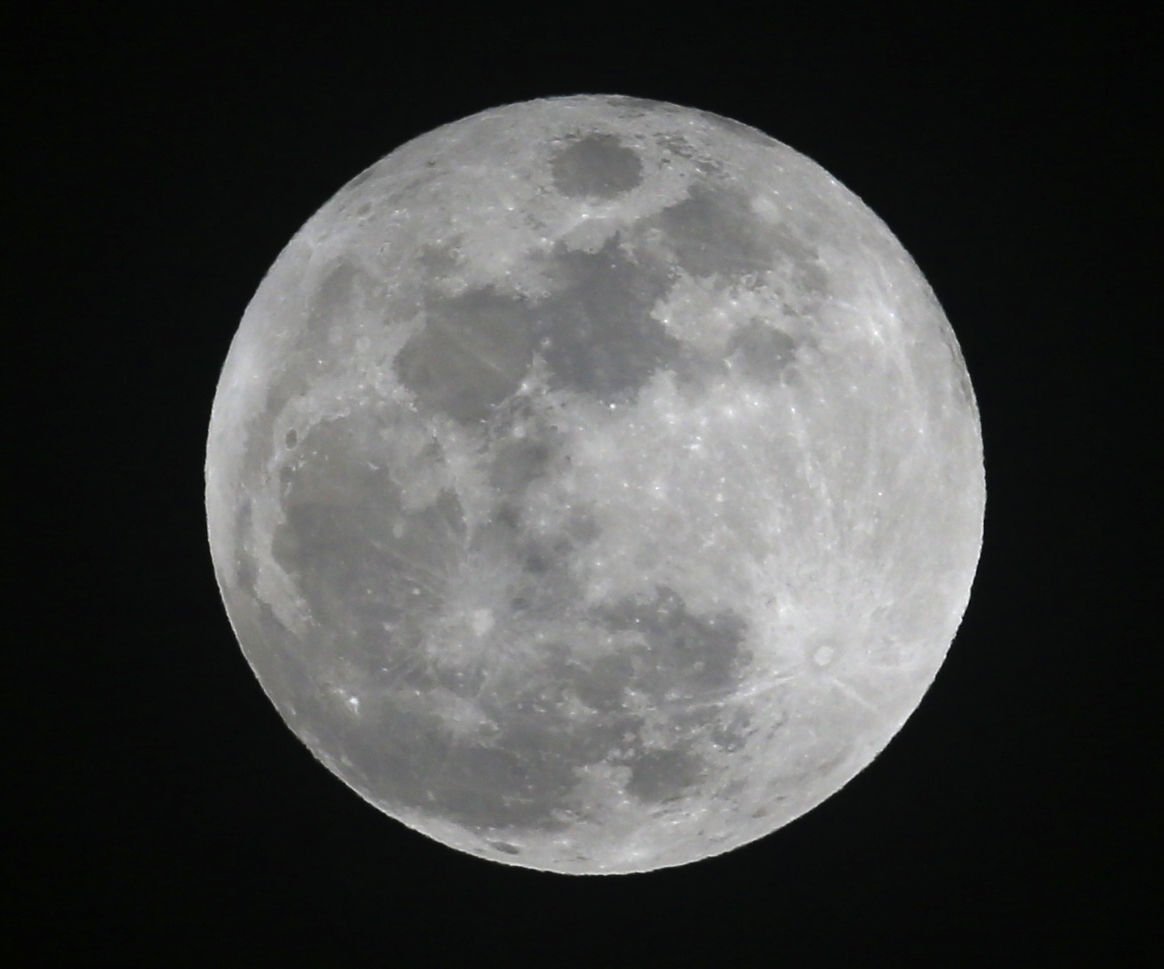
As the fall season approaches and colder temperatures set in, there's a silver lining to look up to — literally — as the harvest moon makes its debut on Sept. 20, bringing plenty of bright moonlight.
The full moon known as the harvest moon, as it traditionally gave farmers more time to harvest their summer-grown crops into the night, will make its appearance Monday night soon after sunset.
Appearing two days before the autumnal equinox this year, the full moon can first be seen at 7:55 p.m. ET, 17 minutes after sunset, according to NASA.
During the few days surrounding the harvest moon's appearance, the moonrise will occur within just 25 to 30 minutes across the northern United States and only 10 to 20 minutes in farther north Canada and Europe, according to NASA.
People are also reading…
Typically, the moon rises around sunset and about 50 minutes later each day, according to EarthSky. But when a full moon occurs near an autumn equinox, like the harvest moon, the moon rises closer to the time of sunset, creating a dusk-till-dawn moonlight for several nights in a row.
This year's harvest moon will be the last of the summer season for those living in the Northern Hemisphere, while for those in the Southern Hemisphere it will be the fourth winter full moon, according to EarthSky.
The harvest moon may seem bigger and brighter than other full moons, and that's because this moon is physically closer to the horizon. The location of this moon gives the illusion of largeness, despite not being any bigger than other full moons.
Another quirk to the harvest moon is its color — it may look especially orange. That's also due to the fact that the harvest moon is closer to the horizon, which creates a greater thickness of Earth's atmosphere creating an orange hue, according to EarthSky.
It's been a year of unusual celestial activity, with a rare third full moon, known as a Blue Moon, making an appearance in late August. Typically, it's more common for a season to have three full moons, however this year there will be four that occur in just one season alone, between the June solstice and September equinox.
Upcoming sky schedule
Throughout the remainder of 2021, you might be able to catch these space and sky events depending on your location.
The full moons and their names, according to The Old Farmer's Almanac:
• Sept. 20: harvest moon
• Oct. 20: hunter's moon
• Nov. 19: beaver moon
• Dec. 18: cold moon
What is the Flower Moon? A guide to full moon nicknames
January: Wolf Moon
The names for full moons, especially the most common ones adopted by the Old Farmer's Almanac, generally come from a combination of Native American and Colonial American terminology that have been passed down through generations.
According to the Old Farmer's Almanac, January's full moon was named the Wolf Moon because wolves tend to howl more during this time period.
Other names: Moon After Yule, Old Moon, Ice Moon, and Snow Moon.

An airplane passes the full moon, known in the Farmers' Almanac as the "Wolf Moon," on its final approach to Los Angeles International Airport over Whittier, Calif. on Wednesday, Jan. 15, 2014. (AP Photo/Nick Ut)
February: Snow Moon
February is generally the snowiest month of the year in North America, so its full moon was appropriately nicknamed the Snow Moon, according to the Old Farmer's Almanac.
Other names: Hunger Moon, Storm Moon and Chaste Moon.
The full Snow Moon lights up the night sky over Lawrence, Kan., Friday, Feb. 10, 2017. February's full moon is so-named from Native American traditions because usually the heaviest snows fall in month. (AP Photo/Orlin Wagner)
March: Worm Moon
March marks the end of winter, which is the first time earthworms start coming out of the ground. The Worm Moon in March is usually the last full moon before the spring equinox.
Other names: Crow Moon, Crust Moon, Sap Moon, Sugar Moon, and Chaste Moon.
According to TimeandDate.com, the Old English or Anglo-Saxon name is the Lenten Moon.

The full moon rises above the Lincoln Memorial, the Washington Monument and the U.S. Capitol in Washington on Saturday, March 19, 2011. The moon appeared larger as it made its closest approach to Earth in 18 years. (AP Photo/Jose Luis Magana)
April: Pink Moon
April's Pink Moon doesn't actually appear pink in the sky. It's named instead after the pink flowers – Wild Ground Phlox or Moss Phlox– that start showing up in early spring, according to TimeandDate.com.
April's full moon is also called the Paschal Full Moon in the Christian calendar. The Paschal Full Moon is the first full moon after the Vernal Equinox and is used to determine the date for Easter.
Other names: Sprouting Grass Moon, Fish Moon, Hare Moon, and Egg Moon

A view of the full pink moon, in Lakatamia a suburb of capital Nicosia, Cyprus, Friday, April 19, 2019. (AP Photo/Petros Karadjias)
May: Flower Moon
May's full moon is simply named the Flower Moon due to the flowers that bloom during the month.
Other names: Corn Planting Moon and Milk Moon.

A full moon rises behind the Temple of Poseidon in Cape Sounion, south east of Athens, Greece, while tourists watch, on Saturday, May 5, 2012. Saturday's event is a "supermoon," the closest and therefore the biggest and brightest full moon of the year. (AP Photo/Dimitri Messinis)
June: Strawberry Moon
In North America, the name comes from Algonquin tribes of Native Americans. This full moon was their sign to harvest wild strawberries, according to The Old Farmer's Almanac.
Other names: Honey Moon, Mead Moon, Full Rose Moon, Oak Moon, Cold Moon or Long Night Moon, according to EarthSky.org.

The nearly full moon rises in the background as a horse eat grass in a field in Bloomsburg, Pa., after the sunset Monday, June 16, 2008, following a thunder storm which moved across the region. (AP Photo/Bloomsburg Press Enterprise, Jimmy May)
July: Buck Moon
Antlers generally start showing up on male deer during July, giving the month's full moon the name Buck Moon.
Other names: Thunder Moon, Wort Moon, and Hay Moon.

Fireworks light up the sky against a full moon during a Fourth of July celebration in Kansas City, Kan., Tuesday, July 3, 2012. (AP Photo/Charlie Riedel)
August: Sturgeon Moon
Many Native American tribes would fish for sturgeon during August, thus giving the month's full moon the name Sturgeon Moon.
The fish were once found in much of the U.S. and Canada, but the population has been significantly depleted due to overfishing.
Other names: Grain Moon, Green Corn Moon, Fruit Moon, and Barley Moon.

The super moon rises over the Chinese calligraphy on a sign that reads "Beijing" in Beijing, China, Sunday, August 10, 2014. The phenomenon, which scientists call a perigee moon, occurs when the moon is near the horizon and appears larger and brighter than other full moons. (AP Photo/Andy Wong)
September: Harvest Moon/Corn Moon
The September full moon is usually the Harvest Moon, which is the full moon closest to the autumnal equinox. However, that sometimes happens in early October instead.
The name Corn Moon is used nearly as often.
Other names: Barley Moon.

The harvest moon rises over the Colorado prairie framed by the engines of a Royal Air Force cargo plane parked at a general aviation terminal at Denver International Airport in east Denver on Thursday, Sept. 27, 2007. (AP Photo/David Zalubowski)
October: Hunter's Moon
As previously mentioned, October's full moon is sometimes referred to as the Harvest Moon if it's the closest full moon to the autumnal equinox. However, it's more commonly referred to as the Hunter's Moon. This is because October was when people in the Northern Hemisphere would begin preparing for winter by hunting, slaughtering and preserving meat.
Other names: Blood Moon, Sanguine Moon, Travel Moon and Dying Grass Moon.

A pedestrian crosses over the John A. Roebling Suspension Bridge as the full moon rises, Thursday, Oct. 5, 2017, in Cincinnati. The moon, better known as the Harvest Moon because it's the first full moon during the fall season, had not risen in its full stage during the month of October since 2009. (AP Photo/John Minchillo)
November: Beaver Moon
Colonists and Native Americans used beaver furs to keep warm during winter. They'd set traps in November before swamps froze over to make sure they had enough fur for the cold months ahead. Beavers also became more active during November, making it that much easier to trap them, thus the name Beaver Moon.
Due to hunting, the beaver population in North America has dwindled to about 12 million, where it used to be about 60 million, according to TimeandDate.com.
Other names: Frost Moon, Trading Moon, Snow Moon and Mourning Moon.

The full moon rises behind holiday lights on Thanksgiving in Lawrence, Kan., Thursday, Nov. 22, 2018. (AP Photo/Orlin Wagner)
December: Cold Moon
The naming of December's full moon is pretty straightforward — it's cold in December in most parts of the Northern Hemisphere. More specifically, it's usually the first month in many areas where it gets really cold and stays that way.
Other names: Long Nights Moon, Moon Before Yule, Oak Moon and Wolf Moon.

The Full Cold Moon seen through the star of a Christmas tree in Beirut, Lebanon, Thursday, Dec. 24, 2015. The full moon, which is the last of the year, is called the Full Cold Moon because it occurs at the start of winter. The last time there was a full moon on 25 December was 1977, and there won't be another one until 2034. (AP Photo/Hassan Ammar)
Blue Moons
The Blue Moon has nothing to do with color. Most commonly, a Blue Moon occurs when there are two full moons in the same month. The first would get the traditional name, while the second moon is called the Blue Moon.
An alternative definition considers a Blue Moon the third full moon in an astronomical season with four full moons, according to TimeandDate.com. A typical season has three full moons.

A blue moon rises behind the Statue of Liberty seen from Liberty State Park in Jersey City, N.J., Friday, July 31, 2015. The blue moon happens when the moon rises in its full stage twice during the same month. (AP Photo/Julio Cortez)
Meteor showers, according to EarthSky's 2021 meteor shower guide:
• Oct. 8: Draconids
• Oct. 21: Orionids
• Nov. 4-5: South Taurids
• Nov. 11-12: North Taurids
• Nov. 17: Leonids
• Dec. 13-14: Geminids
• Dec. 22: Ursids
Solar and lunar eclipses, according to The Old Farmer's Almanac:
• Nov. 19: A partial eclipse of the moon, which people in North America and Hawaii will see between 1 a.m. Eastern time and 7:06 a.m. Eastern time.
• Dec. 4: A total eclipse visible for those in the Falkland Islands, the southern tip of Africa, Antarctica and southeastern Australia.
When planets will be visible
Skywatchers will have multiple opportunities to spot the planets during certain mornings and evenings throughout the rest of 2021, according to the Farmer's Almanac planetary guide.
Seeing most of these — except Neptune — with the naked eye is possible, but binoculars or a telescope will provide the best view.
Mercury will appear as a bright star in the morning sky from Oct. 18 to Nov. 1. It will shine in the night sky until Sept. 21, and Nov. 29 to Dec. 31.
Venus, our closest neighbor in the solar system, will appear in the western sky at dusk in the evenings through Dec. 31. It's the second-brightest object in our sky, after the moon.
Mars makes its reddish appearance in the morning sky between Nov. 24 and Dec. 31.
Jupiter, the largest planet in our solar system, is the third-brightest object in our sky. Look for it in the evenings from now until Dec. 31.
Saturn's rings are only visible through a telescope, but the planet itself can still be seen with the naked eye in the evenings until Dec. 31.
Binoculars or a telescope will help you spot the greenish glow of Uranus in the mornings through Nov. 3 and in the evenings from Nov. 4 to Dec. 31. It will be at its brightest now until Dec. 31.
And our most distant neighbor in the solar system, Neptune, will be visible through a telescope in the evenings now until Dec. 31. It will be at its brightest until Nov. 8.


