

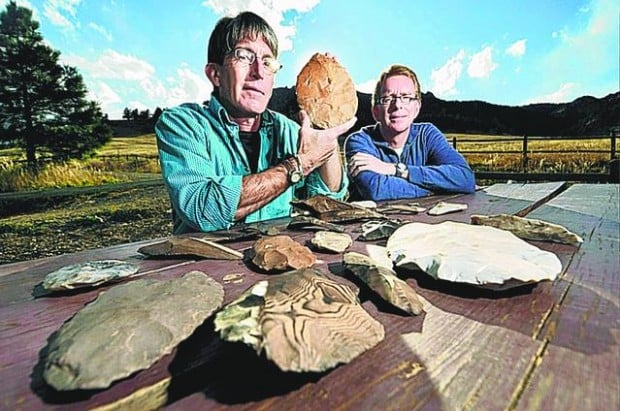
DENVER — Landscapers were digging a hole for a fish pond in the front yard of a Boulder home last May when they heard a "chink" that didn't sound right.
Just some lost tools. Some 13,000-year-old lost tools.
They had stumbled onto a cache of more than 83 ancient tools buried by the Clovis people — Ice Age hunter-gatherers who remain a puzzle to anthropologists. The home's owner, Patrick Mahaffy, thought they were only a century or two old before contacting researchers at the University of Colorado-Boulder.
"My jaw just dropped," said CU anthropologist Douglas Bamforth, who is leading a study of the find. "Boulder is a densely populated area. And in the midst of all that, to find this cache."
The cache is one of only a handful of Clovis-age artifacts uncovered in North America, said Bamforth.
People are also reading…
The tools reveal an unexpected level of sophistication, Bamforth said, describing the design as "unnecessarily complicated," artistic and utilitarian at the same time.
What researchers found on the tools also was significant. Biochemical analysis of blood and other protein residue revealed the tools were used to butcher camels, horses, sheep and bears. That proves that the Clovis people ate more than just woolly mammoth meat for dinner, something scientists were unable to confirm before.
"A window opens up into this incredibly remote way of life that we normally can't see much of," Bamforth said.
The cache was buried 18 inches deep and was packed into a hole the size of a large shoebox. The tools were most likely wrapped in a skin that deteriorated over time, Mahaffy said.
"The kind of stone that's present — the kind that flakes to a good sharp edge — isn't widely available in this part of Colorado. It looks like they were storing material because they knew they would need it later," said Bamforth. He said the tools had likely been untouched since the owners placed them there.


