

In naming Pima County's newest public-health center after a doctor who devoted his life to fighting social inequity in Tucson, county leaders hope to keep Dr. Herbert K. Abrams' legacy alive.
"It was a perfect match," said county Board of Supervisors Chairman Richard Elias, as the center was dedicated Saturday. "Herb was a strong believer in eliminating health disparity."
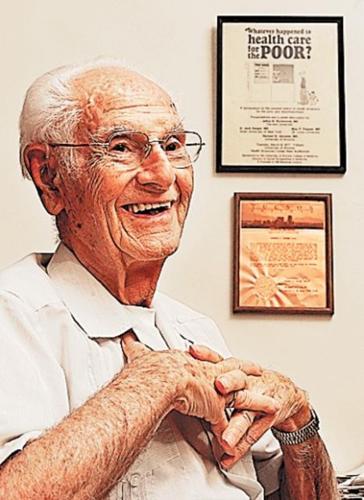
Abrams, who helped found what is now called El Rio Community Health Center, believed that health care should be affordable and accessible to everyone. He died in July 2006.
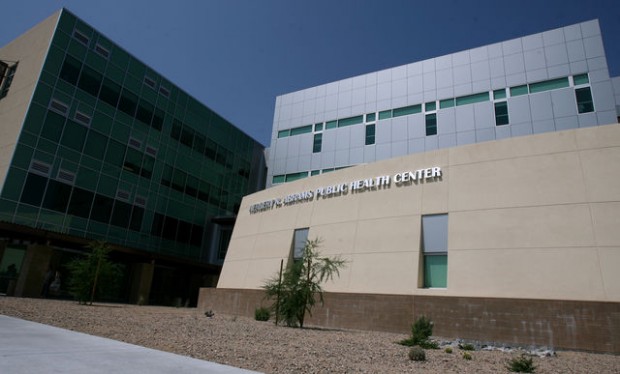
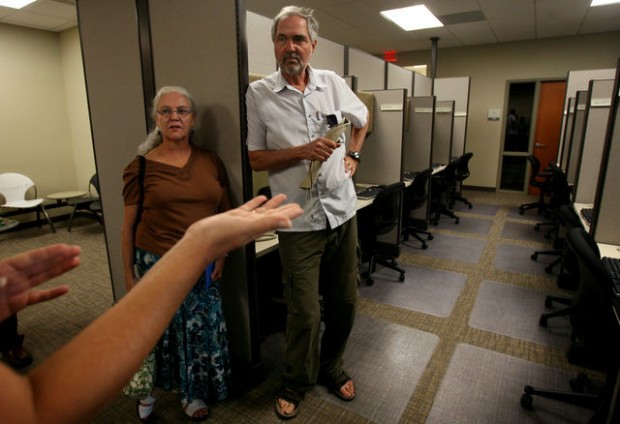
The $28 million Herbert K. Abrams Public Health Center, at 3950 S. Country Club Road, near University Physicians Hospital at Kino Campus, houses nearly 500 employees of the county's Health Department and public-health system.
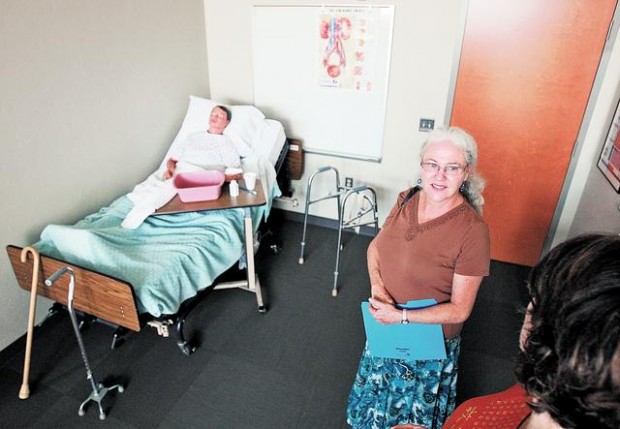
The center, part of a $732 million county bond package passed in 2004, was designed to be a one-stop health center, where residents can receive numerous benefits such as nutrition education for new parents and elderly caregiver training.
People are also reading…
Large windows on the first floor and throughout the building were designed to create an open and welcome feeling for those needing care.
The warm design was critical because people are often intimidated when they seek government help, Elias said.
"We want to let people know that this is a welcoming place," he said.
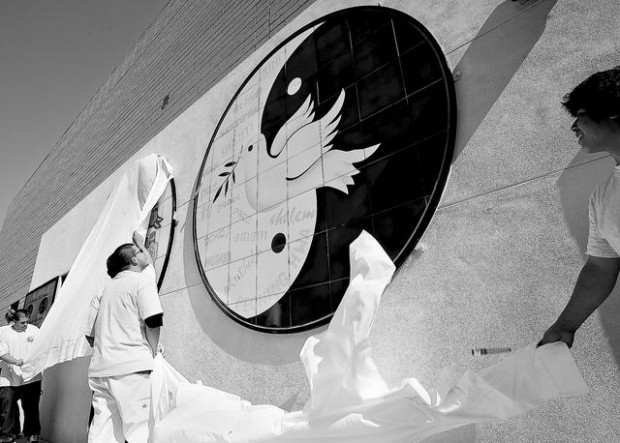
In addition to dedicating the building to Abrams, officials unveiled two tile murals in the courtyard designed with the doctor's spirit in mind.
In one mural, Mexican folk art themes were used to create a candelabra, or tree of life. The tree features faces of various races and ethnic backgrounds to show how people are rooted in the common thread of humanity.
The second mural features a large white dove with the word "peace" written in various languages. The murals were created by students from the county's Las Artes Arts & Education Center, a GED program.
Abrams would have appreciated both murals because they touch on his ideas of diversity and peace, said Alex Garza, an artist who supervised the project.
"Hopefully the two murals will inspire others who share Abrams' views," he said.
Abrams' daughter Ellen said her father would have been humbled by the building dedication and proud of the county's commitment to health care.
She added that if he were still alive, Abrams probably would have been circulating in the crowd of about 100 people, advocating for increased health-care spending.
"He never gave up on what he believed to be right," she said.
Abrams knew that despite all the improvements in public health care, work still remained, his daughter said.
That's why it's important that public leaders continue to advocate for cheap and accessible health care, she said.
The best way to honor Abrams is to continue to build around the health campus, where officials propose a mental-health facility and other public-health buildings, said county Supervisor Ramon Valadez.
The building is the second to be named after Abrams. The building that houses the University of Arizona College of Medicine's family medicine program also bears his name.
DID YOU KNOW ...
Dr. Herbert K. Abrams was lured to Tucson in 1968 to head the Department of Family and Community Medicine for the University of Arizona's new medical college.
He led the drive to create El Rio Health Center and served on its board from its opening in 1970 until 1986.
The need for the clinic was evident in the mostly Hispanic, low-income part of town El Rio served, an area that still had 400 outside toilets, an infant-mortality rate 50 percent higher than the community at large and few doctors, Abrams told the Star's Bonnie Henry in 2001.
This was at a time when people were suspicious of government-run health programs, he said. "In those days, community medicine was viewed as modern and progressive by some, but by others as almost a communist plot," said Abrams.
Abrams later helped create the UA's Arizona Center for Occupational Safety and Health and was the center's director until his retirement in 1983.
He also served on a string of health-related boards, including the El Pueblo Health Clinic and Kino Hospital. His advocacy for public health continued until his death last year at age 92.


