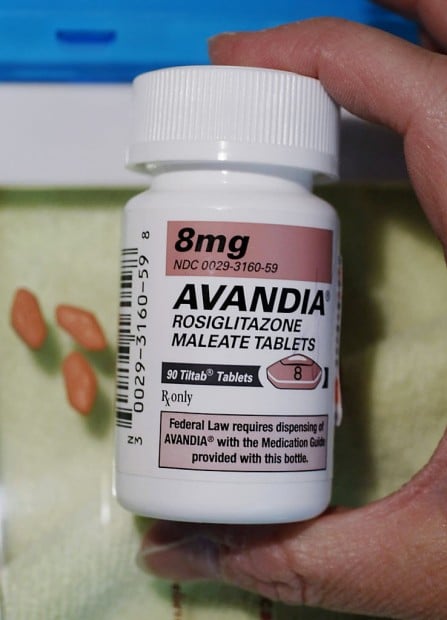
The Food and Drug Administration placed stringent restrictions on use of the diabetes drug Avandia Thursday and European regulators ordered it off the market, saying heart attack risks associated with the former blockbuster are too great a safety concern to continue its use for most people.
In simultaneous news briefings, the European Medicines Agency and the U.S. Food and Drug Administration announced their long-awaited decisions on the fate of GlaxoSmith-Kline's controversial drug.
The European regulator said it would stop authorizing marketing of Avandia, which will be banned from sales within the next few months.
The FDA said new patients will be able to get a prescription for Avandia, but only if they can't control their blood sugar with other medications. Doctors will have to document that their patients are eligible to receive it and have been briefed on its risks. The FDA expects the plan "will limit use of Avandia significantly."
People are also reading…
The two decisions will virtually eliminate use of the drug around the world, said Dr. Steve Nissen of the Cleveland Clinic.
"To prescribe this drug in the U.S., you now have to certify that the patient has tried every other diabetes drug, and there are no patients who only respond to Avandia," said Nissen, who published the first paper linking Avandia to heart risks.
While there are more than a dozen diabetes drugs on the market, only Actos from Japan-based Takeda Pharmaceuticals works the same way as Avandia. U.S sales of Actos have risen steadily - hitting $3.4 billion last year - as Avandia's reputation has soured. Global sales of Avandia have fallen from a peak of $3.2 billion in 2006 to $1.2 billion last year.
In the U.S., more than 2.6 million patients filled prescriptions for Avandia last year, and some experts worry that those now taking the drug may continue using it despite the heart risk.
Anyone already taking Avandia will need to sign a waiver saying that they understand the drug's risks. But Dr. Harlan Krumholz of Yale University said patients may not understand they are still at risk even if they feel good.
"Asking a patient, 'Are you doing well on this medication?' isn't an adequate assessment of whether the drug is increasing their risk. It's a silent risk. They don't feel the risk," Krumholz said.
The safety of Avandia, the brand name for rosiglitazone, has been the top drug-safety controversy facing the FDA in recent years. The FDA's critics have framed the Avandia decision as a key test of the agency's Obama-appointed leadership, who vowed to bolster the agency's regulatory stance after a series of drug- safety problems under the previous administration.
FDA Commissioner Margaret Hamburg said the decision reflects the agency's unique powers to restrict access to medications.
But critics say the agency had a responsibility to act much sooner. Senate investigators concluded earlier this year that the FDA was informed in 2005 of Avandia's heart risks - two years before it made those risks public. The same investigators concluded GlaxoSmithKline began hiding evidence about Avandia's risks soon after it came on the market.
"This unfortunate decision sends a signal to industry that this Food and Drug Administration is incapable of removing a drug from the market," said Paul Thacker, who led an investigation into the handling of Avandia for the Senate Finance Committee. "I have a hard time imagining another drug where more negative evidence has piled up."
GlaxoSmithKline said in a statement Thursday that it will voluntarily stop promoting Avandia in all countries where it operates.
The decision marks the second time in three years that the agency has decided to leave Avandia on the market despite mounting pressure from outside medical experts, politicians and some of its own scientists.
The FDA approved the drug in 1999, and it became the top-selling diabetes pill in the world by 2006. But use has plummeted since a 2007 analysis linked the drug to heart attack risks.
The European Commission still must approve the recommendations by the European Medicines Agency, a process that could take weeks. Decisions by the health regulators usually are not challenged.
The FDA's decision essentially concurs with the opinion outside experts reached earlier this year.
In July, a 33-member panel of medical experts voted 20-12 to keep Avandia available in the U.S. Of the 20 who voted to keep it on the market, 10 said it should be available only on a limited basis. The FDA is not required to follow the group's advice, though it often does.