Diego Gonzalez-Rosales had an insider’s knowledge of hiring practices as the manager overseeing kitchen staff at Zipps Sports Grill locations around metro Phoenix.
He estimated the popular local chain of sports bars employed between 150 and 180 people to staff the kitchens at its 14 locations. Of those, almost all were undocumented immigrants, Gonzalez-Rosales said: Spanish speakers in the country illegally, like him.
What's more, Zipps managers knew it, he said.
“Everyone knows,” Gonzalez-Rosales said.
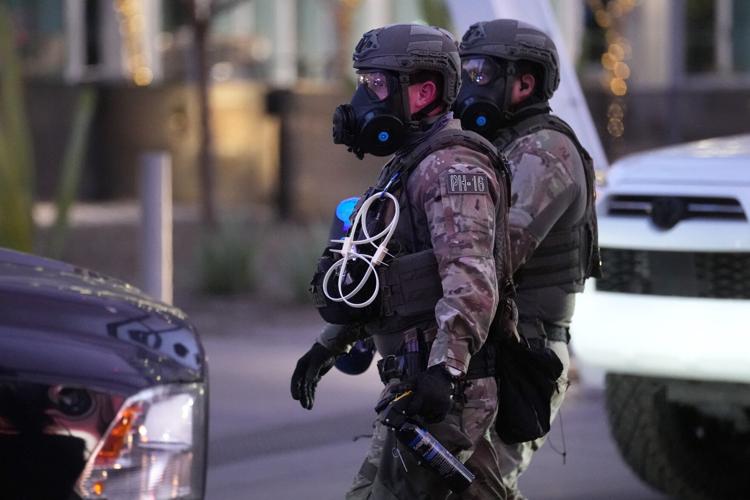
Masked federal agents simultaneously raided every Zipps Sports Grill location in January.
The raids followed an 11-month investigation prompted by a tip that Zipps restaurants were employing undocumented workers to staff their kitchens, according to criminal complaints filed in federal court. The tipster also claimed management knew employees were fraudulently using identification documents that belonged to U.S. citizens to pass mandatory employment eligibility checks, according to the criminal complaints.
People are also reading…
Homeland Security Investigations agents audited Social Security numbers being used by Zipps' employees and found dozens of instances where the same numbers were being used multiple times at other jobs in Arizona, an indication of widespread "aggravated identify theft," according to the criminal complaints.
Gonzalez-Rosales, 37, was in the kitchen of the downtown Tempe Zipps when he saw agents swarm the front of the house. He tried hiding in the bathroom.
Agents busted in and arrested him. Handcuffed, he waited with other kitchen workers for his turn to be questioned individually. When his time came, he told agents what he knew.
He repeated much of the same information to The Arizona Republic in a phone interview from the Eloy Detention Center as he awaited deportation.
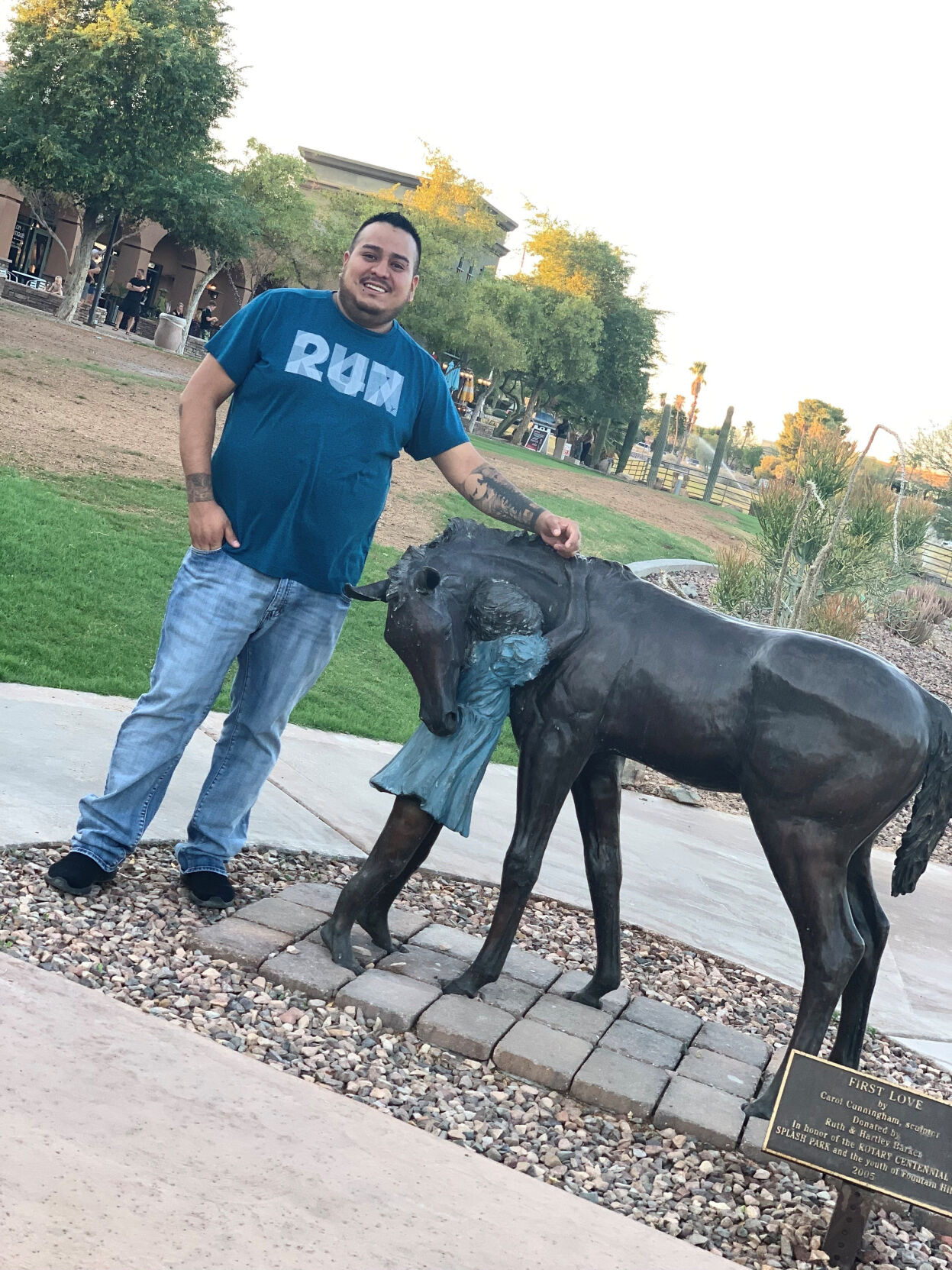
Diego Gonzalez-Rosales is pictured in an undated photo.
Gonzalez-Rosales said undocumented immigrants used driver's licenses and Social Security numbers that belonged to legal workers to fraudulently pass E-Verify screenings, which under Arizona law are mandatory.
Zipps managers not only knew workers were using fraudulent documents to get hired, they sometimes facilitated it by "firing" and "rehiring" the same illegal worker multiple times using different documents each time, he said.
While he had an initial conversation with prospective hires, managers above him at each location would sign the hiring documents, Gonzalez-Rosales said. Agents could check the paperwork to see who signed, he said.
He told authorities about the time a prospective employee failed a verification screening through the federal E-Verify program and was told by a manager to go get another Social Security number.
He discussed with agents text messages that he said showed a manager knew a person worked under one name but went by another real name.
Investigators were able to corroborate “much” of what Gonzalez-Rosales told them, according to a sealed court document reviewed by The Republic.
Prosecutors, in a memo filed with U.S. District Court before his sentencing, said Gonzalez-Rosales was a “key facilitator” in hiring at Zipps but was not the only person involved.

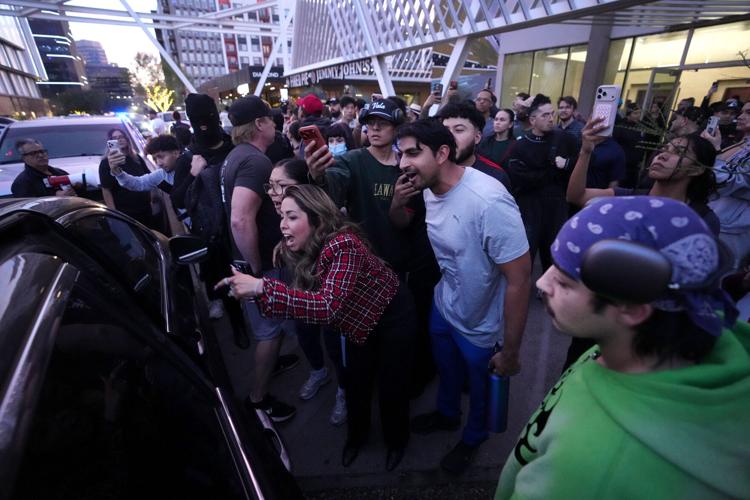
People protest outside of Zipps Sports Grill Park Central after federal authorities entered multiple locations in metro Phoenix on Jan. 26, as part of a still-evolving investigation by the Department of Homeland Security.
Gonzalez-Rosales was “certainly not solely responsible for the hiring practices at Zipps,” prosecutors said in the memo.
Prosecutors filed a separate motion under seal on May 25 requesting the judge grant Gonzalez-Rosales a lighter sentence because of his cooperation with investigators. The Republic was able to view a copy of that sealed document.
Gonzalez-Rosales was sentenced to five months in prison after pleading guilty to a single charge of giving one person documents that would allow him to get hired at Zipps.
He is the highest-ranking Zipps manager to face federal charges. The high-profile raid and investigation only resulted in the criminal prosecutions of Gonzalez-Rosales and three lower-level workers.
Gonzalez-Rosales said he felt like he was taking the fall for the entire Zipps operation. He said he shared ample evidence of the hiring practices at Zipps with federal prosecutors during his seven months in custody. He provided details that he believed showed people in the Zipps' corporate office knew its kitchen staff used fraudulent documents to get hired.
As he awaited deportation to Mexico, Gonzalez-Rosales said he was left with a burning question: Why had no other managers been prosecuted?
“They try to put everything on me,” he said in the phone interview.
"They don’t want to find a person that is in charge,” he said. “Or just because I’m an illegal (person), they put a charge to me, send me to Mexico and nobody sees anything and nobody does anything?"

People protest outside of Zipps Sports Grill Park Central in January after federal authorities entered multiple locations in metro Phoenix as part of a still-evolving investigation by the Department of Homeland Security.
Dishwasher to kitchen manager to detainee
Gonzalez-Rosales said he crossed into the United States at 17, looking for a “better life” than what he had in Mexico.
Days after arriving, he started at Zipps as a dishwasher. He wasn’t asked to show any documents to get hired, he said, nor did he have any. He was just told to sign his name in a box.
Gonzalez-Rosales said that through hard work and hustle, he rose to cook and then to managing the kitchen of a single location. Last year, he said, he was put in charge of overseeing the kitchen staff of each restaurant in the chain.
On the afternoon of Jan. 26, he assigned himself to the Zipps in downtown Tempe. A party of about 40 to 50 people had booked the back room, and Gonzalez-Rosales said he wanted to make sure the evening went smoothly.
He had arrived to oversee the setup and planned to stay until the party left and the room was broken down.
“But the party never showed up,” he said, “because ICE was there.”
The U.S. Immigration and Customs Enforcement raids took place during happy hour. NBA and NHL teams in the Eastern time zone had started their games. The frozen “Zipparita” was $5, with flavors extra.
The raids at all 14 Zipps locations and their sister restaurant in Scottsdale, Goldie’s Neighborhood Grill, were a show of force.
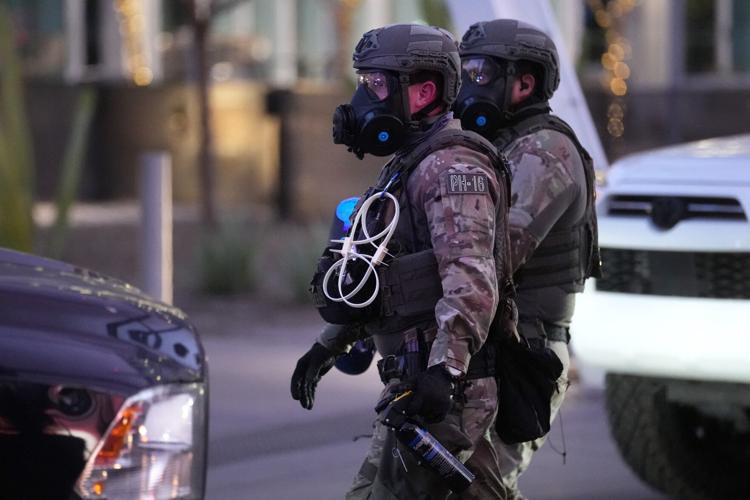
Agents arrived in unmarked pickup trucks, many with out-of-state license plates. Once inside, they ordered patrons out, telling them to leave their food and drinks. Yellow tape went up over the entrances. The sports grills became a crime scene.

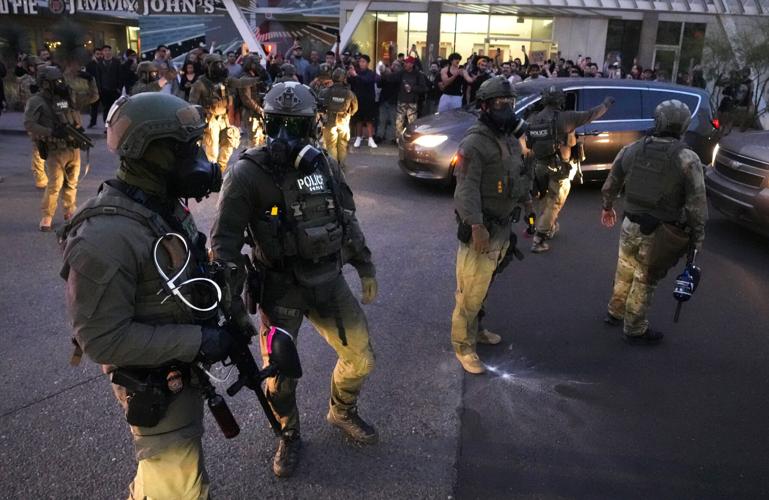
Federal agents outside of Zipps Sports Grill Park Central in Phoenix. Federal authorities entered multiple locations in metro Phoenix on Jan. 26, as part of a still-evolving investigation by the Department of Homeland Security.
Raids happened during tense immigration crackdowns
The Zipps raids came late in a month of increased immigration enforcement action nationally. Two U.S. citizens had been shot and killed while protesting in Minneapolis.
Alerted to the arrests, protesters in the Phoenix area gathered outside some Zipps locations, shouting at immigration officers inside the restaurants and squaring off with law enforcement officers standing outside to keep the peace.
Protesters believed what was happening signaled the start of workplace raids in Arizona, although the Zipps raids had been sparked by the earlier tip.
After clearing the restaurants of patrons, agents went to the back of the house at each location, zeroing in on the kitchen.
Agents detained 39 people during the operation and accused them of being in the country illegally.
Three people faced felony charges of misusing someone else’s identity.
The charges lodged against Gonzalez-Rosales were the most sweeping and serious. He was accused of engaging in a “pattern and practice” of illegal hiring. He was accused of lying on federal employment forms. He was accused of providing false names and Social Security numbers to prospective employees.
A news release from the U.S. Attorney’s Office for Arizona described him as "the individual responsible for hiring kitchen staff for all Zipps locations" and accused him of having "recruited and hired illegal aliens at multiple locations, using fraudulent identification documents."
The Republic asked Zipps to comment on what Gonzalez-Rosales said about the company's hiring practices. In an email, Tiffany Doby, a spokesperson, said the company declined to comment in detail. But she said Gonzalez-Rosales, because of his criminal charges and pending deportation, had “ample motivation to make self-serving statements.”
Doby said Zipps had a record of taking seriously its obligations to comport with federal, state and local regulations. She did not respond to a follow-up question asking whether Zipps had changed any of its hiring practices after agents found workers who were in the country illegally.
Inside the Mill Avenue location, Gonzalez-Rosales started speaking to investigators in detail about how the hiring at Zipps worked and why management had to know that most of its kitchen staff were in the country illegally and getting jobs using fraudulent documents.
“Everybody knows about that," he told The Republic. "The IDs that they showed, I don't know exactly how (they know) the good ones, or how (they know) the fake ones. But they know."

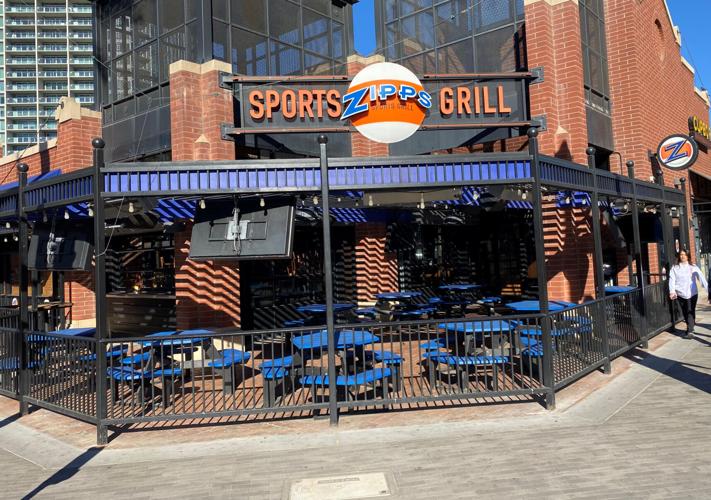
The downtown Tempe location of Zipps Sports Grill was closed on Jan. 27, a day after federal immigration authorities raided the restaurant chain.
Ex-Zipps manager details hiring process
Gonzalez-Rosales, during his interview with The Republic, said he conducted initial phone interviews in Spanish for applicants to jobs at Zipps. But he did not officially hire anyone, he said.
That job was left to managers at the Zipps locations, he said. Gonzalez-Rosales would send applicants to those restaurants, choosing the one closest to where they lived.
He told the prospective hires to bring the documents they would need to show managers at the location, who would run the name and number through E-Verify.
Gonzalez-Rosales would sometimes help new hires meet with managers, translating for them and helping fill out documents.
“But I never do, like, hirings or E-Verifies. I never do anything like that,” he said.
To access E-Verify, a user must clear a separate federal verification process.
“I never (had access), because, obviously, I don’t have papers,” he said.
What he told prosecutors
What Gonzalez-Rosales told investigators was summarized in the memo that prosecutors filed requesting a lighter sentence for him because of his extensive cooperation with investigators.
Gonzalez-Rosales said “that many of the managers and operations know the company hired aliens but they protected themselves with the paperwork,” the motion states.
Gonzalez-Rosales told investigators that if the I-9 was flagged for not passing E-Verify or if the identity was already “being worked” at Zipps, the company would simply “fire” the old identity and rehire the same individual under a new identity, according to the motion.
If a person's name and number did not clear E-Verify, Gonzalez-Rosales said he would hear about it from a member of the Zipps operations team. The motion said Gonzalez-Rosales gave names of those individuals to investigators.
Gonzalez-Rosales told investigators he was present when a member of the operations team told an employee that he needed to obtain a new Social Security number to continue working at Zipps, the motion states.

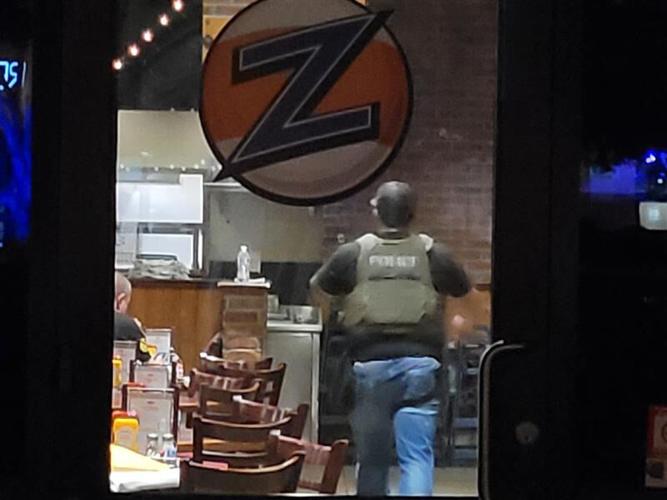
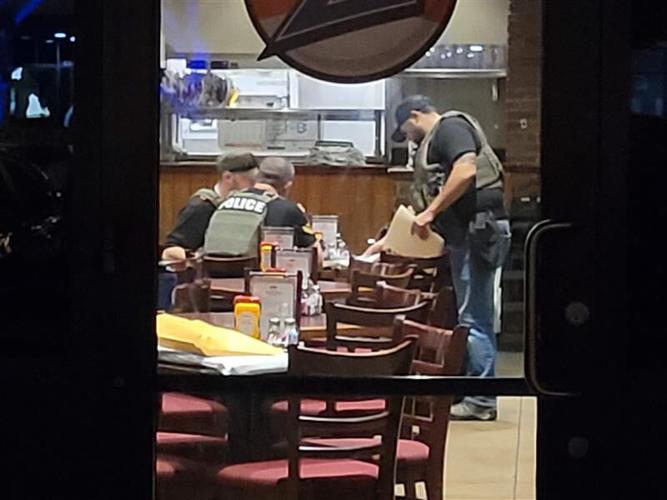
An Immigration and Customs Enforcement agent is seen inside a Zipps Sports Grill on Jan. 26, during an operation at the business in the area of 59th Avenue and Utopia Road in Glendale.
Gonzalez-Rosales also indicated that several restaurant managers knew that Social Security numbers were being “recycled” at the business. He identified several managers who had been with the company for years who he believed were working under fraudulent names, the motion says.
Zipps executives would occasionally email representatives from the human resources department to inform them that an active employee would be working under a different Social Security number, the motion states.
Those managers were told not to send communications of that nature within the company, the motion states.
If Gonzalez-Rosales ever had to speak to human resources about employees with work authorization issues, they would simply “play dumb,” the motion states.
"Law enforcement was able to corroborate much of the information” provided by Gonzalez-Rosales, the motion states.
What happens next in the case?
Gonzalez-Rosales also told investigators he would testify in court against any Zipps executives or managers, and he was willing to meet again with investigators, the motion noted.
The government did not take him up on the offer.
“At this time Defendant’s co-conspirators have not been charged and it is not expected that the Defendant will be asked to testify in court,” the motion states.
A spokesperson for the U.S. Attorney’s Office in Arizona said Gonzalez-Rosales was not held in the United States as a material witness because there were no pending cases that required his testimony. The spokesperson also said that authorities never took his sworn testimony to use in a future proceeding.
Jason Stevens, the special agent in charge of Homeland Security Investigations for Arizona, told The Republic on Aug. 26 that the investigation into Zipps was ongoing.
The U.S. attorney for Arizona, Timothy Courchaine, also said the investigation into Zipps was continuing. “I wish I could say more, but I can’t,” he said. The men were holding a news conference about another matter.

Immigration and Customs Enforcement agents are seen Jan. 26, inside a Zipps Sports Grill during an operation at the business in the area of 59th Avenue and Utopia Road in Glendale.
In a separate email sent Sept. 2, Zipps spokesperson Doby said the chain had learned the government had closed the case and had declined to bring any further criminal prosecutions. Doby called the government’s decision “appropriate.”
But it may be too early to conclude the attention-grabbing raids at Zipps have only yielded low-hanging fruit, said Jessica Vaughan, policy studies director at the Center for Immigration Studies, a think tank that supports stricter immigration enforcement and less immigration.
Worksite enforcement cases take years to play out, especially when companies "get lawyered up," Vaughan said.
Prosecuting employers on criminal charges is hard because prosecutors must show employers engaged in a "pattern and practice" of knowingly hiring unauthorized workers, Vaughan said. That is a high standard to prove in court because of the prevalence of fraudulent documents and gaps in the federal government’s E-Verify system, which is susceptible to identity fraud, Vaughan said.
Prosecutors can also pursue civil fines if they don’t have enough evidence to pursue a criminal case against higher-level managers or owners, Vaughan said. She said the case against Zipps might have moved to negotiating civil penalties rather than criminal prosecution.
“There may be things going on in the background, negotiations with the employers,” Vaughan said. “They may be trying to look at what they can make stick.”
Gonzalez-Rosales told The Republic that Zipps management was confident the company could withstand scrutiny from immigration authorities because it ran every employee through E-Verify.
In March 2025, one month after receiving the tip about Zipps' alleged illegal hiring, Homeland Security Investigations agents visited each location to serve notice of inspections of the restaurants’ I-9 records.
The audit panicked the kitchen staff, Gonzalez-Rosales said.
“Everybody started, you know, freaking out about that,” Gonzalez-Rosales said.
Because he spoke fluent Spanish and passable English, Gonzalez-Rosales said he often served as a bridge between Zipps executives and the kitchen staff. He said someone from “the office” at Zipps called him and told him to tell employees not to worry.
Zipps had been through something like this before, he was told, and the company had an attorney working on the case.
Plus, every single employee at Zipps had produced a name and number that passed through E-Verify.
“Technically, everybody is a citizen in this company,” Gonzalez-Rosales said. “That’s what they told me.”

Federal agents outside of Zipps Sports Grill Park Central in Phoenix following raids at the Phoenix area chain's multiple locations.
What is E-Verify screening? How can employers get around it?
In 2008, Arizona enacted a law designed to combat what lawmakers saw as the rampant use of fake documents by undocumented immigrants to get jobs in Arizona.
Before the law change, employers in Arizona were only required to follow federal law, which required them to physically inspect Social Security cards and other identification documents, such as a driver’s license, to complete the form given the bureaucratic title of I-9.
All employers had to do was inspect the documents and write down the numbers on the form, as long as the documents presented by the prospective employees appeared real. But employers were accepting documents that were obviously fraudulent.
For example, a 2005 report from the federal Government Accountability Office said 9 million people were working under the Social Security number: 000-00-0000.
Under Arizona’s law, employers were mandated to run a person’s name and Social Security number through the federal government’s web-based E-Verify system. The number and name needed to match up with what the government had on file in its database. That, according to the law, would ensure new hires were legally authorized to work in the United States.
But the E-Verify system has a major Achilles' heel: identity theft. Unauthorized workers can pass the E-Verify checks by using documents that belong to authorized workers.
A black market emerged for names and their matching Social Security numbers that could pass through the system.
And once an employer runs a person through the E-Verify system, it creates what the law calls a “rebuttable presumption” that the employer didn’t knowingly hire someone who was in the country illegally.
State Sen. John Kavanagh, R-Fountain Hills, pushed to make E-Verify mandatory across Arizona. In an interview in August, he said the law had an effect on illegal hiring, curtailing the acceptance of obviously fraudulent documents. But, he said, names and Social Security numbers are “floating around out there.”
He has heard anecdotes of some U.S. citizens willingly allowing their name and number to be used so it would pad their Social Security earnings, he said.
For businesses, he said, “some might be a situation of the owners being willfully blind. Others are situations where you can be actually duped. There’s no way to discern between the two. So you’ve got to give the businesses the benefit of the doubt.”
Why worksite enforcement matters
Employment is a key driver for illegal immigration, Vaughan, of the Center for Immigration Studies, said.
If employers fear nothing beyond token consequences, Vaughan said, illegal hiring will continue.
The administration of President Donald Trump had vowed to crack down on employers but has not done so, she said.
“It has not been the highest priority for ICE,” Vaughan said. “They are talking about increasing worksite enforcement, but we have not seen that.”
It's fair to ask whether immigration agents were content to go after workers at Zipps and not follow the investigation into the corporate offices, said Doris Meissner, the former commissioner of the U.S. Immigration and Naturalization Service under President Bill Clinton.
“Are they basically doing employer enforcement but doing it in ways that go for the low-hanging fruit?" she said, "And that don't actually put to the test the more difficult kind of investigation that actually bites the employer in the way that the statutes envisioned?”
Since Congress created penalties for employers that knowingly hire unauthorized workers in 1986, few employers have ever been held accountable for illegal hiring practices regardless of who is in the White House, Meissner said.
That’s in part because the employer sanctions law requires proof not only that employers had unauthorized workers under their employment but that they "knowingly" hired them, Meissner said.
The nearly two dozen acceptable documents to complete I-9 employment eligibility forms makes it easier for employees to present fraudulent documents and employers to claim the documents looked real and therefore followed the law, Meissner said.
Once someone passes a screening through E-Verify, an employer has “plausible deniability,” Meissner said. “It’s very much a wink and a nod system.”
Employers have long argued they would be more willing to follow rules set up by Congress to prevent hiring unauthorized workers if Congress also reformed immigration laws to make it easier for immigrants to come to the United States legally to fill labor shortages, said Meissner, a senior fellow at Migration Policy Institute, a nonpartisan nonprofit think tank.
Instead, employers argue they are "consigned to a workforce that is incentivized to skirt the law,” Meissner said.
Meanwhile, she said ICE doesn't have an excuse for not vigorously going after employers that flout the law after an infusion of billions of dollars in funding from Congress under the One Big Beautiful Bill.
“The levels of resources that are flowing to ICE as an agency are at historically unprecedented levels,” she said.
'Culpable': What happened to the Zipps cases in Phoenix?
The 11 months of investigation and subsequent raids at Zipps yielded four criminal prosecutions. Gonzalez-Rosales faced five felony charges.
The other three people faced a single felony charge of using someone else’s identity. In all three cases, the I-9 verification forms were signed either by a general manager or an "employer authorized representative," the criminal complaints state.
From court documents filed in those three cases, it appeared immigration agents had a list of names that the workers falsely used. But they did not know which person used which name.
The three men who were charged told investigators both their real name and the false name they used for work, court records say.
The attorney for one of the men charged with a felony — a 22-year-old with no previous criminal record — said the agents likely asked all of the Zipps employees what false name they worked under. Some answered. Some stayed silent.
The attorney, Davina Godley, said her client answered agents’ questions. Other employees stayed silent, she said, and they were not charged with felonies.
“He was honest,” Godley said. “So, he wasn’t thinking beyond answering questions honestly.”
The government reviewed Social Security numbers linked to Zipps' employees as of mid-2025. The review found that Zipps employees were using Social Security numbers that were widely being used at multiple other jobs in Arizona, citing records kept by the Arizona Department of Economic Security.
The audit identified 76 Zipps employees with Social Security numbers being used at active employers other than Zipps. Those numbers were being used at anywhere from three to 42 active employers, the review found.
The Social Security number used by one Zipps employee was also used during the same time period at other local restaurants, construction companies, an electrical company and a golf club, court documents show.
The use of the same Social Security number at multiple jobs, which collectively earned high wages, was consistent with aggravated identity fraud, court records show.
A Department of Economic Security spokesperson would not comment on any statistics the agency might have on such rampant use of the same Social Security number.
The agency also did not answer a question about what consequences, if any, would befall the person to whom the number actually belonged.
Neither the Federal Trade Commission, which offers advice to consumers about identity theft, nor the Social Security Administration provided answers about what might happen to a person whose Social Security number was fraudulently used to gain employment.
By May, each of the three men charged with using someone else’s identity had pleaded guilty and were sentenced to the time they had already served in custody. Each was released to immigration authorities to face what judges described as almost certain deportation.
The plea hearing for one man reached a snag. While he understood what actions he was accused of doing, he did not seem to understand how making a false attestation on a document was a crime.
After a discussion with his attorney, Joe Duarte, the judge asked the man if he pleaded guilty or not guilty.
“Culpable,” he said. Guilty.
After the hearing, Duarte said someone who had another person’s name and Social Security number could cause real damage to their credit score and lives. But, he said, clients such as the man he represented were using these documents not to do harm but to work.
“People charged with identity theft who are here illegally,” he said, “it’s for employment purposes.”
Gonzalez-Rosales 'has taken responsibility,' lawyer says. 'Zipps has not'
Gonzalez-Rosales pleaded guilty in March to a single count of misusing another person’s identification documents.
The government dropped the other charges, including the count that accused him of engaging in a "pattern and practice" of illegal hiring.
In his interview with The Republic, Gonzalez-Rosales detailed what he did that led to his single felony conviction.
He said a friend of his, named “Gato,” was trying to get hired at Zipps but twice used documents that failed the E-Verify screening. A manager said he had one more chance, Gonzalez-Rosales said.
Gonzalez-Rosales said he had on his phone the driver’s license and Social Security card for a person who had applied to work at Zipps three years ago. Gonzalez-Rosales knew the documents would pass E-Verify.
Gonzalez-Rosales said he sent a text message to “Gato” with those images so he could use the identity to get hired. But "Gato" ended up not showing up.
“I just make a bad decision that time,” Gonzalez-Rosales said. “I was just thinking about helping a friend to find work because they don't have (work) at that time.”
Gonzalez-Rosales said it was the only time in his career at Zipps that he had passed along someone else’s identity to use.
Gonzalez-Rosales did not tell this story to the agents who were interviewing him upon his arrest until they found the images on his cell phone and confronted him with them.
Gonzalez-Rosales did not tell The Republic why he still had those 3-year-old images in his phone.
Two other men arrested during the Zipps raids said Gonzalez-Rosales gave them a name and number to use to get hired at Zipps. One of the men said he paid Gonzalez-Rosales $300 for the name he used.
During his sentencing hearing, Gonzalez-Rosales’ defense attorney, Debbie Jang, slammed the federal government’s investigation as flawed because it failed to look deeper into how the restaurants hired kitchen staff.
“Mr. Gonzalez-Rosales has taken responsibility,” Jang told the judge. “Zipps has not.”
Not going after Zipps executives undercut the Trump administration's vow to go after serious criminal violators, she said.
“It’s not some secret that Zipps had undocumented workers,” Jang said. “The higher-ups in corporate knew what was going on.”
Zipps executives used Gonzalez-Rosales as a “pawn” to hire undocumented workers “to line their own pockets," Jang said.
When Gonzalez-Rosales spoke to the judge, he was contrite.
“I want to ask for forgiveness,” he said. “I wanted to do the right thing, but turned out it went wrong. I am about to lose everything, and there’s nothing I can do about it.”
He was sentenced to five months in prison, the bulk of which he had already served by the time of his June hearing.

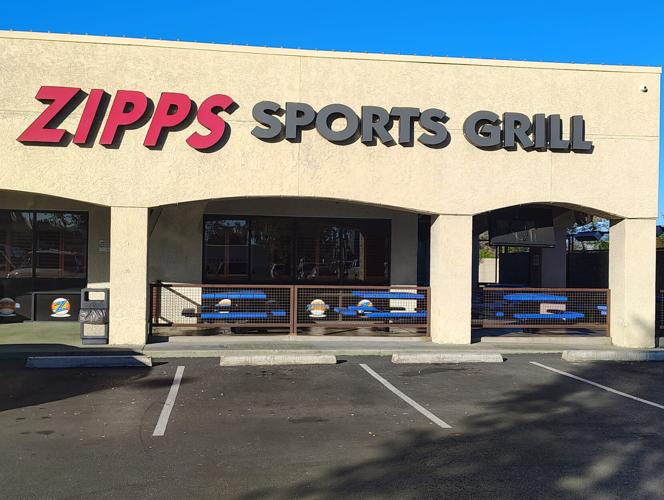
Zipps Sports Grill at 16th Street and Bethany Home Road on Jan. 27.
He was then sent to the Eloy facility to await deportation proceedings.
Gonzalez-Rosales told The Republic his former employers left him holding the bag. He said higher-ups had promised to defend him legally if the company ever had any immigration problems.
“They told me they supposed to be helping me if something happened like this,” Gonzalez-Rosales said. “And they don’t do anything after (expletive) 20 years, man.”
In August, an immigration judge ordered Gonzalez-Rosales deported. He had until Sept. 2 to decide whether to appeal the ruling or be sent back to Mexico. He decided not to appeal. He would have faced months, maybe years, in detention waiting for a decision. He could be deported any day now.
Gonzalez-Rosales has family in Mexico City. But he did not want to go back. He has a girlfriend in Phoenix and had not been to Mexico since he left 20 years ago.
“I got all my memories here,” he said.
Gonzalez-Rosales said he had many questions. Chief among them, of all the people he says knew about the illegal hiring practices at Zipps, “Why just me?”
Gonzalez-Rosales was asked if he thought undocumented people were still working in Zipps’ kitchens.
“Ha,” he said. “For sure.”