PHOENIX — Republican lawmakers are advancing a proposal to make criminals out of those who warn others that they are in "imminent or ongoing'' threat of being arrested or picked up by Immigration and Customs Enforcement or other law enforcement.
Legislative Democrats say the measure is so broad that police could arrest someone for simply warning neighbors that ICE is in the neighborhood. That would be a violation of First Amendment rights, they argue.
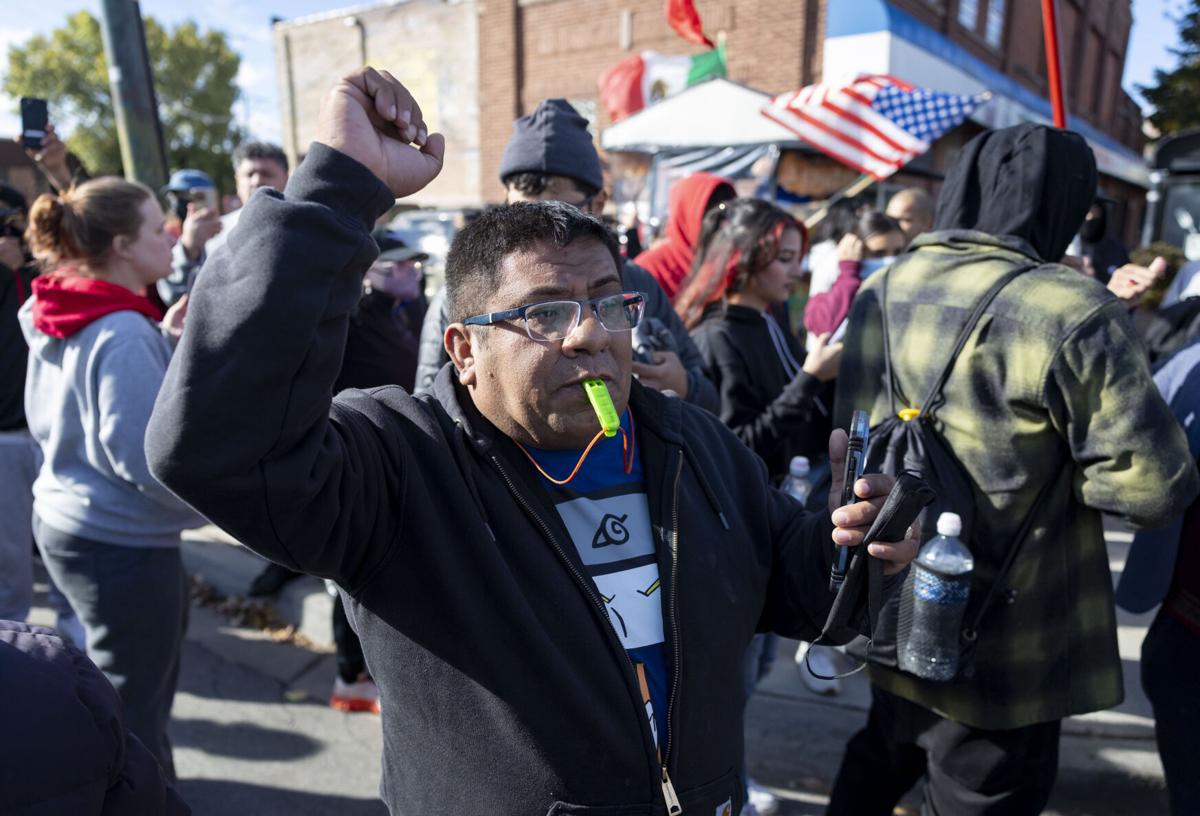
Republican Sen. John Kavanagh of Fountain Hills acknowledged the original version of his proposal could have been interpreted to do that. In fact, he said he wrote it after Democratic state Sen. Analise Ortiz posted the location of ICE agents in her Phoenix neighborhood. He meant to target activities like that as well as people blowing whistles to warn of the presence of federal agents.
But Kavanagh conceded that would not pass constitutional muster. So the version just approved by the Republican-controlled Arizona House is narrower, targeting only those who notify someone whom they know is being sought by law enforcement.
People are also reading…
Kavanagh said there already are laws that make it a crime to physically obstruct police who are trying to make an arrest. What's needed, he said, is something to criminalize those who obstruct police by warning those whom police are seeking.
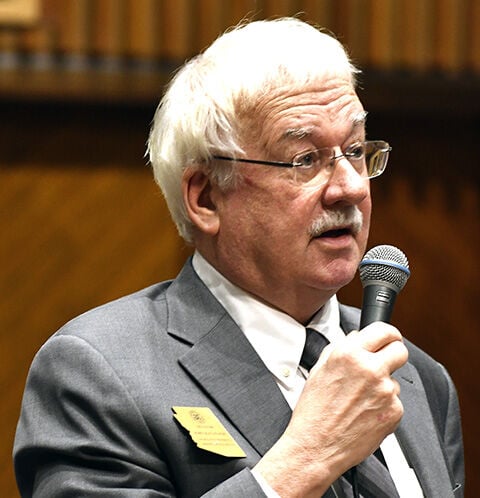
Sen. John Kavanagh
The measure has alarmed Democrats.
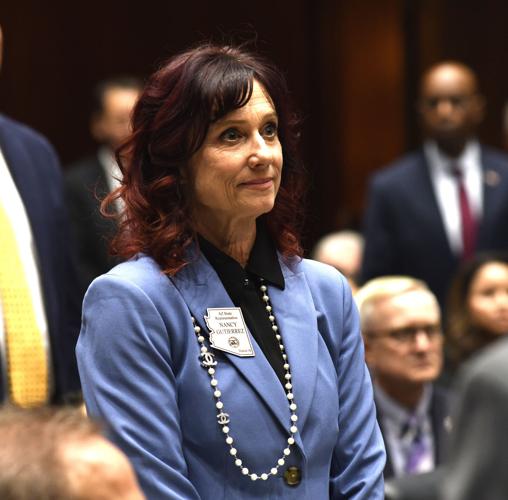
"It targets speech,'' said Rep. Nancy Gutierrez, a Tucson Democrat. "It criminalizes communications itself.''
The problem, she said, is the breadth of what the legislation defines as an illegal warning. It includes everything from bells and whistles to electronic communications, gestures, written messages and "any other method of conveying information'' that is not specifically listed.
Those are exactly the things some lawmakers are doing to warn people about ICE activities.
"My colleagues and I have reached out to our communities when we are hearing about ICE in a neighborhood and when we are wanting to prevent the random kidnapping of our citizens,'' Gutierrez said.
"So we let people know: This has been seen at this corner or at this grocery store, or people have been seen here, be careful if you are in that area,'' she said. "This bill would make that illegal.''

Rep. Nancy Gutierrez
Kavanagh contends this version of the bill wouldn't do that, however.
He added language to his original Senate bill to say a crime would occur under this legislation only when a warning is designed to hinder, delay or prevent the lawful arrest of another "specific'' person.
That eliminates the possibility of arrest for someone who simply warns others that there are ICE officers, or any other law enforcement, in the area, Kavanagh said. He said the law would apply only when someone knew that another specific person was being sought and then warned that other person.
But Gutierrez said she remains unconvinced the language is narrow, nor that the state should make any of this a crime that people could be jailed for. A violation would be a Class 1 misdemeanor, carrying a penalty of up to six months in county jail and a $2,500 fine, under Kavanagh's measure.
Consider, Gutierrez said, if she has a neighbor whose legal status may be in question, even if they have followed the law and applied for asylum. People like that are still being swept up by ICE as they go to their immigration hearings, she said.
"I go to that neighbor and say, 'Hey, ICE is coming to our neighborhood,' then I can be arrested for telling my neighbor because it's one specific person?'' she asked.
Ditto, Gutierrez said, if she finds out that immigration officials are coming to a school.
"Why shouldn't I be able to say specifically to a family, 'Hey, you don't want to be here, this is what we're hearing is happening,'?'' Gutierrez said.
Kavanagh, however, said she would remain free to do just that even if his bill becomes law. The key, he said, is the provision saying it's only illegal if someone is warning a "specific'' person that law enforcement is coming for them.
"You don't even know if the police are coming for that person,'' Kavanagh said of Gutierrez's example of telling a neighbor that ICE is in the area.
By contrast, "If police get out of the car and said, 'All right, let's serve this warrant on Joe Blow,' and you quickly walk to the backyard where you know he is barbecuing and said, 'ICE is here to get you,' then it would'' be illegal, he said.
Kavanagh, a former police officer, acknowledged that, if he had his way, the legislation would read exactly the way the Democrats fear. But that isn't an option, he said.
"Courts have ruled that it's a First Amendment right to post on the internet 'Police are on Fifth Avenue and 23rd Street,' '' Kavanagh said.
"It's a First Amendment right if you see ICE coming down the street to blow a whistle and say, 'ICE is here,' '' he said. That required him to rewrite his bill to avoid those constitutional issues.
But House Minority Leader Oscar De Los Santos isn't convinced the lines Kavanagh said his legislation draws are as clear as he suggests. The Laveen Democrat said he still believes Senate Bill 1635 could make criminals out of people he says are doing nothing wrong.
"This bill includes a lot of language, including things like 'interference' or 'assisting' or 'harbor' that are undefined,'' De Los Santos said.
"Because they're undefined they are vague and could be used in a sweeping manner, in an overly broad manner,'' he said. "And my fear is that, because of the poor draftsmanship of the bill, it is not only unconstitutional but potentially you could have a case where somebody could be arrested or charged with crimes simply for going around and educating their community about their rights.''
While Kavanagh said he's convinced the legislation as it now stands will withstand legal challenge, it was still designed with the possibility that a court could find parts of it unconstitutional.
Kavanagh included a "severability'' clause. It says if any part of the act — or how it is applied to any person or circumstance — is found by a court to be legally invalid, it does not invalidate the entire statute.
The proposed legislation still needs a roll-call vote in the House and final consideration by the Republican-controlled Senate.
Howard Fischer is a veteran journalist who has been reporting since 1970 and covering state politics and the Legislature since 1982. Follow him on X, Bluesky and Threads at @azcapmedia or email azcapmedia@gmail.com.