PHOENIX — The Pima County Republican Committee has filed a lawsuit to overturn some rules about what people can do in and around polling places.
Legal papers filed in federal court contend that Democratic Secretary of State Adrian Fontes has put regulations into the Elections Procedures Manual that impermissibly violate the First Amendment rights of those going there to vote, as well as those who are promoting candidates and causes outside.
And the committee, along with Kathleen Winn who is its chair, want U.S. District Court Judge Michael Liburdi to not just declare those rules illegal, but prevent election officials from enforcing them.
The litigation did not originate with the county party.
Winn said the Oversight Project already was working with her over a dispute about whether party observers were improperly banned from polling places in Pima County in the November 2025 election. That led to a decision by the Oversight Project, which has a history of investigations and litigation over what it considers corruption and fraud in government, deciding to take on Fontes and the state — and doing so through Winn and the Pima GOP as plaintiffs.
People are also reading…
The lawsuit largely focuses on two provisions of the manual.
One allows election officials to remove — and potentially have arrested — anyone who is in or near a polling place who impersonates a law enforcement officer or is "wearing clothing, uniforms or official-looking apparel intended to deter, intimidate, or harass voters.'' The problem with that, according to Neal Cornett from the Oversight Project, is there are no standards for how that would be applied.
"How are election officials to determine what uniforms or clothing would be intended to deter, intimidate, or harass voters?'' he asked.

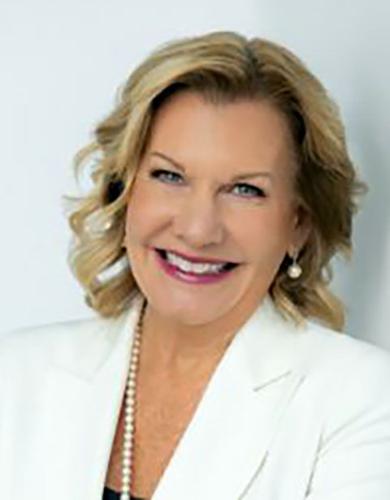
Winn
Calli Jones, spokeswoman for the Arizona Secretary of State's Office, said people in uniforms are not automatically banned. So, for example, she said a police officer who is taking time to cast a ballot would not have to change.
And a law enforcement professional, if in uniform and wearing a badge, would be permitted to carry a firearm. That is prohibited to everyone else, including those who have permission to carry a concealed weapon.
But the problem, according to Cornett, is bigger than just what is an intimidating uniform.
On one hand, the manual no longer has prior restrictions that had banned political apparel — like support for a candidate — by those going to cast a ballot. Cornett said, however, that still leaves a lot of leeway for poll workers to decide that something crosses the line.
"Is an 'America First' shirt considered intimidating?'' he asked.
"An 'Antifa' shirt? A 'No Kings' shirt?' Cornett said. "It's hard to say that any such inquiry would be more than a test that lies in the eye of the beholder.''
And that, Cornett told Liburdi, raises the chance that, with no "objective, workable standards'' in the manual, that could lead to someone being removed from a polling place, denied the ability to cast a ballot, and potentially arrested, simply for exercising a First Amendment right.
The other big issue comes down to what can get people in trouble outside the polling place.
There are very specific rules that regulate what is prohibited within 75 feet. That includes urging people to vote for or against a candidate or ballot measure.
Outside that zone, electioneering is permitted.

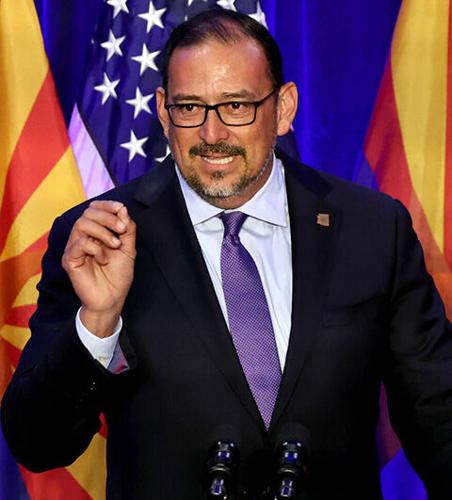
Fontes
But what's in the manual, Cornett said, extends the reach beyond that perimeter and forbids noise that is "audible from a location inside the door of the voting location.''
"Audible to whom?'' the attorney asked. "There are no objective, workable standards — decibel level, multi-party verification of noise levels, or a prohibition on noise amplification near polling places — for enforcing the restriction while ensuring it does not interfere with permissible electioneering practice.''
Cornett said if the concern is someone might have a megaphone just 76 feet away from the site, there's a simple way to deal with that: bar amplification equipment within 150 feet.
"Such a restriction would be entirely objective and not grant poll workers and law enforcement the powers to corral and referee speech,'' he said.
Jones said the rules — which have the force of law — were crafted with the goal of providing a safe space for people to cast their ballots.
"The guidance we provided is to assure that there is no intimidating environment that voters have to participate in,'' she said. And Jones said nothing in the rules infringe on constitutional rights.
"Your First Amendment rights stop you from yelling 'fire' in a full movie theater,'' she said. "And that's how our office views it.''
Nor does Jones believe that the way the rules are crafted invites arbitrary enforcement. She said the bottom line is how the activities of others affect voters.
"It's the view of our office and the guidance that was put in the Elections Procedures Manual that voters cannot and should not be intimidated while they vote,'' she said. "And that will be the continued guiding light for the office during this case.''
It will be up to Liburdi to decide where that line exists. Fontes and Attorney General Kris Mayes, who was also sued, have been given until May 29 to respond.
But there's another issue.
There is a general legal principle that courts will not agree to make significant changes in procedures so close to an election. And the statewide primary is July 21.
Cornett, however, said that doesn't necessarily preclude a quick ruling, which he said could be in place and enforced that day.
The Oversight Project, based on its own list of current projects, has a definite political bent.
It is currently involved in other issues nationally, including demanding the release of the tapes and transcripts from interviews Joe Biden did with a ghost writer, arguing that there should be an investigation of the former president on his use of an "autopen'' to sign documents, and a call to immediately prosecute Dr. Anthony Fauci on claims that he was involved in a cover-up about the origins of COVID-19.
Winn, for her part, has some theories of her own about how elections have been run in Arizona and whether they were fair.
For example, she said she would have liked to see more investigation of the 2022 defeat of Abe Hamadeh in his bid to become attorney general. He lost to Mayes by 280 votes.
"Heather Lappin for Pima County Sheriff down here would have been another one,'' Winn said, where she lost to Chris Nanos in 2024 by fewer than 500 votes.
"I also believe there are a lot of ballots that just weren't counted, just a lot of anomalies that happened in the 2022 election,'' she said.
But Winn's doubts extend back to the 2020 race, where the official tally showed Joe Biden outpolling Donald Trump by 10,457 votes in Arizona.
"There was an enthusiasm that I've never seen for Trump,'' she said.
"I saw how many people voted for him,'' Winn said. "And I can't believe with that enthusiasm that there were 10,000 more voters for Joe Biden.''
Still, she acknowledged a challenge has to be proven in court.
"And that was never accomplished,'' Winn acknowledged, despite multiple lawsuits.
Winn has a political history herself, losing her 2022 bid to be the Republican nominee for the U.S. House in CD 6 to Juan Ciscomani, who later went on to win the general election. She fared no better in her 2024 primary election outing against Ciscomani in the GOP primary.
Howard Fischer is a veteran journalist who has been reporting since 1970 and covering state politics and the Legislature since 1982. Follow him on X, formerly known as Twitter, Bluesky, and Threads at @azcapmedia or email azcapmedia@gmail.com.