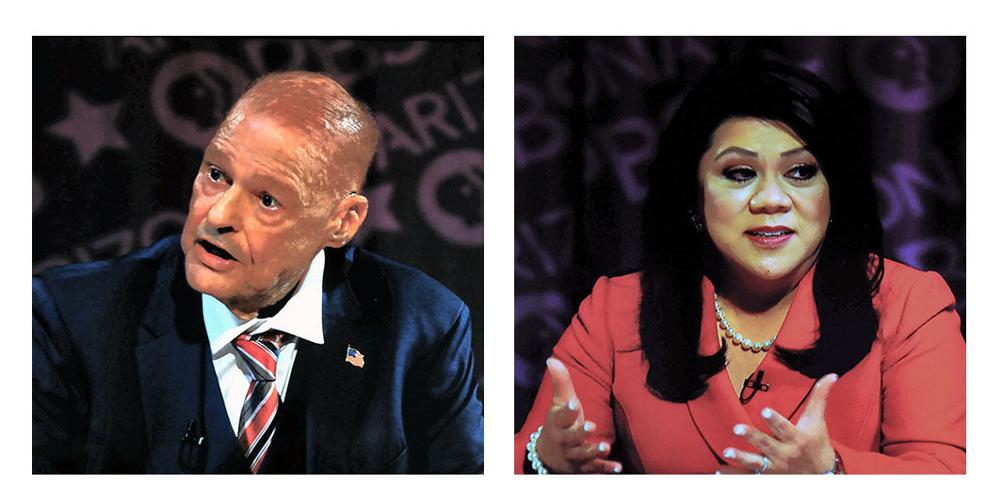
PHOENIX — State Treasurer Kimberly Yee lashed out Wednesday at schools chief Tom Horne, saying a new report by the Auditor General's Office "confirms my allegations of complete chaos within the Department of Education."
That report concluded the department, under Horne's control, could not show what action, if any, it took to review more than $500 million in "high-risk expenditure transactions" in the state's universal voucher program over more than two years.
Yee said that is at least part of the reason she wants Republican voters to choose her over Horne in the July 21 primary election for Arizona superintendent of public instruction.

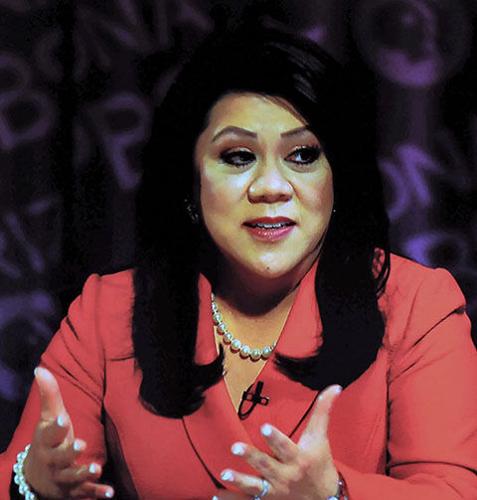
Kimberly Yee
"It shows that there was complete mismanagement of how they administer these funds," Yee charged in a televised confrontation Wednesday with Horne on KAET-TV, the Phoenix PBS affiliate.
People are also reading…
This comes amid multiple reports that some parents whose children were getting the vouchers, known as Empowerment Scholarship Accounts, were using the funds for questionable, if not outright improper, uses. These range from trips to foreign countries and theme parks to expensive pianos, jewelry, lingerie and high-end clothing.
Horne, during the half-hour televised discussion with his campaign opponent, did not dispute the audit findings of improper oversight.
But he also said his ability to police parents' expenditures has been hobbled as state lawmakers have not provided more funds for oversight, even as the Legislature's action to make vouchers available to all students has ballooned the number of participants from about 12,000 to 100,000.
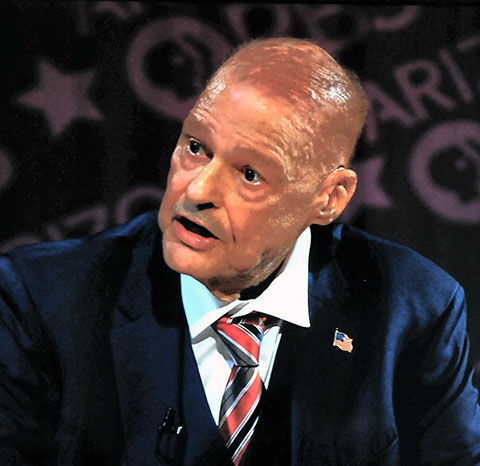
Tom Horne
Horne also pointed out that Yee, in announcing her candidacy last year, questioned whether he — or anyone else heading the agency — has the authority to deny reimbursement to parents who claim an expense has a legitimate purpose.
Horne said he has not seen his role that way. He listed some of the things he said the Department of Education has refused to fund, including a $5,000 Rolex watch, a $24,000 golf simulator, and a vasectomy testing kit.
Yee responded that she never believed these kinds of purchases should be reimbursed. And when Horne said that doesn't match what she said about his authority last year, Yee responded, "Have you heard of fake news?"
In fact, though, Yee said in May 2025 — comments that are on tape — that the law that created vouchers limits the authority of a state superintendent of public instruction to overrule what a parent concludes is an appropriate need for a child.
"As long as the state school superintendent and Department of Education follow that law I would be supportive," she said.
And if the law is not clear, "I believe the state superintendent, if there's any question on how to administer the program, should not be making those exclusive decisions on his own," Yee said last year. "He needs to go back to the legislative process which is appropriate and work with the Legislature to additionally add those protections."
But Yee, asked about that statement after Wednesday's televised discussion, said she was referring to the fact that Horne, struggling to keep up with the flood of new requests for reimbursement, ordered his staff to automatically approve all purchases of less than $2,000, with the idea that they could be audited later and improperly paid amounts recovered.
"The Legislature didn't tell him it was $2,000," Yee said.
Much of the rest of the discussion Wednesday focused on how students in Arizona are doing.
"Nobody is satisfied with the state of education in Arizona," Yee said.
"The person who is running the position has not gotten the job done," she said. "And we see that not only in our test results, we see that in our graduation rates, we see that in declining enrollment. And parents deserve better."
Horne said what Yee is leaving out of all this is how poorly — relatively speaking — Arizona schools are funded by the state.
The World Population Review lists per-pupil spending in Arizona in 2006 at $12,003. That puts the state at No. 47 nationally.
A separate report by Learner, which connects parents with tutors, ranked Arizona even lower, with only Idaho spending less.
But Horne said that, despite those numbers, Arizona is "in the middle of the pack" in standardized test scores, the same tests given in every state.
"So, when you're last in funding and you're in the middle of the pack with test scores ... I think the schools deserve some credit for that," he said.
The data, however, are a bit more mixed.
According to the 2024 results of the National Assessment of Educational Progress, the most recent figures available, the average Grade 8 reading test score in Arizona is "not significantly different" than the national figures. But for Grade 4, the Arizona average was "significantly lower" than the national average.
Horne did not address the other issues.
Arizona does have a lower graduation rate than the national average — 77.3% versus 86.6%. But there has been little change in more than a decade.
And school enrollment has fallen for four years in a row. Some of the reason could be lower birth rates, with some districts closing schools.
Yee has her own theory.
"I believe there are so many families here that are leaving the public school system because they are not satisfied with what is happening in their schools," she said.
Yee also said that the Department of Education needs "fresh, new ideas," a not-so-subtle reference to the fact that Horne was state schools chief between 2003 and 2010 and got the job back in 2023 after a stint as state attorney general.
"It's very clear that we need to bring phonics back into the classroom for reading instruction," Yee said, a reference to a method of teaching reading and writing that focuses on identifying the sounds of letters or groups of letters.
"Every school in Arizona teaches phonics," Horne responded. "And it's been the law since 2008."
He said that shows why Yee, who has been state treasurer for eight years — she cannot seek reelection — should not be running for this office.
"You've got someone challenging who's completely ignorant about what's going on in schools," Horne said. "I challenge her to find a single school that is not teaching phonics in the classroom."
Asked by Ted Simons, host of the televised event, to explain the discrepancy, Yee moved on to another subject.
"Well, I would like to get back to the basics on education," she responded.
Both candidates said they oppose an initiative being promoted by the Arizona Education Association and Save Our Schools, an education advocacy group, which would put into law that families making more than $150,000 a year, adjusted annually for inflation, are ineligible for vouchers.
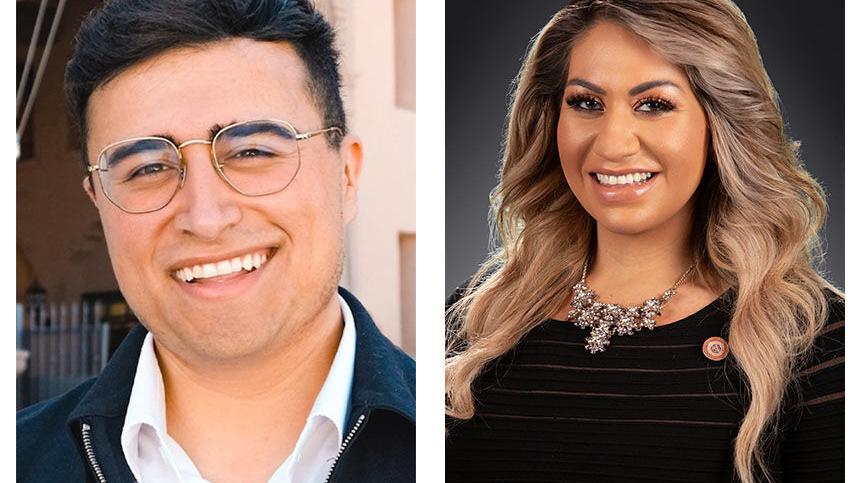
Whoever wins the primary between Yee and Horne will face the winner of a Democratic contest between Brett Newby and Teresa Leyba Ruiz.
Newby and Ruiz faced off in a separate debate Wednesday night sponsored by the Arizona Citizens Clean Elections Commission. According to KTAR radio, both Democrats said they are foes of the current universal voucher system and would seek to scale it back if elected.

Incumbent state schools chief Tom Horne and challenger Kimberly Yee, the state treasurer, sparred over school vouchers and other issues during a televised conversation.
Howard Fischer is a veteran journalist who has been reporting since 1970 and covering state politics and the Legislature since 1982. Follow him on X, Bluesky and Threads at @azcapmedia or email azcapmedia@gmail.com.