

LONDON - The Clash did it. So did Boy George and, at a decidedly less prosperous stage in his life, billionaire Richard Branson. But as the ranks of those living precariously spike amid a double-dip recession and waves of government cuts, Britain has suddenly declared war on squatting.
Squatting, or the unilateral occupation of at least temporarily vacant property, has been a rite of passage for Britain's young, down at heel and artistically inclined since at least the psychedelic 1960s.
But with evidence that squatter numbers are surging - intruder eviction cases have doubled over the past year in posh London neighborhoods including Knightsbridge and Mayfair - a new law criminalizing the practice came into effect this month that is upending the rebellious and politically charged British subculture.
Armed with legal codes that bound the hands of police and forced landlords into cumbersome civil suits to evict unwanted dwellers, squatters became the bane of the British homeowner. Urban lore tells of families that pop over the English Channel for vacation only to return and find strangers playing house in their home. Vacant, abandoned or second homes are far more classic targets. One squatter in Wales has raised four children over 11 years in a 500-year-old home whose owner died.
People are also reading…
Last year, Guy Ritchie, the movie director and Madonna's ex-husband, fell victim to a rash of squatter takeovers of luxury homes when intruders occupied his $10 million Central London manse as it was undergoing renovation.
Under British law, owners and tenants currently living in homes can bring in police if there are obvious signs of forced entry and they can prove they've been turned out by invaders.
But since his Georgian manor was vacant as workers labored on a renovation, Ritchie had to follow the rules of British Squatter Eviction 101: He had to get a court order before the authorities could touch them.
Yet for the first time since the 1970s, squatters at residential properties are facing forcible evictions without court orders, as well as penalties of up $8,000 and six months in jail.
Over the past two weeks, authorities have evicted squatters from flats in London and country cottages in Somerset.
Police in riot gear forced through a line of protesters in the beach town of Brighton, entering an occupied home only to find three young squatters had superglued themselves to the attic rafters in an attempt to prevent arrest.
The squatters code here has almost always carried an anti-capitalist message, with empty property portrayed as the moral equivalent of wasting food. The squatter ranks have been boosted, observers say, by the popularity of the recent Occupy movement and Europe's surging youth unemployment, with squatters describing their growing numbers as an outcrop of the region's economic crisis.
Aging bohemians and young leftists traditionally make up the heart of the squatter corps. But the new law is adding an extra level of fear to the lives of Londoners like Richard Broadbury.
Last year, the down-on-his-luck fashion photographer joined a growing segment of squatters who are not so much seeking to make a political statement as trying to put a roof over their heads.
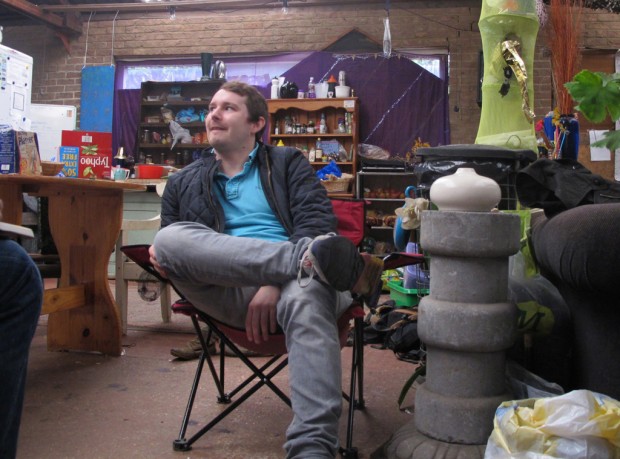
"It's not my first choice, no," joked Broadbury, who is cohabiting an empty East London flat with nine other squatters, all of whom cope daily with spotty electricity and dingy, used mattresses. More seriously, he added: "I'm doing it because I have no other option."
The anti-squatters law that went into effect Sept. 1 criminalizes squatting only in residential - as opposed to commercial - property. That has left people like Broadbury in a gray area of the law, given that his commune of squatters is occupying both an empty pub in East London as well as the apartment on the second floor. Nevertheless, he believes that their days at their current squat are numbered.


