

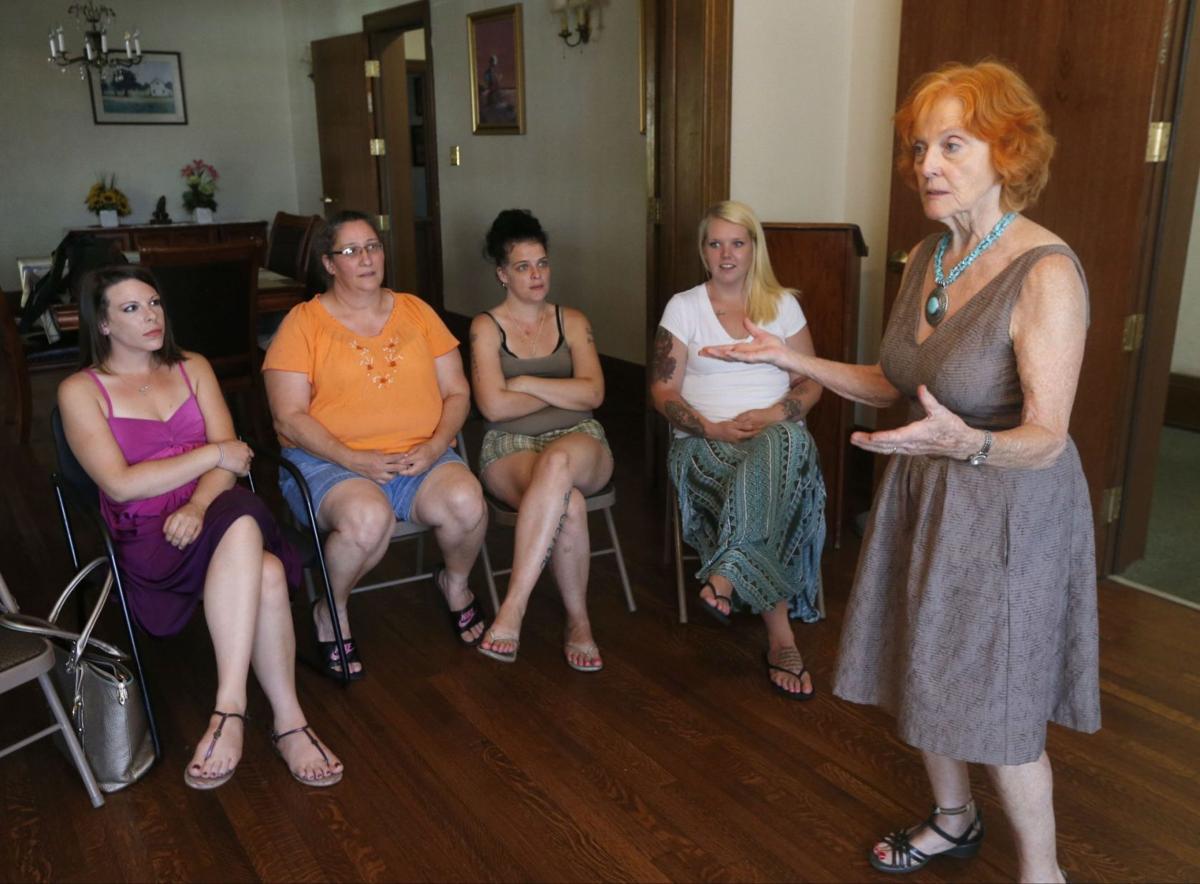
The first irony is that Paradise House founder Anne P. Paris is being recognized with a street named in her honor at the same time that the shelter for women overcoming substance abuse still struggles to overcome a huge cut in government funding.
The second is that the funding cut to Paradise House and shelters like it came at the same time the opioid crisis was exploding and when the solution in being viewed less in criminal terms and more in terms of anti-drug and support services – the very services Paradise House provides.
If the past is any guide, Paris won’t let that go unnoticed Thursday when part of Mill Street near Stanislaus Street is renamed "Anne Paris Way" to honor her work since opening the shelter there in 1993. In various missives to officials over the years, she has never minced words about the "ludicrous absence of sense in the distribution of funds" to help addicts recover or the "broken system" that stymies programs like hers.
People are also reading…
Nevertheless, Paradise House endures, scraping by on donations and grants and reduced county funding to help women trying to escape the ravages of addiction and turn their lives around.
"It was hard for me to find places, and Anne opened her doors to me," said Kimmi, who’s been at Paradise House about two months. "With active addiction, my daughter didn’t trust me with my granddaughter ... My granddaughter calls it ‘recovery college.’ "
Like others, her battle with addiction could not be won in a month or two. She had been coming to Narcotics Anonymous meetings at Paradise House for years as she relapsed and searched for places that could help her kick heroin and crack.
"I’m not court-ordered; I came on my own," she said.
Residents such as Kimmi credit not only Paris, but also housing director Debra Page, a former addict who had tried everything from methadone clinics to outpatient treatment before finding Paradise House 14 years ago. She evolved from patient to worker, using her experience to help women who are where she once was.
"If they see you messing up, they’re gonna let you know, Deb and Anne. And they’re not going to sugarcoat it," said Lesha, another resident who added: "I want to get my life back on track."
That has been more difficult for women like her since Erie County began cutting funding to Paradise House and two similar facilities in 2014. The goal was to have them become state-certified and, thus, eligible for Albany funding, to relieve the burden on the county.
Instead, Canaan House on Walden Avenue in Cheektowaga announced it was closing its doors because of the funding cut. And while New Life Residential Center on Memorial Drive in the Broadway-Fillmore area remains open, its name no longer accurately reflects its mission. Founder Margaret R. Hamilton said the funding cut forced it to close its residential component and offer only outpatient counseling as it scrambles to survive "moment to moment" while seeking grants and donations after county support was cut in half.
Like Paris, she said the staffing requirements to become state-certified required up-front money the facility didn’t have.
"Where do you get those dollars?" Hamilton asked rhetorically, while acknowledging the irony of having to reduce services in the midst of the opiod crisis. "Go figure," she said. "Unbelievable."
Paris also pointed to paperwork burdens imposed by the state Office of Alcohol and Substance Abuse Services in the bid to get certified.
"You didn’t answer 829, part B-3," she said of the bureaucratic obstacle course that accompanied the staffing demands. "In the end, they said, ‘You don’t have enough money.’ "
The state office didn’t respond to a request for comment.
In the meantime, Paris said, Paradise House tries to keep its 21 beds open for women "with no place to go" while getting $21 per day per resident from the county for three months, after which that paltry amount is cut further, even though she said most patients need at least six months to get clean.
To pay debts, it already has sold three nearby houses it used for apartments for women ready for more freedom and responsibility as they transitioned back to everyday life.
With a kitchen, a recreation room and rooms for women to meet with their children on weekends, Paradise House remains, in Kimmi’s words, a place where women can "learn how to live again."
Fillmore Council Member David A. Franczyk, who has funneled some of his district’s discretionary money to the facility, calls Paris an "old-world activist" who’s been in the vanguard of helping people "based on faith and community activism."
Having a street named in her honor recognizes that. But in the midst of the opioid crisis, that is literally the least that government could do.

