

The following is the opinion and analysis of the writer:
Several mountain peaks in the Santa Rita Mountains south of Tucson are scheduled to die. Canadian mining giant Hudbay Minerals is determined to decapitate them.
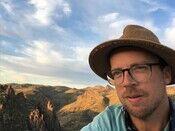
As a conservationist at the Center for Biological Diversity, I document and push back against destructive projects in defense of public lands and their rich array of wildlife. For more than a decade I’ve been visiting the Santa Ritas with a fever to get lost in, understand and protect this special place.
I’ve photographed one of the world’s rarest flowers, a high-desert orchid that gathers all its nutrients from an underground fungus. I’ve checked remote cameras that detected a wild jaguar here, as well as bobcats, coatis, cougars, mule deer and too many birds to count.
On the same day, I’ve been sunburned at the base of the foothills and nearly frostbit in the snow at the peaks. More than once I’ve tumbled bloody through cat claw and steep scree. I’ve watched lonely monsoon clouds collapse and feed a desert stream that generates an eruption of insects, nourishing bats and foxes under a dark sky full of stars unfamiliar to city dwellers.
People are also reading…
I’ve raised my child around campfires and the croak of canyon tree frogs here. Everything about these mountains — the presence of ocelots, phosphorescent beetles, 20-foot-tall agave flower stalks and an untold number of freshwater springs visited by bears and mountain lions — feels like a beautiful dream.
But copper is a harsh wake-up call.
Our modern, connected civilization demands tons of copper rolled into our internet lines, smartphones and electric-vehicle batteries. And while it’s possible to reduce demand for new copper by recycling — one report estimates it could cut demand by 55% — that process is limited by the lack of economic drivers and policies to encourage it.
Instead, mining companies get rubber stamps to rip more wealth out of the earth.
Large copper deposits sit beneath the Santa Rita Mountains, and Hudbay has been after them for years. A federal judge and the 9th U.S. Circuit Court of Appeals have dealt blows to the company’s proposed Rosemont Mine on the mountains’ eastern slope, ruling that Hudbay couldn’t dump waste rock and tailings on federal public land where it had no mining claims.
Now Hudbay is focusing on the Santa Ritas’ west side and ridgeline. Over the past several years, as its original mining project stalled because of fierce opposition from Arizona Tribes and environmental organizations, Hudbay started buying thousands of acres of state and private land.
Earlier this year Hudbay broke ground on Copper World, scraping, drilling and dumping earth into desert streams that feed the Santa Cruz River. I visit nearly every week, though it’s painful to watch.
Hudbay plans up to six open pits, including the proposed mile-wide eastside Rosemont pit, along with a sulfuric acid plant, toxic waste ponds and other mining operations that would span more than four miles and decapitate mountain peaks. Weigles Butte, Harts Butte and others would vanish from the skyline.
These lands are within jaguar critical habitat, part of a mountain range that is a crown jewel of biodiversity in southern Arizona and northern Mexico’s sky islands.
In April, the Tohono O’odham, Pascua Yaqui and Hopi tribes asked a federal judge to halt Hudbay’s work at Copper World, saying it violated the Clean Water Act. They described the area as a “location of sacred sites, ancestral villages and burials, and a source of plant, animal and mineral resources critical to maintaining the Tohono O’odham Nation’s culture.”
“There is no way to reverse the loss of these critical desert streams,” the Tribes warned.
The Tribes’ Clean Water Act suit, along with a separate case filed by the Center for Biological Diversity and our allies, sought to expand the permit to cover mining on the Santa Ritas’ west side. When Hudbay withdrew its discharge permit, claiming it didn’t need one, the judge dismissed the cases.
Hudbay still needs state permits to begin full-blown mining, but it’s hard to see Arizona officials stepping in to stop this destruction.
The U.S. Army Corps of Engineers and the Environmental Protection Agency are allowing it to continue unabated. The Corps has failed to conduct a sufficient environmental impact analysis and require measures to safeguard our desert’s precious water. The EPA has failed to require Clean Water Act permits for Hudbay’s bulldozing, dredging and dumping.
So Hudbay continues to strip the land and prepare the mountains for oblivion.
I’ll be out at Copper World again in a few days. I’ll stand at the historic Helvetia Cemetery with binoculars and bear witness.
It’s heartbreaking to admit it, but this magical section of the Santa Ritas we love and rely on, for water and a connection with a wilder world, are scheduled to die.
Russ McSpadden is the Southwest conservation advocate at the Center for Biological Diversity.