
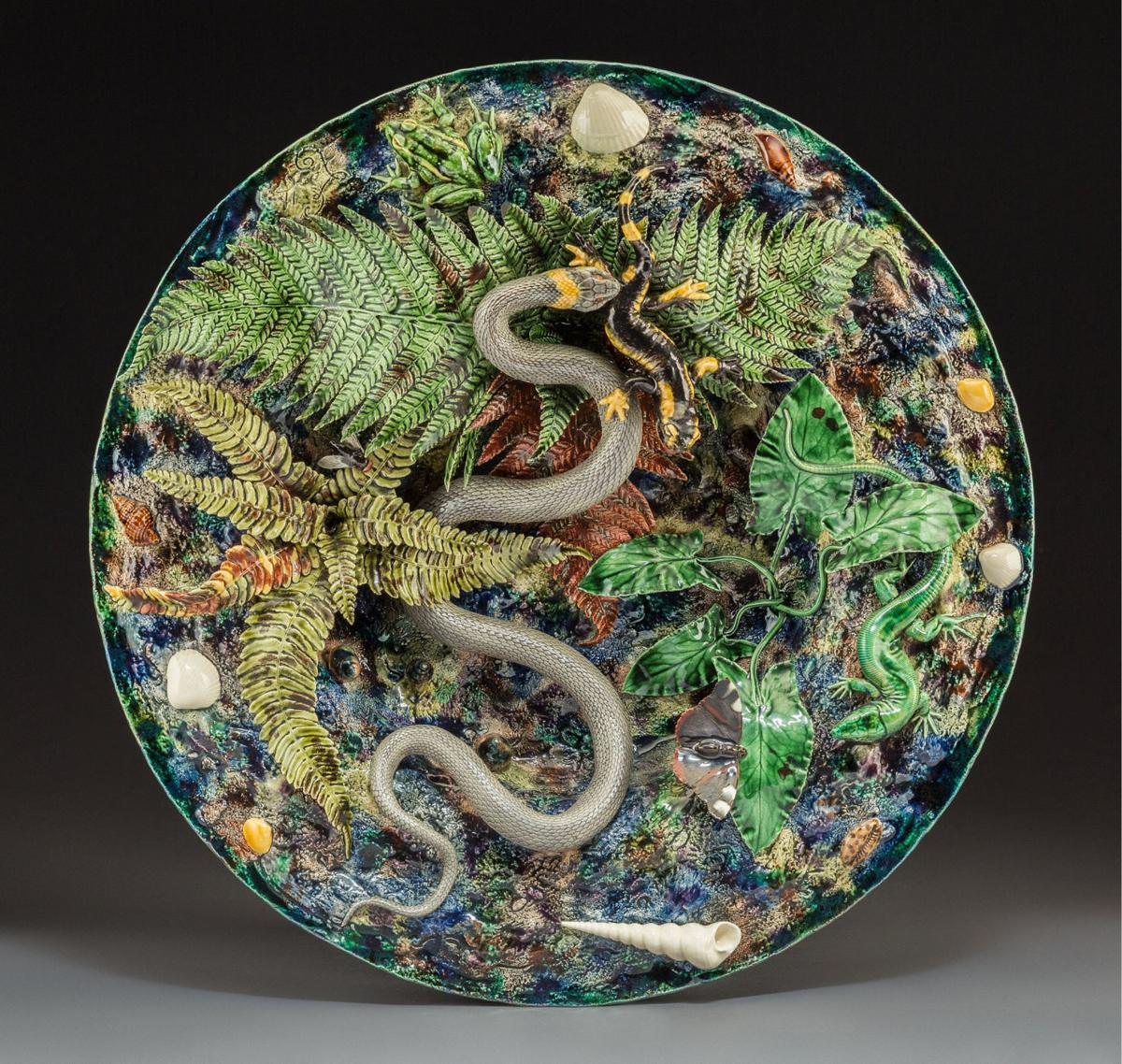
WHAT: Many collectors yearn for the finest but cannot indulge because of price. It’s the old “Champagne taste with a beer pocketbook” syndrome. But in some cases, it’s OK to buy new. Take for instance the plate shown here. Made by recognized French contemporary potter Geoffrey Luff, it follows the style of Palissy majolica wares produced during the Renaissance.
Maiolica (the original name) ceramics originated in 16th century Italy as soft, low-fired earthenware notable for raised decorations painted with bright lead-based colors
MORE: Bernard Palissy, a French potter of the 1500s, recreated the tin glaze of Italian majolica, using brights on wares decorated in a naturalistic manner featuring clay shells, reptiles, fish and plants. Needless to say, old and original Palissy ceramics in good condition are now pricey.
People are also reading…
Sought by collectors since the start, Palissy’s take on nature became a rage in Victorian England.
SMART COLLECTORS KNOW: What most readers see today dates from the 1850s, when English pottery Minton & Co. trademarked “Majolica” because it aimed to sell wares done in the style to Victorians, who loved bright colors. Palissy from that time is a special niche in majolica to this day.
Note that majolica emphasizes visual impact over function. One would not dream of eating off a Palissy plate or any other antique majolica.
HOT TIP: Palissy naturalism is a multistep process. Luff’s snake, shown biting the leg of a salamander, is pre-made and applied, as are ferns, lizards, shells, frogs and a butterfly.
BOTTOM LINE: Despite market ups and downs, top majolica has long appealed to collectors. Ditto for nature wares from Bernard Palissy, or in the style of Palissy. When master artisan Luff nails technique so beautifully, smart collectors cannot be blamed for wondering if his works will ultimately appreciate. A buyer can always hope.