

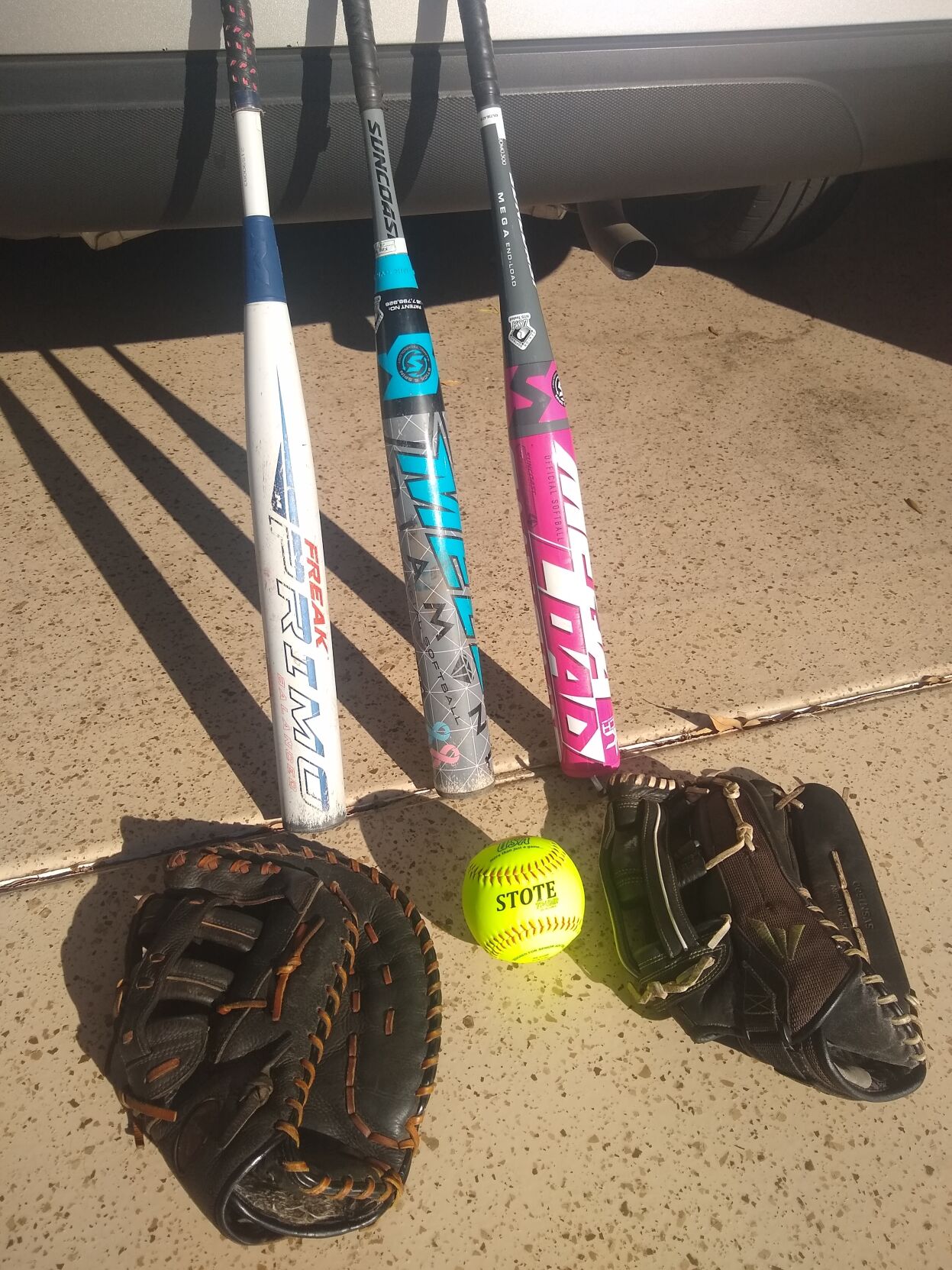

Well, SaddleBrooke and Ranch Senior Softball (SSSA) fans, here it is Thursday, May 15 and it is the deadline again for SaddleBag Notes. Here’s the past and future in the action-packed world of SaddleBrooke softball.
Tournament Action Forthcoming on Monday, May 26 (Memorial Day) Well neighbors, that’s right!! Three games of softball entertainment will be offered, sponsored (SINCE 2006!!!!!)) by Ambient Air Heating & Cooling—thanks, again. There’ll be exciting softball “dramedy,” food (brats, dogs, burgers, chips, beverages), music, insightful announcing and commentary (by yours truly) on what is sure to be a beautiful day here in the Brooke.
Spring Season Action Well, the action just started on Monday, May 5, so here, today, on Thursday, May 15, there hasn’t really been a lot of “action.” The snowbirds have headed north, so the number of teams is down, and will be all summer. Along about October, the numbers will “swell” again as the birds fly back into town.
People are also reading…
So, in the meantime, let’s talk about…
The Science and Care of the Ball, Your Bat and Your Glove
Now, you may own glove (maybe two!). And most players have at least one bat. Of course, the “junkies” will have several bats. Softball junkies are not that different from other sports junkies. I mean, some golf nuts have eight putters and five drivers (oh wait, that’s me!).
The Ball
The “Brooke ball” is a 12 incher with a COR of 44 and compression of 375. HUH, you say? Moi aussi.
The compression of a softball refers to the amount of force needed to “compound” the ball a quarter of an inch. Whaaa? Well, essentially the higher the compression, the harder the ball, equaling more “trampoline effect” off the bat which should mean more distance. OK? So, 275 is extremely soft and has limited flight. But 450 is very hard and too lively for senior bats. Three hundred and seventy-five is the top of the scale for “limited flight.” That’s us here in the Brooke.
The COR (Coefficient Of Restitution) indicates how much energy is retained by the ball after it deflects off of a solid, immovable object (a wall). Essentially, it is a measure of the “bounciness” of the ball. Balls with higher COR ratios will have lower compression ratings and cannot compress a softball bat barrel very well. So, high COR balls do not equal the longest hits. Forty COR is not very “bouncy,” while 52 COR is very “bouncy and springy.” Our 44 COR is low to medium “bouncy.”
So, when hittin’ da ball, there’s you (bat speed (or lack thereof), COR, compression and the bat you’ve chosen.
The Bat (Polycarbonate Fiber Softball Bats)
Now, there are plenty of used bats around, but you know junkies, “gotta have my own.” The “Rooks” generally try out a veteran’s bat for a few games but ultimately go for their own. These days, the bats are polycarbonate fiber; one or two pieces. Yep, gone are the days of wood or aluminum. Around the Brooke, two basic classes of bat are allowed—“medium” and “hot.” No, not temperature-wise! Compression-wise. The “hot” bat is allowed in the Competitive league and for those 75-plusers and (I think) for all the women. All others use the “medium” bat. It’s all about the “pop (launch velocity)”. If I disremember my physics (and that’s very likely), it’s mass x velocity = launch velocity. So, the junkies are CONSTANTLY reworking/buying new/trading up to find that elusive super “pop” bat.
Anyhoo, pretty soon after a newbie gets back in the game, he or she has gotta have a new bat (maybe two). Well, get out the loan papers, cuz this is gonna run you around $2 TO 3 C’s! Yeah, that’s right! New polycarbonate bats run $200 to $300 dinero!! So, you want to take care of it.
The Right Bat For You and Your League—Weight, Barrell Length, “Balanced”, “End Loaded” or What?
Who gives a hoot about Launch Angle, Exit Velocity, Spin Rate and Spin Direction? Well, if you want to get the ball outta the infield, you do. The pros say you want backspin instead of topspin (overspin), to hit the ball hard (exit velocity), and a launch angle that isn’t too low or too high. Swing speed and weight are key factors in choosing your bat. You want to swing fast, but you also want some mass behind that swing. Right? Bat Velocity x Mass = a one-hopper off the outfield fence!! So, you want the heaviest bat with which you can maintain your fastest bat speed. AND… you want that elusive bat with “super pop” (compression).
Very common around the Brooke are bats ranging from 25 ounces to 30 ounces. These bats come in “balanced” or “end loaded.” These both refer to where about ½ to 1 ounce of weight is placed—middle or end. Balanced bats are favored for “spot” or placement hitters—easier to control location. End loaded are favored by the power hitters as they tend to give more distance to the stronger hitters.
Gotta Have the Right “Stamps” (Labels)
That’s right. You have to have a correctly stamped, undamaged, unaltered bat or you is outta there and the bat gets tossed. So, what are the stamps, right? Well, this is a bit confusing since the stamps/labels have changed over time.
“Medium” — bats for use in Community, Coyote, Sidewinder and Recreation should have a “badge-shaped” stamp that has “ASA Softball”(older) or “USA Softball” (newer) within the badge/label.
The “hot” bat can be used by all players in the Competitive league, by women in all leagues, by men in the Recreational league if 85 years and in any league (except the men in Rec), and if you are 75 or older or turning 75 sometime in the current year (74 now, 75 later this year). These typically seemed to be stamped with a softball diamond with SENIOR SOFTBALL above and USA below in the stamp/badge/label. In the same stamp it might also note “NTS Tested. These bats may also have an ISA (Independent Softball Assn) stamp as well on the opposite side.
Care of Your Bat
Here’s what the experts say:
- Wash them after every use (Really???? ) One well known bat-junkie in the Brooke has told me that he washes his bats more often than he washes himself!! Phew! Smell ya later, bro! Mild temp water, sponge or washcloth, mild soap. No abrasives! Dry and store in moderate temp and dry location.
- WHY? Well, extreme hot or cold is a negative. In fact, best not to use your “good” bat in temps around 60 degrees or cooler. The pros say it ain’t the bat; it’s that the ball “gets harder.” Bats can crack and splinter and do so regularly (they are polycarbonate fibers, right?). And while an “upper/max” temp limit, I could not find, the pros say over 104/105 is probably a good “high” limit as the fibers degrade with extremes. So, around the Brooke, using bat warmers or bat “hot boxes” in the fall and winter leagues is probably okay, but when the outside temp cracks 100, there probably ain’t no reason to be putting your $250 bat in the hot box. Extreme temperatures hot or cold can degrade the polycarbonate, shortening the bat’s “life.”
- You know in the old days of using a wooden bat, you always kept the logo up? NEGATIVE with the polycarbonate. The honchos say rotate your bat about ¼ turn every hit ball to maintain an even wear and even pop. Otherwise using the “same spot” will accelerate degradation (yow! Four syllables! I got it today!)
- “Break-in” time can be upwards of 150 to 200 “hits,” so, come on down to Saturday batting practice.
- Want to buy a bat that has been “pre-broken in?” You can do this for an extra $30 to $40 clams. It’s called “rolling” or “shaving.” BEWARE!!!!! These processes will “alter” your bat and altered bats (or damaged) are illegal in many leagues, including the SaddleBrooke leagues. So, fergetaboutit!
Gloves
Now you may have “old faithful” still sitting around the closet, or you may be thinking, “Gotta get a new one.” Needless to say, there are derriere-loads of gloves and places to get one. Here, in the Brooke, you can use a glove or a mitt (first baseman’s glove) at any position. Regardless, they all need care.
Cleaning
- —clean regularly to remove dirt and grime. A dry cloth after games and practice. That includes the inside to remove salt and sweat buildup.
Conditioner or Oil
- – USE SPARINGLY!! Just a small amount to maintain the leather’s suppleness. MLB players commonly use glove oils and/or conditioners to soften and lubricate (the glove, dude! Not… nevermind) the leather preventing it from drying or cracking. Some popular choices include lanolin-based products, beeswax and natural oils like shea butter and coconut oil. Lanolin is a natural oil known for its moisturizing and softening properties. You can get these products in 2 or 4 oz tins or bottles, but they are kinda expensive for such a small amount. Well, I’m cheap. I mean thrifty. But yours truly found a competitively priced 12 oz lanolin-based product on the Internet, under the name LANTISEPTIC (50 percent lanolin) and GET THIS… yerself and the missus (or mister) can use it to 1) “relieve and prevent rashes and irritation due to wetness from incontinence” (that’s handy, right?) and 2) “protect chafed skin due to irritation and help seal out wetness.” Now, who couldn’t occasionally use a bit of that around the house?? I just slather on a bit (the glove, not me) and set it in the laundry room to let the leather absorb. Easy-peasy. Otherwise, glove oil, mineral oil, coconut oil, etc. Just don’t overdo it. Rub it in and wipe off the excess and your glove you’ll love ya.
Anyhoo, that’s a wrap! C’mon down to the field and check the action. The softball junkies will be down at the field every week-day slapping the softball around. Ditto Saturday mornings, when the softballers tune the gloves and bats with some batting and fielding practice. Or you can surf the SSSA at saddlebrookesoftball.com.


