

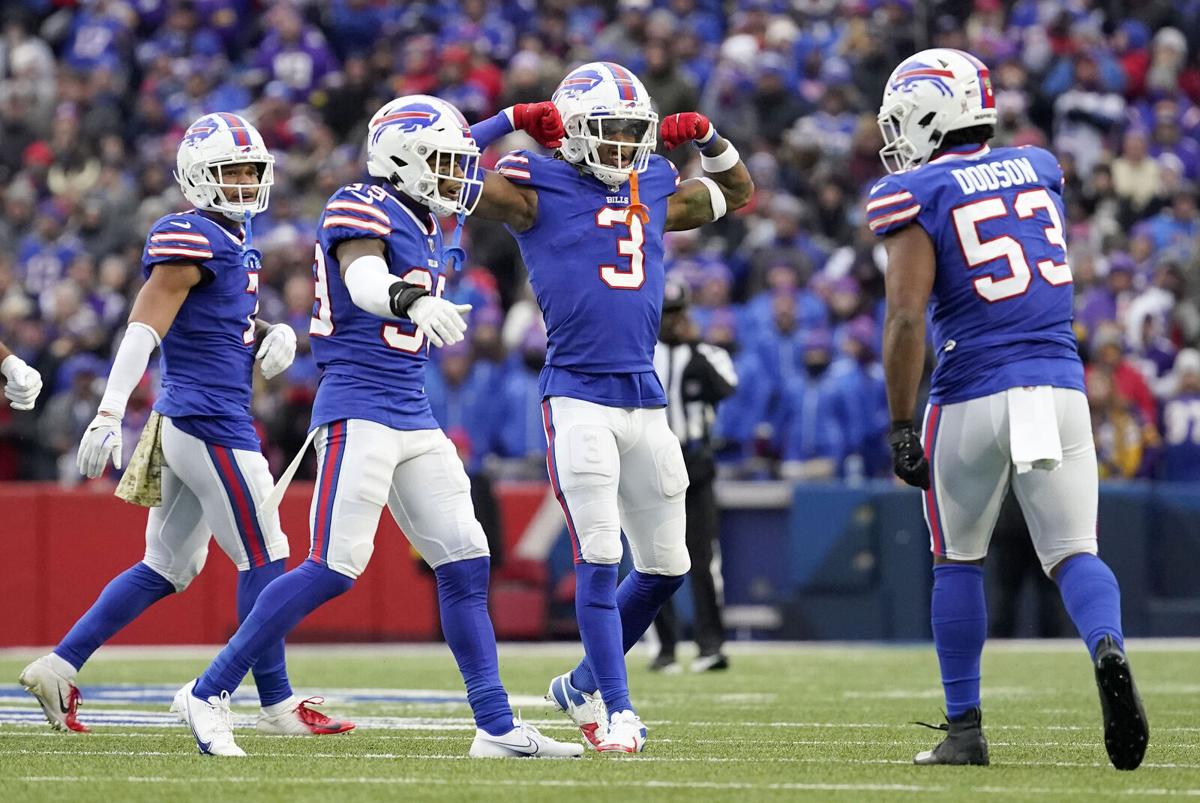
The University of Cincinnati Medical Center held a video news conference Thursday with two of the doctors involved in the treatment of Buffalo Bills safety Damar Hamlin, who went into cardiac arrest Monday during his team’s game against the Cincinnati Bengals at Paycor Stadium.
Dr. William Knight IV, professor in the Department of Emergency Medicine at the University of Cincinnati College of Medicine and Director of the Emergency Medicine MLP Program and Dr. Timothy Pritts, professor in the Department of Surgery at the University of Cincinnati College of Medicine and Division Chief of General Surgery and Vice Chair for Clinical Operations at UC Health spoke on Hamlin’s recovery for about 50 minutes. Here is a partial transcript of that interview:
After waking up, Hamlin wrote a question: Who won the game? One of the doctors responded: "Damar, you won. You've won the game of life."
Dr. Timothy Pritts: It’s our privilege today to meet with you. And Dr. Knight and I are representing the many, many individuals and teams that have helped care for Mr. Hamlin since the on field event on Monday night. We would like to share that there has been substantial improvement in his condition over the past 24 hours. We had significant concern about him after the injury and after the event that happened on the field, but he is making substantial progress. As of this morning, he is beginning to awaken and it appears that his neurological condition and function is intact. We are very proud to report that, very happy for him and for his family and for the Buffalo Bills organization that he is making improvement.
People are also reading…
He continues to be critically ill and continues to undergo intensive care in our surgical and trauma ICU. He’s being cared for by ICU neurocritical care teams, trauma surgery and a cardiology team, as well as our expert nurses and respiratory therapists. They are attending to him and he still has significant progress that he needs to make, but this marks a really good turning point in his ongoing care.
Q. Take us through the timeline from start to this point.

A number of fans have suggested that rather than announcing the starting lineup before Sunday's game, the Bills should announce the names of the medical staff.
Dr. William Knight: What I can tell you is that our team involved a significant number of the care team involved in helping with Mr. Hamlin on the field on Monday night. He was attended to by four of our emergency physicians serving in the various roles as the airway physician, the visiting team medical liaison, a neurotrauma consultant, as well as one of the team physicians for the Cincinnati Bengals. As everybody knows, Mr. Hamlin suffered a cardiac arrest on the field, and it was promptly recognized by the Buffalo Bills medical staff, and that allowed for a very immediate resuscitation on the field. He was promptly resuscitated. It did require CPR and defibrillation, at which point he was transported to the University of Cincinnati Medical Center, where he was met by Dr. Pritts and the trauma team, as well as our emergency medicine colleagues. He was managed and resuscitated and worked up in the emergency department, had some additional tests in the ED and in the hospital, and then has been managed in the surgical ICU, as Dr. Pritts said. It’s been a long and difficult road for the last three days, he has been very sick and has made a fairly remarkable recovery and improvement to the point, as Tim noted, he is now demonstrating that sign of good neurologic recovery, as well as overall clinical improvement, as has been previously reported, related to not just his vital signs, but a lot of his other individual organ recovery.
Q. Can you speak to what caused the cardiac arrest or was it a pre-existing condition?
Knight: The answer to that is that workup is ongoing. We do not have definitive answers as to the etiology and the arrest at this time. And that test will continue to be ongoing as he continues to progress.
Q. Can you give detail on critical the first moments were on the field?
Knight: I think it just speaks really to the immediate recognition that there was something significantly and seriously wrong by the Bills medical staff. Tim and I speak together: We cannot credit their team enough. Unfortunately, there are injuries, occasionally, that happen on sports fields, be it football or others, but it is incredibly rare to have something be this serious that happens like that and to be that quickly recognized. What they did was immediately marshal the emergency action plan, meaning the emergency medicine services. That prompted the airway physician, the emergency physician that was out on the field, to be at his bedside in less than a minute. He had a prompt recognition of loss of pulse, which gave him immediate bystander CPR, which, as many of you know, rarely, if ever, happens. And so the fact that Mr. Hamlin had immediate bystander CPR, in addition to prompt recognition of his arrhythmia, to get defibrillated and then back to the return of circulation very quickly, that speaks to that timeline that you were asking about, to get the return of spontaneous circulation with immediate bystander CPR that was performed well, all meeting the standard of what we would expect in that scenario is what has led us to be able to discuss these good outcomes today.
Pritts: I will second that. The Bills training staff who was with him immediately recognized that this was not a run of the mill injury and that they had a significant event on their hands and immediately responded and got the emergency response team involved in his care. And, really, this went as well as something like this could go under very challenging circumstances, and they did a fantastic job, which is why we’re here today.
Q. Fair to say, a few extra minutes could have produced a different outcome?
Pritts: I think that’s fair to say.
Q. There are signs of neurological intact, what have been those signs?
Pritts: We’re in the situation where we wanted to allow him to gradually wake up as the rest of his body was healing. And last night, he was able to emerge and follow commands, and even asked who had won the game.
Q. How common is it for that type of improvement to be made so quick?
Knight: The answer to that is it’s variable. We do manage post cardiac arrest patients routinely as part of critical care in all of our ICUs, and it’s variable, but it speaks to his age, his incredible fitness, and, then again, I don’t think that we could emphasize enough the immediate medical response. The fact that he had highly trained professionals from the Buffalo Bills, in addition to having paramedics, emergency physicians, respiratory therapists, all right at his bedside in less than a minute from the collapse. That speaks to that ability that demonstrates that he had good perfusion to his brain that led to no identifiable neurologic deficit.
Q. Did Damar actually speak?
Pritts: I can clarify he did not speak. He was able to communicate in writing. And he is unable to speak with us yet as he still has a breathing tube in and we’re still assisting him with ventilation. When he was communicating with us last night and then again today, that’s been in writing. And to paraphrase one of our partners, when he asked ‘Did we win?’ the answer is ‘Yes, Damar you won. You’ve won the game of life.’ And that’s probably the most important thing out of this, and we really need to keep him in the center of everything else that’s going on, and we really want to ensure a good outcome for him.
Q. Had there not been one thing in protocol, what would that have been that would have led to a bad outcome?
Knight: I’m not sure there is one thing. I think that really speaking and emphasizing to that team approach that if you see those pictures in that video of the congregation of the team. You had Bills professionals, Bengals professionals, independent physicians, but we have all the right equipment. There’s all the EMS equipment, airway equipment, advanced cardiac life support equipment, the ability to do CPR. The ability to defibrillate is all there and all spelled out in terms of accessibility. Speaking specifically to our team, we had several of my partners that were teammates, that were partners that were helping to resuscitate Mr. Hamlin. You have those scenarios where people know each other and they trained together. There’s not a lot of speaking that needs to happen. They know how to work and know how to integrate, no different than when Dr. Pritts and I are working in the trauma bay, and that really goes a long way to helping with that in terms of that overall management. But was there one thing or is there one thing that if absent, would have led to a poor outcome? I can’t say that there was any one thing, because it really is the entire global spectrum of care from the minute he collapsed until the ongoing care he’s receiving right now up in the ICU.
Q. What are the next steps for his recovery?
Pritts: There are many, many steps still ahead of him. From our standpoint, we would like to see him continue to improve, to be completely breathing on his own, and then to be ready to be discharged from the hospital. So, those are the immediate next steps as we go for his care. His family has been with him at his bedside, as have members of Buffalo Bills organization, really, since this all began, and we really want to get him home to them. So, those will be the immediate next steps, and then we’ll talk about potential plans for the future.
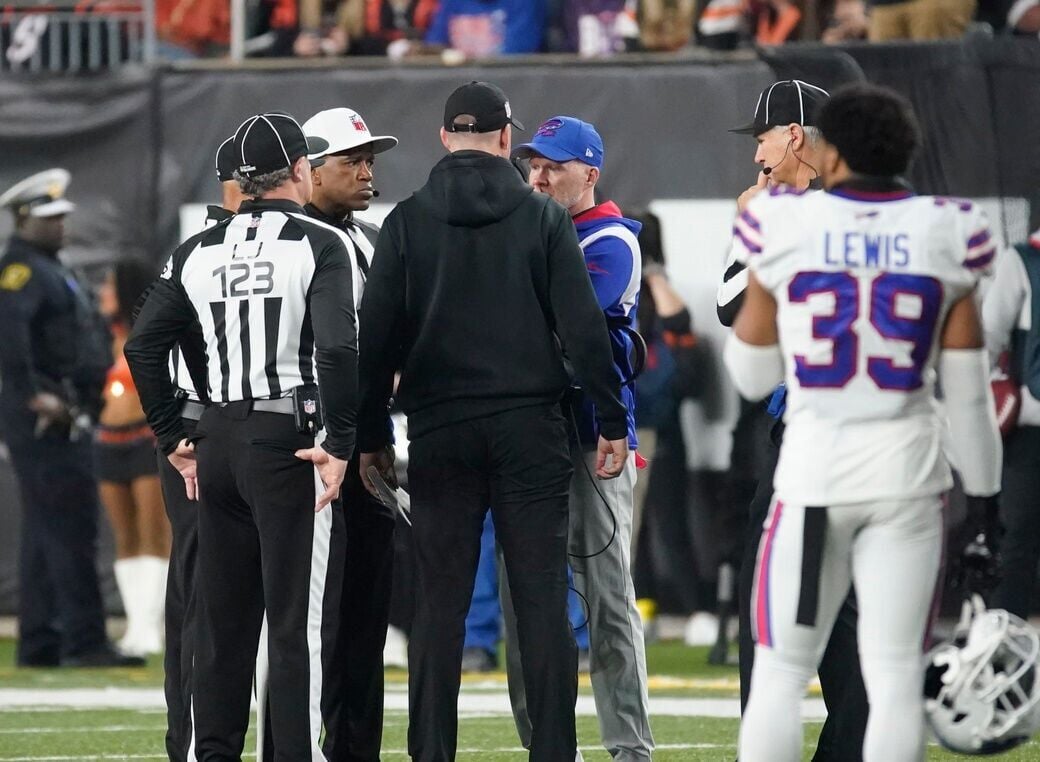
NFLPA president J.C. Tretter said Thursday it was a “clear no” to resume the Buffalo Bills-Cincinnati Bengals game Monday night following Bills safety Damar Hamlin’s injury and questioned why it took so long for the league to suspend the game.
Q. Was he trached on the field? And will he be able to walk and talk?
Knight: He was not trached on the field. He was intubated on the field, had what I would would deem a textbook resuscitation on the field from, again, immediate bystander CPR, defibrillation, airway management and then transport to the hospital. It’s critical that we do that resuscitation at the scene of where a cardiac arrest is. That portends the best recovery. There was no trach or airway other than the endotracheal tube that he has. As for the long term recovery, again, we’re focused on the right now, and he still has a little ways to go in terms of liberation from the ventilator. And I think that that’s going to be our focus right now in terms of helping him to recover, liberate, continue to get stronger and rehabilitate, but it is entirely too early to project into the future.
Q. Any reason that he might not have a full recovery?
Knight: Again, more focusing on right now. I don’t have any reason to expect or not to expect anything in the future, just focusing on what’s going on right now.
Q. Feeling the prayers?
Knight: Yeah, we have. It’s been very powerful. We’ve been surrounded by, we keep using the word team, in that by Dr. Pritts and I being able to get to know this amazing family and this amazing organization of, in a matter of 48 hours, having friends and having family, the hugs and the tears that have already been shared just by the progress that’s been made. But then looking outside, I mean, all I have to do is look over my left shoulder, and I see vigils and posters and well wishers and the food that has showed up at the hospital for the support for the family and for the emergency department and for the surgical ICU team. The support that’s been done to the family. Damar’s family has been wonderful. They’ve been right here. They’ve been great throughout the entire stay. And so have we felt it? Yeah, it doesn’t take long to look outside and see the lights, the blue and the red around the city of Cincinnati. The support from local restaurants, the support from the fans and just people who are concerned, so, yes, it’s been very powerful.

“The reason why this was so different was because it was not about football; it was about the human element,” Capaccio said.
Q. Does Damar know?
Both answer: He’s learning it today.
Q: You mentioned communication with Damar writing. What can you see that shows he's understanding?
Pritts: We've discussed with him what happened. He's not quite to the point where we can have a conversation, because, again, he still has a breathing tube and is able to communicate with yes or no by shaking his head or nodding his head or with brief notes. He expressed surprise that he had not been with the world for two days. We've talked to him about all the support that's been given from Cincinnati, Buffalo and, really, across the country for him and his family during this time. His mom and dad have talked to him about what has happened, and we expect that we'll continue to have ongoing conversations with him. Again, his first question that he wrote when he started to awaken was "Did we win?" It's not only that the lights are on. We know that he's home. It appears all the cylinders are firing within his brain, which is greatly gratifying for all of us, for the nurses and the respiratory therapists, the care team that has been at side, for his family and for everybody else beyond.
Q: What are you looking to see next?
Pritts: We want to see him continue to breathe more on his own, and then we want to get him breathing completely on his own. That will be the next big milestone for him.

An Ohio man visiting Niagara Falls as part of a cross-country escapade to celebrate his 40th birthday left a gift in front of the Buffalo Bills store early Thursday: a brand-new folding table scrawled with a message to Bills Mafia.
Q: At this stage, what would you project to be the best case scenario for Damar's ultimate return to function?
Knight: I think, what is the best? The best is getting him to the way he was at 8 o'clock on Monday evening. Is completely neurologically intact, strong, good lung function, no cardiac dysfunction with his heart. The best outcome would be back to who he was before this all happened.
Q: The chain of events and what happened. Did he have a second resuscitation at the hospital? And then how long was the defibrillator used and the total minutes of CPR? And lastly, can you confirm is he moving his hands and feet at this time?
Pritts: I'll start in reverse, he's moving his hands, his feet. And, again, appears to be neurologically intact to both our exam and our neurology consultant's exams. So, he appears to be doing well. He received one defibrillation and one round of CPR, it was on the field. He did not receive second defibrillation or additional CPR once he was in the ambulance or at the hospital.
Q: To clarify something that was just said, the best is getting him back to the way he was prior to the injury. Does that mean the door is open for him to play professional football again, and then, in the more immediate term, reasonable amount of time to suspect that he will remain in intensive care and in the hospital as a whole?
Knight: I think to answer the first question about his future in professional football is that it's an entirely too early to to have that conversation. He's still critically ill in the ICU. Our focus is on getting him better, to get him (garbled) and on the road to recovery. So, it truly is too early to have that conversation. I already forgot your second question. I apologize.
Pritts: The real next steps are allowing him to continue to get better again. We're so focused on the day to day, and then we'll talk about next steps after that.

NFL executives start conference call with well wishes for Hamlin, and with immense gratitude for the medical personnel who have helped him since the moment he collapsed.
Q: How much post hospitalization physical therapy and the like will he need before he gets clearance to return to football?
Knight: That's a very good question. And that's a very, it's really individualized to each person and that process of recovery. Rehabilitation starts to really engage and involve physical therapists, rehab physicians in terms of "What are his needs?" He was incredibly sick for two days in the ICU, and we would expect that as he continues to recover, we'll see what kind of sequelae there may or may not be from that. A lot of it is just going to be defining what kind of strength may he have from that and recover as we get his nutrition back up to par and his strength back up to par and his rehab and recovery. So, it'll be a very individualized, tailored plan that'll become a lot more clear when we're in that phase, which we're still a little ways out from.
Q: You mentioned liberation from the ventilator, what hurdles are still left for tomorrow to get off that ventilator and, hopefully, as I know a lot of us are hoping, to have them get out of the intensive care unit?
Pritts: We sort of view the ventilator as an aid for him as he needs it. And so, after the initial event, we were supporting him on the ventilator 100%. And what our goal really is for liberation from mechanical ventilation is to gradually decrease the amount of support and let him pick up the difference. And when we reach 0% support, breathing tube comes out. And then we define that as success.
Q: What is Damar writing on?
Pritts: It’s high tech. It’s a pen and a piece of paper and a clipboard.

The NFL announced Thursday night the Bills' postponed game against the Cincinnati Bengals has been canceled. The key reasons are the outcome of the game would have no impact on which teams make the playoff field and finishing the game would impact all 14 playoff teams by delaying the start of the playoffs for a week.
Q: Is there a timeline by which you want to see him breathe on his own?
Pritts: That's a really good question. Every patient is different. And when families asked me how long do I need to be in the ICU? How long is our family member going to need to be on a ventilator? The answer is, as long as it takes and whatever you need. And so from our standpoint, we will continue to give him all the support and intensive physician, ICU and respiratory care that he needs. But our goal is to eventually be able to peel that all away, so that he's doing it all on his own. But the short answer is as long as it takes. There's no threshold in our world beyond which there's damage from the ventilator support itself. But we'd like to liberate him as soon as possible.
Q: Who was the first person Damar talked to last night?
Pritts: Can’t say names, but it was to his bedside nurse last night.
Q: Is he holding anyone’s hands?
Knight: Yep, he is.
Pritts: He’s held many people’s hands.
Knight: He held my hand. He did. His parents have been with him constantly. There's a lot of family members, a lot of support from his family and friends, as well as members of the Buffalo Bills administrative and medical teams that have been really at his bedside throughout, which is admirable in terms of the support of that the Bills that have shown here. And so, yes, he's held many people's hands.
Pritts: The Bills organization folks, as well as the family, have been with him constantly. He's interacted with all of them today. And so, he’s been very interactive with them.

While the team returned home after the game was suspended, Buffalo Bills general manager Brandon Beane stayed in Cincinnati to be with safety Damar Hamlin and his family.
Q: Was there anyone on your staff watching the game live, and did anybody see the injury take place live? If so, was there any reaction shared with you?
Pritts: I think, probably, everybody on the staff was watching the game live that wasn't directly involved in patient care. You know, it was a highly watched game, and I know I had at least three partners who were physically at the game during this happening. I mean, the reaction like anything else in sports, is, you know, one of disbelief and sadness. You know, it's – sports are a wonderful thing. You know, football is a great game, and you hate to ever have anything happened to the participants in the sport. So, you know, we really don't want to see anything like this happen.
Q: You said earlier that not only is Damar home, the lights are on. From what you can tell, how's he doing emotionally?
Knight: It's, honestly, it is too early to tell. I mean, he still on the ventilator. That does require still a little sedation to make sure he's comfortable – being on a ventilator is not the most comfortable thing. So that, in fairness to Damar, has not been fully assessed, in terms of even his awareness of everything that has happened in the last three days. That will come more as we have better assessment – when we talk about neurologically intact, it's a very gross term of big motor movements and following commands. When we talk about the finer things that make us human – cognition, emotion, speech, language, etc. We’re looking forward to learning more about that soon.
Q: In response to all of this around the league, players have been saying that one of the best places for, God forbid, trauma to happen is, short of a hospital, an NFL field. How much truth is there to that in your professional opinion?
Knight: In terms of in Cincinnati?
Q: Just being on an NFL field and that the care that they can be provided with so quickly.
Knight: Well, I mean, the biggest thing that happens on that NFL field is that each team has a – each sports team has an entire team of, not only athletic trainers and assistant athletic trainers, but also team physicians. There's a wide breadth of experience that ranges – everything from sports medicine, orthopedic surgery, emergency medicine, primary care. Teams have ophthalmologists, neurosurgeons. There's a wide range of different supports that different teams have. And so, when you're on an NFL sideline, there are layers upon layers of not just preparation, but presence of – and it's not just physicians. There are paramedics, there are respiratory therapists, all there that are trained and a part of this emergency action plan ... And so, is it a good place to have an event like this? Again, as Dr. Pritts said, you don't ever want to have an event like this, but where there are a lot of cameras to record what happened and to have a good video review, as well as the immediate response of highly trained physicians in specific areas – such as airway management, emergency medicine, orthopedic surgery, sports medicine, primary care, etc. – with the equipment that is afforded there, with immediate paramedic and ambulance support, yeah, it gives us a lot of opportunity to do things at the scene that you may not have at a grocery store or a mall that you are bringing that expertise to that, versus that already being there.
Q: I know you said it has to still be reviewed, but it's my understanding that he went down and initially he did have a pulse. And then he lost the pulse? He had a cycle of CPR? How long was that cycle, was it two minutes and then he immediately had defibrillation?
Knight: Again, the specific details of that review are still pending, but the high level answers to that are yes, he initially had a pulse. He lost his pulse, had immediate bystander CPR, (inaudible) the rhythm check, he did have defibrillation and then return of spontaneous circulation. The specific numbers, without having them in front of me, and again, in deference to the review that will happen as part of a debrief, I don't have those immediately in front of me.


