After the bipartisan Protect College Sports Act passed through the Senate’s Commerce Committee via a 19-9 vote on June 18, the bill is being revised by co-sponsors Sens. Maria Cantwell, D-Wash.; Ted Cruz, R-Texas; Chris Coons, D-Del., and Eric Schmitt, R-Mo., with the possibility of a floor vote before the full Senate in the current working session that extends through Aug. 7.
While the measure faces — at this time, anyway, pending revisions and additional conversations — staunch opposition from college powerhouse conferences the Big Ten and SEC, the bill has hearty support from the NBA, NFL, NHL and Major League Baseball.
The legislation attempts to tackle fiscal components, such as revenue-sharing and name, image and likeness, as well as athlete mobility, firing and hiring parameters for coaches and conference structures. It also carves out significant language in an attempt to preserve college rivalries and what its sponsors contend are fan interests.
People are also reading…

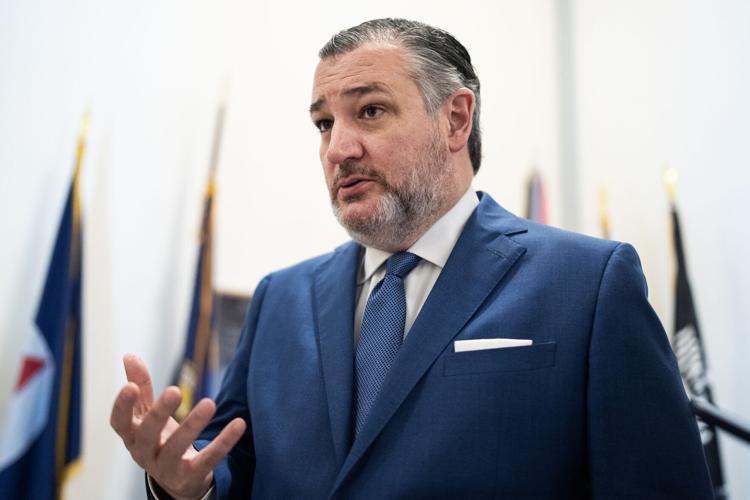
Chairman Ted Cruz, R-Texas, talks with reporters June 10 after a Senate Commerce, Science, and Transportation Committee roundtable on the “Protect College Sports Act and the current state of collegiate athletics,” in the Russell Senate Office Building in Washington.
“The Protect College Sports Act is about restoring order to college athletics and securing its future for the student athletes, the schools, and the fans,” Cruz exclusively told USA Today Sports via statement. “While there is broad agreement that the current trajectory is unsustainable, far too much of the conversation has centered on conference priorities and television contracts, while overlooking the athletes and fans who fill stadiums and maintain the very heartbeat of college sports.”
“That’s why our bipartisan legislation includes a provision dedicated to preserving the historic rivalry games that generations of fans have cherished,” he added. “These iconic matchups are a defining part of college sports and should endure regardless of conference realignment or changing media agreements.”
Specifically, the current language of the bill seeks to “ensure that historic college football matchups are not lost as a result of conference realignment, national scheduling models or changes to media-rights structures.”
In layman’s terms, this provision seeks to help ensure that rivalries such as the Apple Cup — Washington-Washington State, intrastate matchups among Texas universities and even Notre Dame-Southern California are preserved — but is structured so that Congress does not get involved in such scheduling matters unless colleges pool their media rights for collective broadcasting negotiations.
The bill has strong support from the football coaches of the Big 12 Conference, 14 of whom spoke candidly about the need for governance in college athletics — particularly football — in one-on-one meetings with USA Today Sports. All 14 coaches said they favor some iteration of the legislation.
TCU’s Sonny Dykes called it a top priority.
“I appreciate the fact that we're trying; I don't know that any legislation right now is going to be perfect,” said Dykes, 2022’s consensus national coach of the year and the Big 12’s second-longest tenured head coach. “But I think we've got to take some steps, and I think we've got to try to do something, because if we stay on the road we're on, I don't know that it's good for college football, but I know it's not going to be good for the other sports.”
“And I do think that we have a moral obligation to try to, you know, to take care of all the other sports,” he added.
In his second tour atop the West Virginia program, Rich Rodriguez was much more blunt.
“We’re on a runaway train and it’s not slowing down; it’s just getting worse,” he said. “Reasons being that people don’t realize how competitive, not just coaches, but schools are athletically. If I am a school that’s got a $40 million dollar football roster, for instance, and I am playing a team with a $15 million dollar roster in my league, well, I don’t want the rules to change. I like it. I’ve got an inherent advantage."

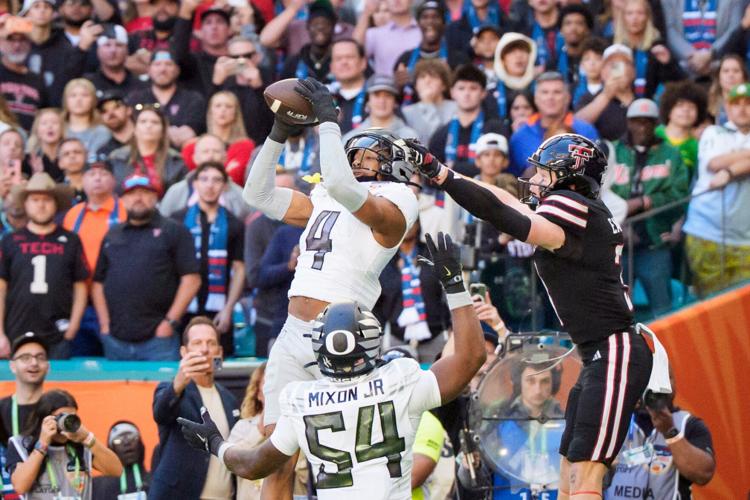
Oregon defensive back Brandon Finney Jr. hauls in an interception during his team's game against Texas Tech in the 2025 College Football Playoff in the Orange Bowl.
Morgan Scalley has been a participant as player and coach in roughly 20 iterations of the ‘Holy Way,’ the BYU-Utah gridiron rivalry.
“It’s what makes college sports, the rivalries, right?,” Scalley said. “And knowing that every year you win that game, it’s bragging rights for 365 days. The rivalries make it so special. Because it goes beyond the game, it goes into daily life. You go back to school and you are able to talk trash to the fans of the other team. It’s what makes college football special, those rivalries.”
A former football letterwinner at the University of Pittsburgh and four-year track letterman at Notre Dame, attorney Ryan Regula, in part, works with universities, collectives and student-athletes in the current landscape.
He’s closely studied the proposal and found the rivalry element particularly compelling.
“College sports would be governed by statute if this bill is passed, and I think that really is kind of monumental,” said Regula, partner at Snell & Wilmer who previously assisted the U.S. Senate Judiciary Committee. “We could get to that position in three or four weeks to get a vote on it, that would be incredible. Guardrails is one of the most important phrases in the bill, getting it to some legal certainty. Valid business purpose (for NIL) also is one of the other most important lines in the modern college sports economy.”
“From a legal perspective, I actually think this is incredibly smart, Congress has put their thumb on, ‘Hey, rivalries are not just pageantry. This isn’t just nostalgia. This is part and parcel of what college sports is about and what made college sports.’ They are tied to the proposed media-rights framework and the antitrust protection that would support pooled rights,” he added. “Congress is treating rivalries as part of the college-sports product.”
Kevin Paule, a former NCAA athlete at Washington University who’s litigated player eligibility issues in Florida, said he’s closely monitored this case.
“Two things to watch would be depending on what happens with this, mid-term elections in a few months; even after that, Congress could still pass something if they wanted to,” Paule said. “But if this does not pass, will we see more movement at the conference level, such as the SEC or Big Ten, to create their own rules?”
“If this doesn’t pass and you get more head-scratching court rulings, it could swing momentum in another way,” he said. “The NCAA is not going to come up with rules on its own; it’s very hesitant to do so.”
Big 12 coaches stopped just short of pleading for action — and soon.
“I think rivalries matter, but at the same time, whatever schedule makes the most sense to get this thing kind of honed in is fine with me,” said Central Florida coach Scott Frost, a former Nebraska quarterback who played in rivalry games against both Colorado at Oklahoma. “It'd be tough to see rivalries go away, but there's been rivalries that have gone away with conference realignment and everybody still shows up to games."
Bringing unique perspective as a former Texas Tech baseball player who’s tallied more than 100 wins as college football head coach, Dykes says the situation requires sacrifice or young student-athletes, like his two teenage daughters, may never get a chance to compete in NCAA-sanctioned collegiate sports.
“The way this stuff's headed, if we don't do something about the amount of money that we're spending and all the things, then, you know, they're not gonna cut football, right?,” Dykes asked. “It's gonna be those opportunities to young ladies and to non-revenue sports, which is gonna have an impact on a lot of different things, and I don't think any of us are gonna want that to happen."