

If the Pacific-10 Conference were a country, commissioner Larry Scott told a crowd of media and giddy Utah fans last Thursday in Salt Lake City, it would have finished sixth in the 2008 Beijing Olympics.
Now, with recent additions Colorado and Utah, the self-described "conference of champions" will have a presence in the Winter Games, too.
"With Utah's prowess in skiing, we will be paying attention to the Sochi Olympics," Scott said to loud applause.
But, of course, the Pac-10's expansion push that attempted to reach into Texas and Oklahoma, then came away with the two mountain schools, had nothing to do with skiing or any nonrevenue sport.
It was all about football and television sets. The Pac-10 gains a strong football program in Utah, plus two Top 50 TV markets in Denver (16) and Salt Lake City (31) that will give it additional leverage during negotiations for a new television deal to start in 2012.
People are also reading…
But there are also many collateral aspects to the expansion.
Here's one look at what Utah and Colorado will bring to the Pac-12, or whatever it might be called, starting in either 2011 (possibly 2012 for Colorado).
Utah's top programs
Football. Before the Utes were invited to join a BCS conference, they were a BCS buster, Exhibit 1A for Utah Sen. Orrin Hatch's railings against the college football championship system. Utah beat Alabama in the 2009 Sugar Bowl and Pittsburgh in the 2005 Fiesta Bowl, and the Utes own the nation's longest bowl winning streak at nine. They have finished in the Top 25 five times.
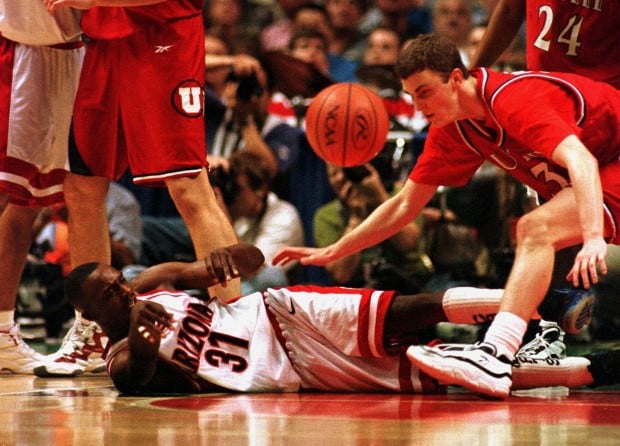
Basketball. Russ Pennell and his orphaned Arizona Wildcats upset the Utes in the first round of the 2009 NCAA tournament, but longtime Arizona fans might painfully recall another postseason meeting: When coach Rick Majerus and the Utes stunningly blew out the defending national champion Wildcats in the 1998 West Region final. Utah finished as a runner-up in 1998 and won the 1944 national title. It has been to 27 NCAA tournaments. In women's basketball, Utah has averaged over 20 wins per year for 36 years.
Gymnastics. The Utes have won 10 national titles, have qualified for all 29 NCAA championships and have drawn more than 11,000 fans per meet for the past 20 years. Those numbers speak for themselves.
Skiing. The men's and women's programs have combined for 10 national titles. Must be nice having world-class slopes less than an hour away.
Colorado's top programs
Skiing. The Buffaloes have won 19 NCAA titles in skiing. Too bad the Pac-10 doesn't have skiing; Colorado and Utah instead compete in the Rocky Mountain Intercollegiate Ski Association along with Alaska-Anchorage, Denver, Montana State, Nevada, New Mexico and Wyoming.
Cross country. Must be the thin-air training. Colorado has three national titles in men's cross country and two in women's cross country.
Football. Well, not really. But the Buffaloes did split the 1990 national championship thanks to the controversial "fifth down" they were awarded against Missouri, when officials mistakenly allowed them an extra play.
Other sports. Did we mention how good the skiing program is?
What they're saying:
"Despite fielding pedestrian football and basketball teams that made Colorado seem like anything but a major catch, CU managed to achieve the best possible result. … The alternatives were far worse for the Buffs. Had Texas, Texas A&M, Texas Tech, Oklahoma and Oklahoma State followed them west, the Buffs would have, in effect, moved from the Big 12 North to the Big 12 South. The revenue from a Pac-16 might have been good, but the results on the football field would not have been. Playing in a conference with Texas, which demands preferential financial treatment, and gets it, is like pro baseball. … Playing in an egalitarian conference like the Pac-10 is more like the NFL. Everybody gets the same distributions. No preferential treatment." - Dave Krieger, Denver Post
"Ironically, Utah might have a better shot at playing in Pasadena this season as a Mountain West Conference member than as a Pac-10 contestant anytime soon, thanks to a Bowl Championship Series provision. But that annual opportunity, at least, will become a reality in 2011. … The Utes have arrived here properly. This is not a case of a school that has sacrificed anything to become a genuine player." - Kurt Kragthorpe, Salt Lake Tribune
What now?
Utah: In basketball and football, the Utes have a tradition worthy of a BCS conference team. Now they have the huge recruiting advantage of being a BCS conference team. The main drawbacks are that the Utes will no longer have that edginess from being a BCS outsider, they will no longer play conference games against longtime rival BYU, and their football recruiting turf in Texas could be damaged.
But Utah already has recruiting ties in California, as well as a productive Polynesian pipeline that should only get stronger. While Utah's nonrevenue sports are generally a good fit with the Pac-10, its mediocre baseball program will have to upgrade.
Colorado: The Buffaloes had more leverage than Utah by coming from the Big 12, which is why they will receive a full share of league revenues two years earlier than Utah. But Colorado has a long way to go, on and off the playing surface.
Its football program has been mired in off-field issues for years and its current lack of academic progress is surprising for a program with Colorado's resources. More notably, though, the Buffaloes just haven't been a factor in football or basketball lately. And they will have to consider whether it's worth the money - and snow removal - to start up Pac-10-worthy softball and baseball teams.
But a stronger West Coast connection could help football and basketball recruiting, and, in turn, help those programs get people to actually turn on all those Denver TV sets. Good skiing alone won't quite cut it, even in the Rocky Mountains.
On StarNet: Follow news of the Pac-10 expansion on reporter Bruce Pascoe's blog at go.azstarnet.com/pascoe
NEW KIDS ON THE BLOCK
Colorado, with an enrollment of about 30,000 students, and Utah, about 27,000, will join the Pac-10 Conference.
School
Location:
Elevation:
Nickname:
Mascot:
Former conference:
Begins Pac-10 play:
Full Pac-10 revenue:
TV market ranking:
Football stadium:
Basketball arena:
2008-09 revenue:
Football profit (08-09):
Basketball profit (08-09):
Football vs. UA:
Basketball vs. UA:
Colorado
Boulder
5,440 feet
Buffaloes
Ralphie (a live buffalo)
Big 12
2011 or 2012
2012
16
Folsom Field (53,613)
Coors Events Center (11,064)
$49.9 million
$14.8 million
$42,000
12-1
8-5
Utah
Salt Lake City
4,657 feet
Utes
Swoop (red-tailed hawk)
Mountain West
2011
2014
31
Rice-Eccles (45,017)
Huntsman Center (15,000)
$31.8 million
$6.5 million
$3.5 million
19-15-2
28-21
Sports offered:
COLORADO: Men (6): Basketball, cross country, football, skiing, golf, track and field. Women (8): Basketball, cross country, golf, skiing, soccer, tennis, track and field, volleyball.
UTAH: Men (7): Baseball, basketball, football, golf, skiing, swimming and diving, tennis. Women (10): Basketball, cross country, gymnastics, skiing, soccer, softball, swimming and diving, tennis, track and field, volleyball.
COLORADO BUFFALOES • THE LAST FIVE YEARS
• Defining moment: June 9, 2010: With a football program that was sacked with NCAA violations under Rick Neuheisel and a sex-and-recruiting scandal under Gary Barnett over the past 15 years, Colorado this spring became the only BCS program to be penalized with scholarship losses in football and men's basketball when the NCAA's Academic Progress Report figures were released.
FOOTBALL
RECORDS
2005 7-6 (Lost to Clemson in Champs Sports Bowl)
2006 2-10
2007 6-7 (Lost to Alabama in Independence Bowl)
2008 5-7
2009 3-9
Games vs. Arizona: None
All-Americans: K Mason Crosby (2005), LB Jordon Dizon (2007)
PLAYERS DRAFTED
• 2006: TE Joe Klopfenstein (2nd, Rams), WR Jeremy Bloom (5th, Eagles), TE Quinn Sypniewski (5th, Ravens), FB Lawrence Vickers (6th, Browns). 2007: K Mason Crosby (6th, Packers), LB Abraham Wright (7th, Dolphins). 2008: LB Jordon Dizon (2nd, Lions), CB Terrence Wheatley (2nd, Patriots). 2009: LB Brad Jones (7th, Packers, 2009). 2010: None
BASKETBALL
RECORDS
2005-06 20-10 (Lost NIT first round)
2006-07 7-20
2007-08 12-20
2008-09 9-22
2009-10 15-16
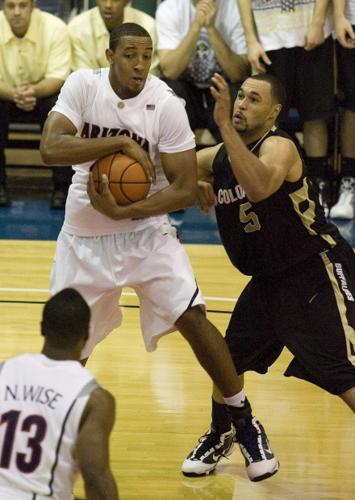
Games vs. Arizona: Arizona 91, Colorado 87 (OT), Nov. 24, 2009 (Maui Invitational)
All-Americans: None
PLAYERS DRAFTED
None
UTAH UTES • THE LAST FIVE YEARS
• Defining moment: Jan. 2, 2009. With eight quarterback sacks and a defense that allowed Alabama just 31 rushing yards, Utah upset the Crimson Tide 31-17 in the 2009 Sugar Bowl to win its second BCS bowl game in five seasons.
FOOTBALL
RECORDS
2005 7-5 (Beat Georgia Tech in Emerald Bowl)
2006 8-5 (Beat Tulsa in Armed Forces Bowl)
2007 9-4 (Beat Navy in Poinsettia Bowl)
2008 13-0 (Beat Alabama in Sugar Bowl)
2009 10-3 (Beat California in Poinsettia Bowl)
Games vs. Arizona: Utah 27, Arizona 24, Sept. 2, 2005, at Salt Lake City
All-Americans: DB Eric Weddle (2006), K/P Louie Sakoda (2007, 2008)
PLAYERS DRAFTED
• 2006: LB Spencer Toone (7th, Titans), RB Quinton Ganther (7th, Titans). 2007: S Eric Weddle (2nd, Chargers), DT Paul Soliai (4th, Dolphins). 2008: None. 2009: DE Paul Kruger (2nd, Ravens), DB Sean Smith (2nd, Dolphins), DB Brice McCain (6th, Texans), WR Freddie Brown (7th, Bengals). 2010: DE Misi Koa (2nd, Dolphins), OT Zane Beadles (2nd, Broncos), DB Robert Johnson (5th, Titans), WR David Reed (5th, Ravens), LB Sylvester Stevenson (5th, Steelers), DB RJ Stanford (7th, Panthers)
BASKETBALL
RECORDS
2005-06 14-15
2006-07 11-19
2007-08 18-15 (Lost to Tulsa in CBI quarterfinals)
2008-09 24-10 (Lost to Arizona in NCAA first round)
2009-10 14-17
Games vs. Arizona: Arizona 73, Utah 43, Dec. 17, 2005, at Salt Lake City; Arizona 84, Utah 71, March 20, 2009 (NCAA tournament first round)
All-Americans: None
PLAYERS DRAFTED
None


