In the late ’90s, Tucson gained a new member of its sports facility family — the Kino Sports Complex.
Whether it was taking in a spring training game from the stadium or rolling down the grassy knolls beyond the outfield as a kid, Kino Sports Complex was the place to be every spring.
Although it could’ve been hard to compete with its predecessor venues that had an 80-year head start, the new kid on the block quickly created an electric environment for Tucsonans.
Over the years, the facility has experienced highs and lows but has always managed to overcome whatever has been thrown its way.
Here’s how Kino Sports Complex grew from the Tucson Electric Park baseball stadium and practice fields to a full-fledged sports complex.
People are also reading…
Play ball!
The ball officially got rolling for a new sports complex in February 1996 when the Pima County Board of Supervisors approved a $25 million proposal to build a “two-team major league spring training facility” and several practice fields on Tucson’s south side, the Arizona Daily Star reported.
The Arizona Diamondbacks and the Chicago White Sox were the two MLB teams signed to use the complex for spring training. The facility was set to be completed before the 1998 season, which was also the inaugural season for the D-backs.
Within a year of the announcement, costs for the new facility quickly rose.
In January 1997, the cost to build the complex increased by $10.5 million, bringing the overall price tag to $35.5 million, the Star reported.

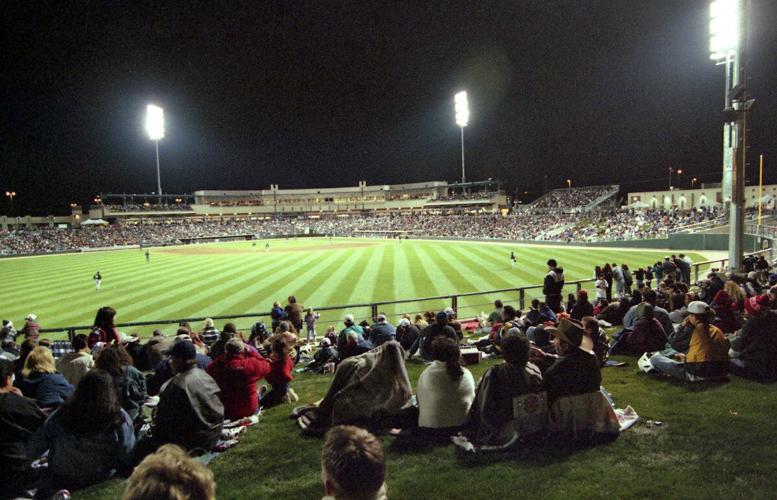
Fans sit in the outfield for the first spring training game at Tucson Electric Park between the Arizona Diamondbacks and the Chicago White Sox on Feb. 28, 1998.
Despite county concerns about how it would cover the facility’s annual cost, a groundbreaking ceremony was held for the stadium on Valentine’s Day 1997.
Ahead of the groundbreaking, concept art was released to the public showing details of the stadium, including a two-level structure and 11,000 stadium seats set below ground level. The St. Louis-based architectural firm that designed the facility also designed Coors Field in Denver and Jacobs Field (now Progressive Field) in Cleveland.
By the summer of ‘97, Tucson’s newest sports complex had its official name: Tucson Electric Park, or TEP for short.
Tucson Electric Power signed a 10-year, $200,000 per year contract for the naming rights to the stadium.
In the fall of 1997, construction was still underway at the facility, but once completed, “Tucson will be the only city in America with three major league teams training inside its city limits,” the Tucson Citizen reported in September 1997. (The third team was the Colorado Rockies at Hi Corbett Field.)
While spring training was set in Tucson, TEP still sought a permanent team for the facility.
That’s where the Tucson Sidewinders come in.
On Nov. 18, 1997, the Pima County Board of Supervisors approved a 15-year contract for the Sidewinders to play at TEP.
For the county to reach its revenue goal of $200,000, the Sidewinders would have to draw an average of 350,000 fans (about 4,000 per game) over 80 games, the Tucson Citizen reported in November 1997.
For reference, the team, which was previously known as the Tucson Toros, had an average of 250,000 fans “for the past five years,” the Tucson Citizen reported in ‘97.

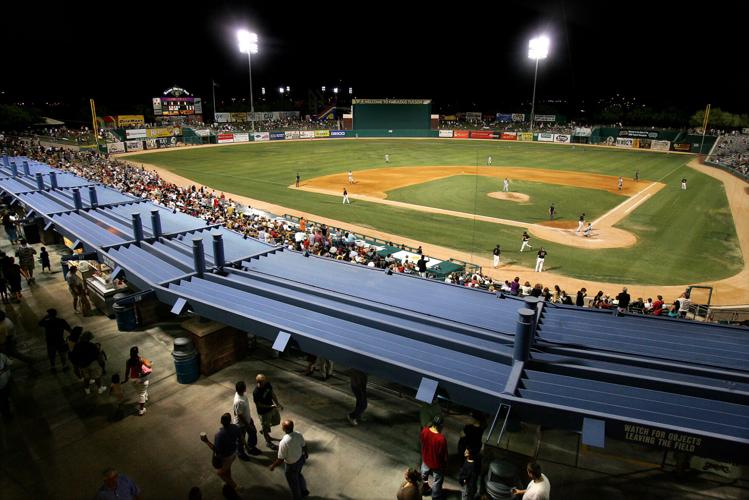
Tucson Electric Park opened in 1998 and was home to the Tucson Sidewinders, Arizona Diamondbacks spring training, and Chicago White Sox spring training.
In case you’re curious where some of the funding came from, the Star reported that “Kino Veterans Memorial Sports Park is financed through a combination of taxes on car rentals, hotel rooms and fees on RV spaces.”
At the time of the Sidewinders’ signing, Republican Ray Carroll told the Board, “I’m prepared to take a leap of faith in (Class) AAA baseball because of what it will bring to the local economy.”
After 10 months of construction, Tucson Electric Park opened on Feb. 27, 1998.
The D-backs faced the White Sox in the park’s first exhibition game.
Fun fact: The game’s first pitch, a ball, was thrown at 7:06 p.m. that night.
While it was a full house, the attendees were more interested in the new facility and their experience rather than the game itself, the Star reported.
Tucsonans shared sentiments like, “It’s beautiful, like a mini major league stadium” and “It’s so green,” the Star reported.
At the time of opening, Tucson Electric Park had six full concession stands, 12 points of sale, a 30-by-56-foot scoreboard and six bathrooms.
Concession prices back then? Nothing above $4, including $3.50 beers and $1.50 peanuts.
The D-backs defeated the White Sox, 6-5.
Major and minor league baseball had a solid decade in Tucson before teams began to move away to bigger ventures.
The Sidewinders remained at TEP until 2008, when the team was sold and relocated to Reno, Nevada.
The White Sox continued spring training at TEP until 2008 and then relocated to Camelback Ranch in Phoenix in 2009.
The D-backs finished spring training at TEP in 2010 and relocated to the Salt River Fields in Scottsdale in 2011.
Despite the wave of departures, baseball didn’t end there for the sports complex.
The Mexican Baseball Fiesta, where professional Mexican baseball teams duke it out in a multi-day series, debuted in 2011. The event has become a fall sports tradition in Tucson.
The Tucson Padres also moved in in 2011.
“It occupies a stadium and brings baseball back, so we’re pleased,” then-County Administrator Chuck Huckelberry told the Star in 2011. “There’s no harm to the taxpayers. That was one of our criteria. We should actually come out a little ahead.”
During the team’s three years at the stadium, the Padres attracted 643,000 fans, some of the lowest numbers for a Pacific Coast League team at the time, according to the Star.
Just as the facility was going through a plethora of changes within the stadium, there was change on the outside, too.
The Pima County Board of Supervisors approved the renaming of TEP as Kino Veterans Memorial Stadium on Jan. 18, 2011.
But this was only the tip of the iceberg for Kino Sports Complex.
Ice, ice, Tucson
While Kino Sports Complex was created with only baseball in mind, things began to shift by the 2010s.

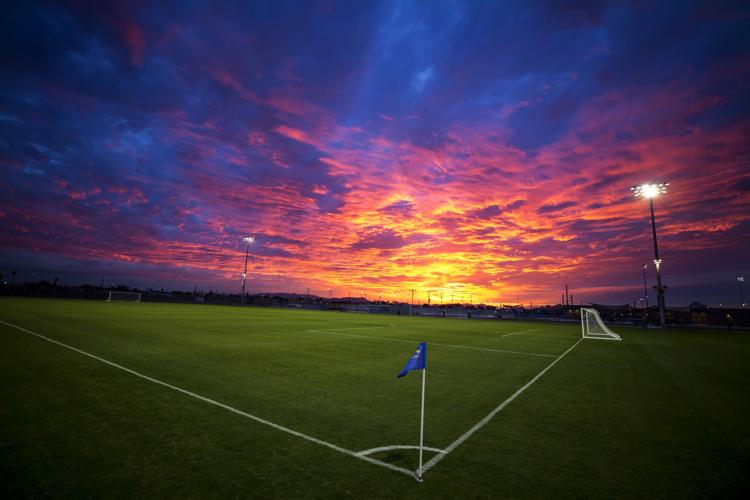
A roaring sunset shows over newly lit grass fields during the Kino South Complex Ribbon Cutting and VIP opening house at Kino Sports Park's South Complex, 2343 E. Tournament Way, in Tucson, Ariz., on January 15, 2020.
In early 2012, talks began about converting some of the practice baseball fields north of Kino Veterans Memorial Stadium into soccer fields and shifting the lighted baseball field into a soccer field and home for FC Tucson and MLS teams visiting for pre-season training.
Toward the end of 2012, those talks started to become a reality.
In October of that year, Pima County approved plans for a $2 million stadium to be built at Kino North and converted several baseball practice fields to soccer fields.
“Fans are really going to see how players and teams and coaches prepare. It’s an inside look,” said FC Tucson co-founder Greg Foster at the time. “They might see games that are four 30-minute periods. … They might hear coaches making the adjustments in real time.”
Kino North, its soccer stadium and practice soccer fields, made their official debut in 2013. The site has been the home of the FC Tucson and FC Tucson women’s soccer clubs ever since.

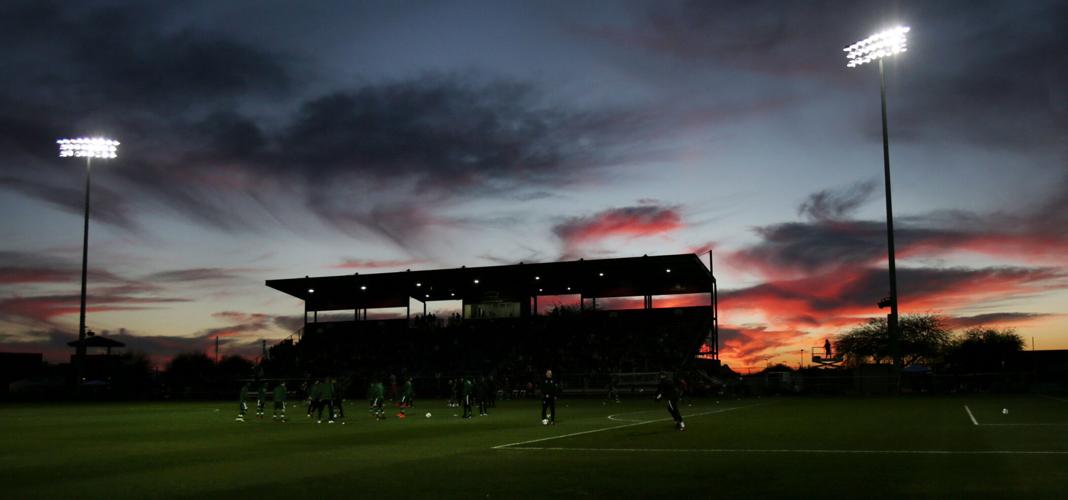
The sunset glows behind the grandstands as the players warm up before the Seattle Sounders vs. Portland Timbers Desert Friendly match at Kino North Stadium on Feb. 4, 2017, in Tucson.
The Kino Sports Complex went through another series of upgrades just five years after Kino North debuted.
This time, the Kino Sports Complex was heading south.
In December 2018, the Pima County Board of Supervisors approved a $9.6 million funding increase to add 145 acres south of the 155-acre Kino Sports Complex.
The first phase of construction, which began in late 2018, included 12 natural grass, sand-based multiuse fields, 20 pickleball fields, concessions, lockers, parking for more than 700 vehicles and an entrance from Benson Highway, the Star reported. Phase one cost an estimated $31.2 million.

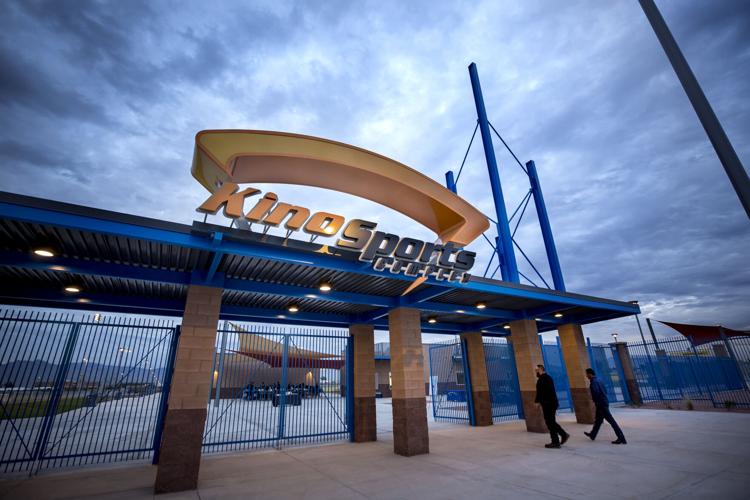
People enter the new Kino South Complex during the Kino South Complex ribbon cutting and VIP open house at Kino Sports Park's South Complex, 2343 E. Tournament Way, in Tucson on Jan. 15, 2020.
Kino South opened to the public in January 2020.
Now, Kino Sports Complex in its entirety is over 300 acres.
In recent years, the complex has been home to hundreds of baseball and soccer games, and Kino Veterans Memorial Stadium has hosted countless events, including concerts, the gem show, and even the World Baseball Classic qualifiers. The stadium is also home to the Pecos League's Tucson Saguaros.
But just like in the years following its inception in 1998, Kino Sports Complex is always evolving.
In 2024, the Pima County Board of Supervisors approved leases for the first phase of Mosaic Quarter, a sports and entertainment complex that will be a part of Kino South.
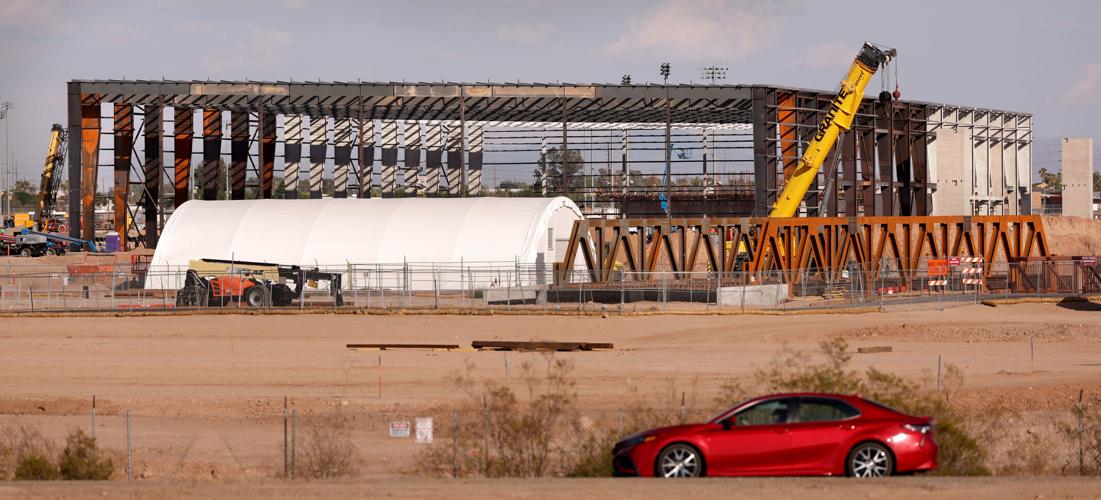
Construction is currently underway on the first phase of Mosaic Quarter, which will include a 175,000-square-foot iceplex, a 131,000-square-foot field house, a utility plant and more.
Once completed in spring 2027, the MQ Iceplex will house the University of Arizona hockey team, Tucson Junior Roadrunners and the Tucson Adult Hockey League.
The MQ FieldHouse will feature 28 wrestling, jiu jitsu and judo competition mats, 24 pickleball courts, 16 recreational volleyball courts, eight NCAA basketball courts and two 7-on-7 football fields.
“Mosaic Quarter will be a hub for sports, entertainment and community,” Lindsay Knott, the executive vice president of Mosaic Quarter, told the Star in 2024. “We are committed to creating a space where people can come together to enjoy world-class events and experiences.”
After completion of Phase one, there are two phases left that will bring a sportsplex, stadium, hotel and a pavilion with plenty of food and entertainment options to Tucson.

The Iceplex facility under construction in the Mosaic Quarter of the Kino Sports Complex in Tucson on July 1, 2025.
Mosaic Quarter is estimated to be completed by 2031.
With all of its additions over the years, the Kino Sports Complex has become the largest and most diverse sports facility in Southern Arizona in just under 30 years.
The future is bright, sporty and a little icy for the Kino Sports Complex.
Contact Elvia Verdugo, the Star's community sports editor, at everdugo@tucson.com. A journalism and history graduate from the University of Arizona, she shares stories highlighting what makes Tucson and its community special.

Elvia Verdugo
Sports Editor