

NEW YORK — The first college football game was played 139 years ago in New Jersey, between Rutgers and Princeton, and the sport was dominated by Northeastern schools such as Yale and Harvard in its infancy.
By the middle of the last century the South had risen in college football, and these days there's no question: If you want to win a national championship, it's best to play in places where sunscreen is more important than snow boots, and the grits are better than the bagels.
Why? Simple. Because that's where the best players are.
Since the Bowl Championship Series started crowning a national champion in 1998, Ohio State and Oklahoma are the only schools that play in cold weather to have won a championship. And it's important to point out that Oklahoma borders Texas, which has more high school football players than any other state.
People are also reading…
"You could draw a horizontal line from Houston to Jacksonville and from Dallas to Atlanta, in between I-20 and I-10, and there would be as many football players in that area than any other area in the country," said Bobby Burton, the editor-in-chief of Rivals.com, who has covered recruiting for 15 years.
Part of this trend is about pure numbers. There are a lot of people living in the part of the country known as the Sun Belt, especially Florida with its population of a little more than 18 million. More people, more players.
But the numbers don't fully explain the imbalance.
The weather plays a big part, no brutal cold and snow to keep kids from getting outside and playing ball. When it comes time to pick a college, it's not easy to convince a teenager who's never owned a pair of gloves to sign up for three months of wearing long johns.
Also, the rules governing high school football in the South give players far more opportunities to hone their craft. For most top players in the South, football is a year-round sport.
Yet there's something deeper at work here, too.
"There's one simple answer," Burton said. "It's just a different social mentality (in the South)."
King football rules. It's an integral part of Southern culture — and it's just not the same throughout much of the northern United States, especially the Northeast.
In the South, small towns pretty much shut down on Friday nights when the high school kicks off as thousands pack their local stadiums.
Saturday morning it's time to pack up the car and head off to the college game, barbecue in tow. The guys who played the night before watch the teams they've been dreaming about becoming part of since they could tell the difference between a Vol and a Gator, an Aggie and a Longhorn.
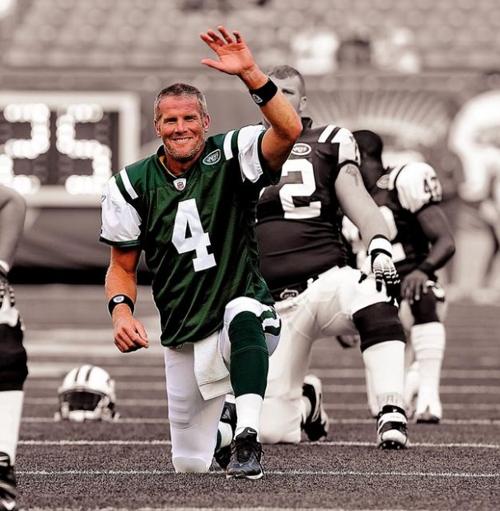
Then on Sunday, they'll flip on the NFL games, often just to root on their local hometown heroes. Hattiesburg, Miss., has lots of Green Bay Packers fans — many of whom just became New York Jets fans — thanks to former Southern Miss quarterback Brett Favre.
"In most of the rest of the world, college football is a game and they love it. In the South, it's not a game, it's a way of life," said Tony Barnhart, author of "Southern Fried Football" and longtime sportswriter for The Atlanta Journal-Constitution.
"It's built into the DNA like no other place in the world."
Sure, there are places up North where the residents follow the same routine — Massillon, Ohio, comes to mind. But longtime recruiting analyst Tom Lemming of the CBS College Sports Network has been to far more games in the Northeast and Midwest where "you're lucky to find 20 people in the stands."
The results of all that Southern football madness are easy to spot in the list of Rivals' top 100 prospects.
From the recruiting class of 2008, this season's incoming freshmen, 42 of Rivals' top 100 were from the 11 states below the Mason-Dixon Line, starting with Virginia in the east and sweeping west to Arkansas. Another 15 were from Texas. California, the most populous state in the country, had 13.
The other 37 states produced 30 among them.
New York state has more people than Florida, but the Sunshine State produces enough top-tier talent to be the backbone of three teams (Florida, Florida State and Miami) that have won a total of eight national titles since 1980, while still leaving plenty of players to bolster rosters all over the country.
On the other hand, not one of Rivals' top 100 in 2008 was from New York state. There was one on the 2007 list — quarterback Mike Paulus from Syracuse, who went to North Carolina.
New York City is the biggest culprit. All those Big East and Big Ten teams are getting no help from the Big Apple.
"The biggest city in the country is not producing football players," Lemming said.
With its population headed toward 9 million, New York City has had one player break into the Rivals annual 100 since 2003 — Maurice Evans, a defensive lineman from Queens who is now playing for Penn State.
Football just isn't a priority in New York.
The city's Public School Athletic League, has 217 member schools. Only 49 play football, according to the organization.
Most of the games are played on Saturday and Sunday afternoons. So much for Friday night lights.


