There is something almost cinematic about watching your favorite Latino stars shine on the diamond.
Fans eagerly await the home run or the highlight-reel catch that electrifies the ballpark. Latino players bring a passion to the field that is impossible to ignore. Yet behind these moments of glory are quieter stories of sacrifice ― stories that begin when these athletes are just 4, 5 or 6 years old, spending years risking everything in pursuit of a dream that at times seems out of reach.
When they sign with Major League Baseball organizations, the sacrifices of those childhood years begin to pay off. But the journey is far from over. Before they turn 20, many must leave behind everything they know: homes, families and roots that shaped them.
That is the story unfolding beyond the diamond for the Arizona Diamondbacks' Dominican prospects, Gian Zapata, 20; Gregori Ramírez, 21; and Adriel Radney, 18. Though these athletes come from different backgrounds, they all share the same goal: reaching the major leagues, a dream they began cultivating long before their first decade of life.
People are also reading…
“Baseball has practically been my whole life,” Zapata told The Arizona Republic. For Radney, the connection runs even deeper. “We Dominicans carry baseball in our blood,” he said.
For Zapata, Ramírez and Radney, pursuing that dream meant stepping into the unknown ― a new country and an entirely different lifestyle. Their challenge extends far beyond the demands of the game: leaving home and family more than 2,500 miles behind, adapting to a new culture, a new life and a new language. Every conversation, much like every turn at bat, becomes another test of their character and determination.
The journey to the major leagues demands far more than talent alone. Talent may open doors, but resilience, sacrifice and the ability to reinvent oneself far from home are often what determine who continues moving forward.

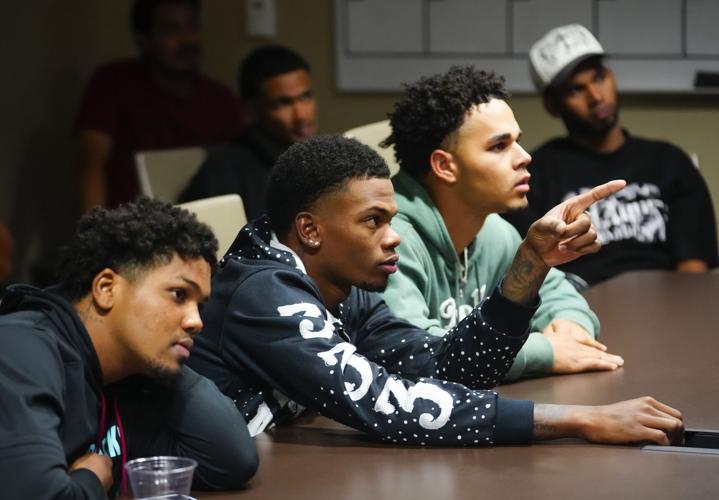
Arizona Diamondbacks minor leaguers Jorge Lara (from left), Alfredo Benzan and Jeury Espinal participate in an English lesson at Salt River Fields at Talking Stick on May 26, 2026.
A friendly hand far from home
Even through those challenges, Zapata, Ramírez and Radney agree on one thing: The transition has been made easier by the educational and personal support they have found within the Diamondbacks organization.
For more than a decade, the Diamondbacks have developed educational and life skills programs aimed at international players. Beyond performances on the field, the initiative is designed to prepare athletes for life.
Through classes, workshops and one-on-one guidance, the program is built around three core pillars:
– A language program, teaching players how to communicate effectively in English.
– An academic development program, providing players with the support and resources to complete their education.
– A life skills program, providing young athletes with the tools to navigate everyday life in the United States ― from opening a bank account and filing taxes to managing personal finances and handling essential responsibilities independently.
“Our role is to help guys make a transition from international players here in the U.S. as smooth and easy as possible.” said Joey Dziedzic, Diamondbacks education coordinator. “We just try to make it smooth so they could be successful not only on the field, but off the field.”
The impact of the program can be seen not only in the stories of Zapata, Ramírez and Radney, but also in several Latin players currently on the Diamondbacks’ major league team, including Geraldo Perdomo, Justin Martínez, Jorge Barrosa and rookie José Fernández, all of whom went through the same developmental process.
‘Set them up for the most success’

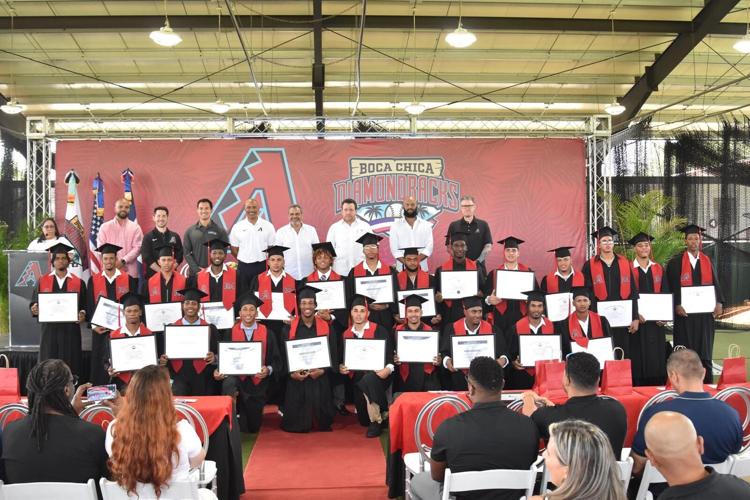
The Arizona Diamondbacks' Class of 2025 and staff pose for a photo during a graduation ceremony in Boca Chica, Dominican Republic.
The development of Latin American players begins at the Diamondbacks Dominican Academy in Boca Chica, Dominican Republic. There, alongside constant baseball training, there is a strong emphasis on academic preparation.
The academic program provides players with foundational education aimed at helping them complete a high school-level diploma. For many Latin players, pursuing the dream of Major League Baseball often means interrupting their studies at a very young age.
“I don't think a lot of people realize that (Latin American) baseball players, a lot of them stopped going to school around like 12 or 13 and they joined a different academy,” Dziedzic explained. “They sign when they're 16.”
One of the program’s primary goals is ensuring players complete their education before arriving in Arizona ― the second phase of their development as professional athletes. If they are unable to finish beforehand, they can continue their studies while training at Salt River Fields, the Scottsdale-area complex where the organization’s minor league players practice, Dziedzic said.
Alongside academics is the organization’s language program, where players attend 2½ hours of English classes each week.
The fruits of the project's success can already be seen in players like Zapata, who has completed all four English levels offered through the organization’s curriculum. During his interview with the Arizona Republic, the young prospect, smiling through a mix of nerves and confidence, proudly demonstrated his ability to introduce himself in English and describe what it means to be part of the Diamondbacks organization.
“Hi, my name is Gian Zapata. I feel great to be here. Every day I wake up cheerful because I have the opportunity to meet with my friends and another opportunity to play baseball,” he said. “It’s great for me to be here.”

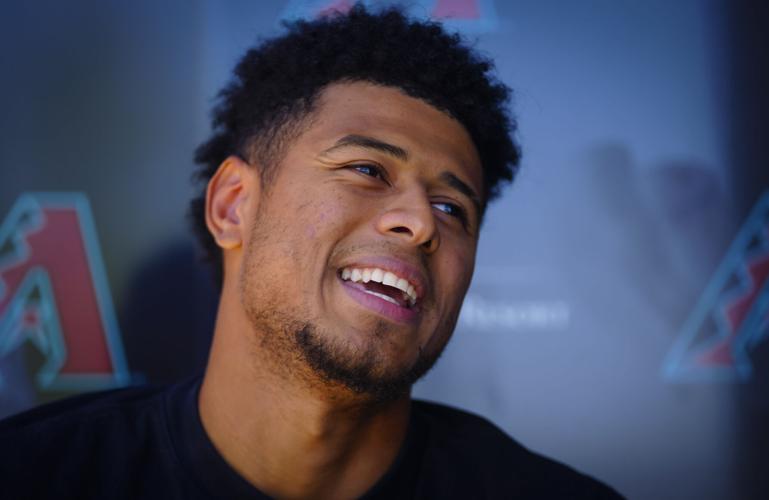
Diamondbacks Gian Zapata speaks in an interview at Salt River Fields at Talking Stick on May 26, 2026.
The teaching model is uniquely tailored to baseball players. Instead of focusing heavily on grammar, instructors use more practical and accessible techniques, including video learning. Because the students are athletes, classes also emphasize baseball-specific vocabulary, often by analyzing and discussing major league games during lessons.
Learning English plays a vital role not only in a player’s athletic career, but also in opening doors beyond baseball. Dziedzic said this reality is central to the organization’s mission, especially given the difficult odds many Latino players face.
"We know it's about a 1% to 2% chance to make the big leagues,” Dziedzic said. “I want to set them up for the most success in their life that is going to be post baseball. And so, I think English is one of the best ways we can do that. Obviously, a high school degree is helpful, but we know if you speak English fluently, your chances of a higher paying and a better job post baseball is going to be highly increased.”
A ‘fatherly’ figure
The third pillar of the Diamondbacks’ educational initiative is the life skills program, a space where players receive practical guidance about adulthood and life in the United States through workshops and mentorship from a key figure: Stalin Pérez.
“Stalin’s role is almost fatherly,” Dziedzic said.
As a Diamondbacks’ player development associate, Pérez supports the young athletes throughout every stage of their transition to the United States. From helping with documents, banking and taxes to offering guidance on mental health, financial literacy and personal growth, his role extends far beyond baseball.
“International players go through an intense process,” Pérez told the Arizona Republic in Spanish. “There are rapid changes, cultural shock and language barriers. It begins very early, when a player is still a child but suddenly has to take on adult responsibilities.”

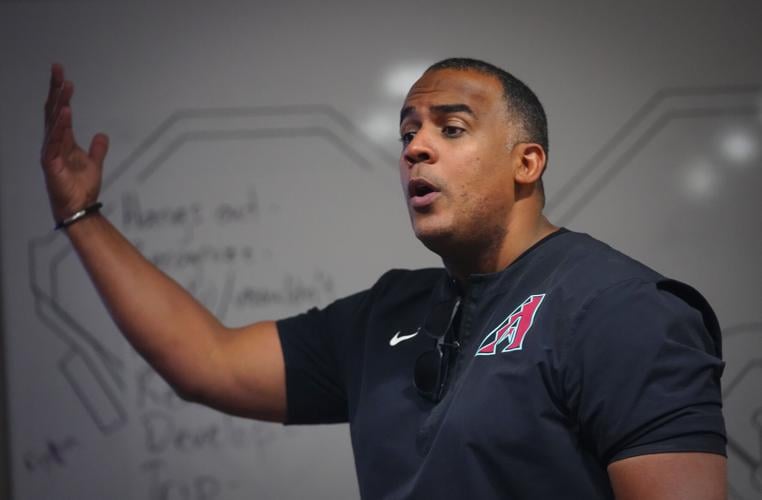
Stalin Pérez, player development associate for life skills, talks to players at Salt River Fields at Talking Stick on May 26, 2026.
Originally from the Dominican Republic, Pérez understands firsthand the challenges these players face when arriving in a new country as teenagers. For him, supporting them means much more than a job.
“It’s a privilege to work not only for this organization, but in this role as a Latino,” he said. “I come from another country and now live in the United States, so I truly understand what they experience here. I can pass that knowledge on to them.”
‘Truly a privilege’
Zapata graduated from the educational program in 2024 and even after completing every level of the organization’s English program, he believes there is always room to grow and continues to attend one English class per week to keep strengthening his communication skills.
“Anyone who comes here and has the opportunity to participate ― whether it’s English classes or guidance in different areas with people like Stalin, Joey and the education staff ― it’s a privilege,” Zapata said. “You can’t even call it just a class or orientation. It’s truly a privilege.”
Ramírez, who graduated in 2022, especially values the life skills sessions led by Pérez, describing them as tools “for improving yourself, learning how to express yourself and how to communicate with others.”
“That helps a lot, because where we want to go — the major leagues — you give a lot of interviews, and you need to know how to carry yourself,” Ramírez said in Spanish.
Meanwhile, Radney, who recently arrived at Salt River Fields as part of the 2025 class, said the organization’s educational commitment was one of the biggest surprises after entering the system, as was the mission of the Arizona team.

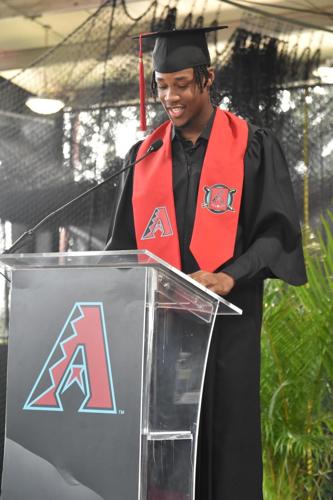
Adriel Radney speaks during the Arizona Diamondbacks' Class of 2025 graduation ceremony in Boca Chica, Dominican Republic.
“The best thing about Arizona is that they want their players to be educated before they become stars on the field,” Radney said. “Honestly, the staff, the teachers here and in the Dominican Republic ... they’re on another level.”
‘On and off the field’
The Diamondbacks’ educational programs have existed since 2014, but their evolution has been remarkable, said Mariana Patraca, senior manager of pro scouting and international baseball operations. Alongside Diamondbacks President and CEO Derrick Hall, Managing General Partner Ken Kendrick and Vice President of Latin American Operations Junior Noboa, Patraca helped pioneer the initiative in its early stages.
In 2022, Dziedzic took over leadership of the program under the direction of Chris Slivka, director of player development. Along with Pérez and a binational staff of at least 10 ― including instructors and coordinators based in both the United States and the Dominican Republic ― the organization continues to expand the project.
“Everybody has such an important role. And all of us are very different, too, which I love,” Dziedzic said. “There's such a difference between all of us that brings a different perspective and philosophy, and it's just so neat to have such a supportive staff and management and then a team that works so hard and it's so bought into what we're doing.”
The success of the program can be measured not only through the stories of current prospects and Latino stars thriving in the majors, but also in the numbers themselves.
According to Patraca, the first graduating class in 2014 included only four players. In 2025, the organization reached a historic milestone with a graduating class of 33 players — the largest in the Diamondbacks’ history.
“The program has gotten a lot of support. And it's been very fun to watch grow ... Trying to turn these guys into thinkers and lifelong learners is super important because we know the more ability they have to think and everything, they're going to be better,” Dziedzic said. “On and off the field.”


 Former Arizona assistant softball coach dies | Greg Hansen