

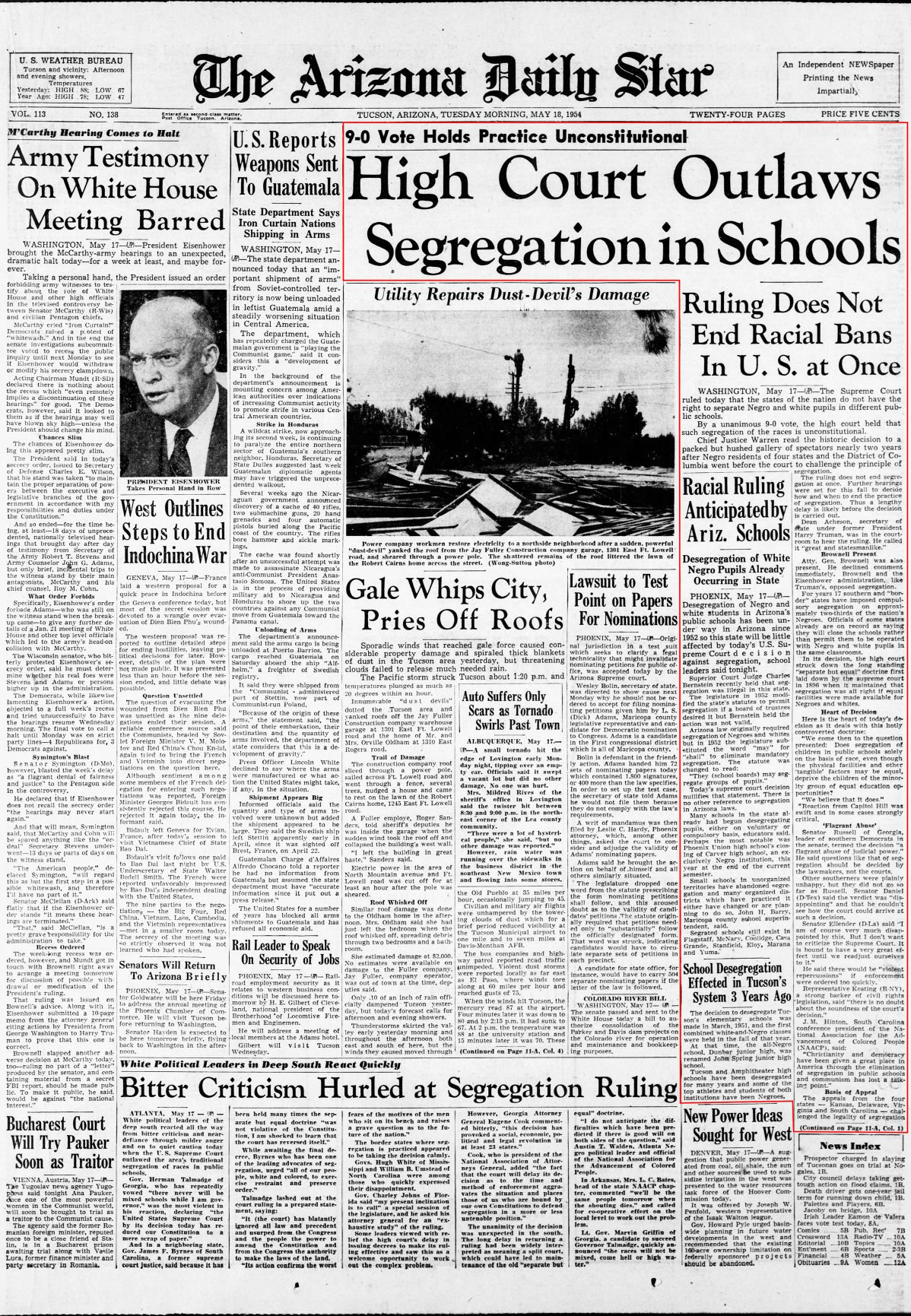
High Court Outlaws Segregation in Schools
Ruling Does Not End Racial Bans In U. S. at Once
WASHINGTON, May 17 ─ (AP) ─ The Supreme Court ruled today that the states of the nation do not have the right to separate Negro and white pupils in different public schools.
By a unanimous 9-0 vote, the high court held that such segregation of the races is unconstitutional.
Chief Justice Warren read the historic decision to a packed but hushed gallery of spectators nearly two years after Negro residents of four states and the District of Columbia went before the court to challenge the principle of segregation.
People are also reading…
The ruling does not end segregation at once. Further hearings were set for this fall to decide how and when to end the practice of segregation. Thus a lengthy delay is likely before the decision is carried out.
Dean Acheson, secretary of state under former President Harry Truman, was in the courtroom to hear the ruling. He called it "great and statesmanlike."
Brownell Present
Atty. Gem. Brownell was also present. He declined comment immediately. Brownell and the Eisenhower administration, like Truman's, opposed segregation.
For years 17 southern and "border" states have imposed compulsory segregation on approximately two-thirds of the nation's Negroes. Officials of some states already are on record as saying they will close the schools rather than permit them to be operated with Negro and white pupils in the same classrooms.
In its decision, the high court struck down the long standing "separate but equal" doctrine first laid down by the supreme court in 1896 when it maintained that segregation was all right if equal facilities were made available for Negroes and whites.
Heart of Decision
Here is the heart of today's decision as it deals with this hotly controverted doctrine:
"We come then to the question presented: Does segregation of children in public schools solely on the basis of race, even though the physical facilities and other 'tangible' factors may be equal, deprive the children of the minority group of equal education opportunities?
"We believe that it does."
School Desegregation Effected in Tucson's System 3 Years Ago
The decision to desegregate Tucson's elementary schools was made in March, 1951, and the first combined white-and-Negro classes were held in the fall of that year.
At that time, the all-Negro school, Dunbar junior high, was renamed John Spring junior high school.
Tucson and Amphitheater high schools have been desegregated for many years and some of the top athletes and students of both institutions have been Negroes.
Johanna Eubank is a digital producer for the Arizona Daily Star and tucson.com. She has been with the Star in various capacities since 1991. Contact her at jeubank@tucson.com

Johanna Eubank
Online producer
