Arizona coach Tommy Lloyd said Monday evening he remains "unwavering" in his support for RJ Godfrey after a Pima County Superior Court Judge denied the ineligible forward's request for a temporary restraining order against the NCAA earlier in the day.
Presiding Judge Scott McDonald ruled that it would be inappropriate to apply a TRO when the NCAA had not yet been served with the five-for-five eligibility lawsuit, which was amended Friday to include the organization.
While meeting with attorneys for Godfrey, Arizona and the NCAA via Teams on Monday morning, McDonald ordered Godfrey's attorneys to serve the NCAA on or before Nov. 30 and scheduled a show-cause hearing for a preliminary injunction for Dec. 2.
Ali Farhang, Godfrey's Tucson-based attorney, could not be reached for comment.
McDonald's ruling meant Godfrey was unlikely to compete in this week's Maui Invitational after he has already missed five games while seeking ineligibility via cases he has filed in Georgia, Texas and now Arizona.
People are also reading…
Lloyd issued a statement from Lahaina, Hawaii, in which he said Godfrey has met all requirements to be fully reinstated by the NCAA, including his restitution for taking benefits from an agent and having proof he withdrew from the Georgia case so as to be eligible to file in Arizona.
Lloyd said it was UA's hope that Godfrey would receive a TRO on Monday and expressed disappointment that a hearing date was instead set for Dec. 2. By then, the Wildcats will have played nine games, representing 28% of the regular season. Lloyd noted that 21 of 22 five-for-five players in the Big 12 have become eligible.
"I will be unwavering in my support of RJ," Lloyd said. "He has done everything in the process correctly and is as deserving to be on the court as the next player in his similar situation."
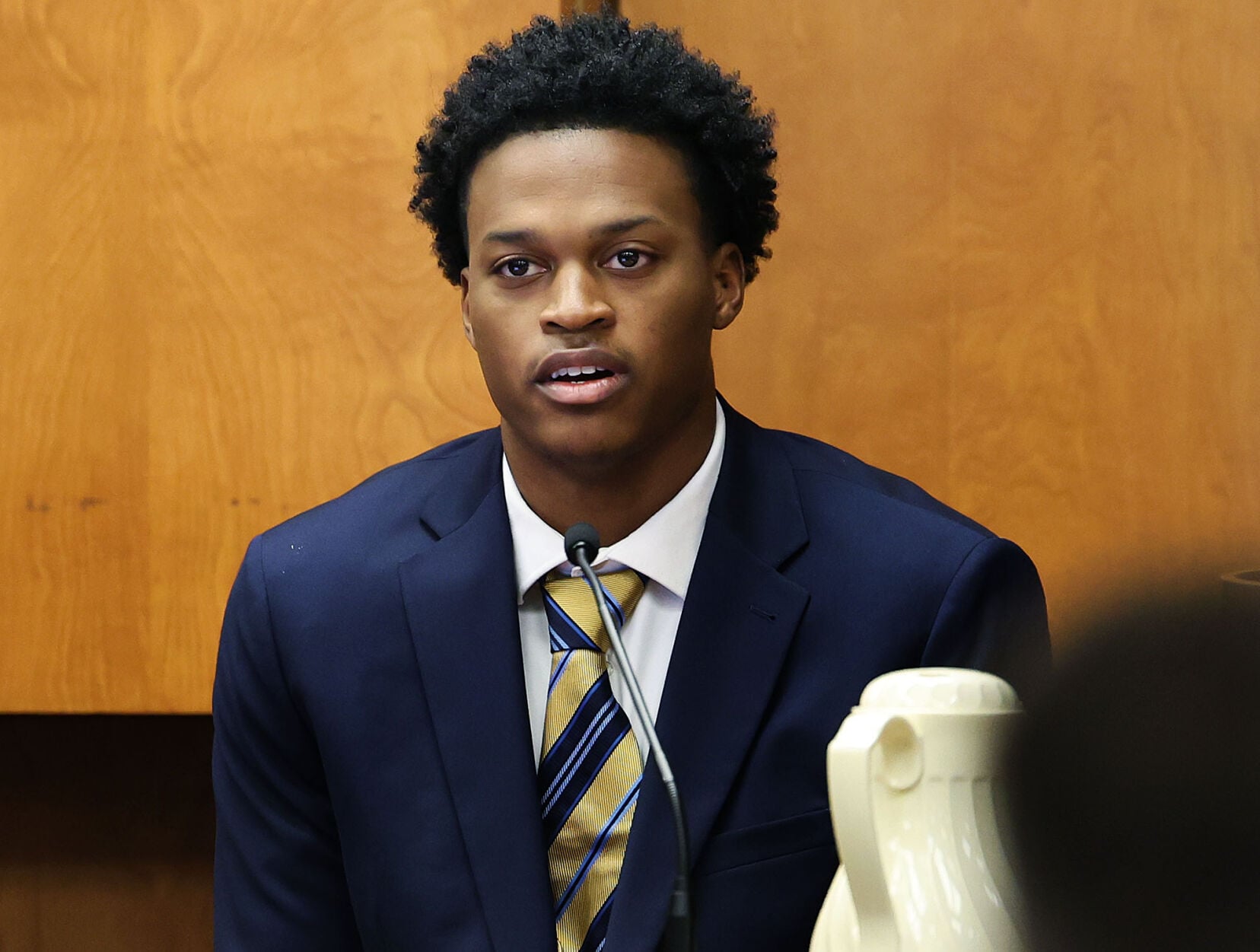
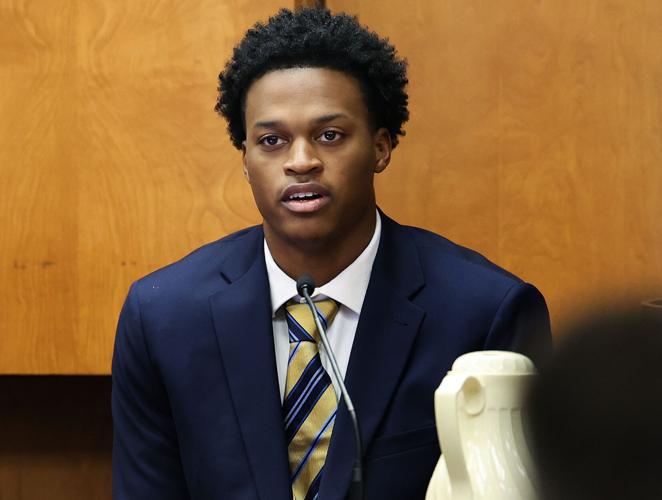
Arizona basketball player RJ Godfrey speaks during a hearing at Pima County Superior Court in Tucson on Nov. 17, 2026.
Earlier this month, Godfrey's attorneys sued only UA and the Arizona Board of Regents, and received a temporary restraining order and preliminary injunction against them from Pima County Superior Court Judge Jeffrey Bergin on Nov. 17. But while that order compelled UA to certify Godfrey, the NCAA still ruled that he was ineligible, and he has remained out.
In an email from NCAA outside counsel that was filed as an exhibit by Godfrey's attorneys, the NCAA maintained that Godfrey was still ineligible and that Arizona would be playing him “at its own risk.” The NCAA has not responded to repeated requests for comment about Godfrey.
Godfrey's attorneys filed an emergency motion on Nov. 18 for enforcement of Bergin's order, but the judge denied that request.
Bergin wrote that the emergency motion “exceeds the scope and intent” of the temporary restraining order and preliminary injunction he issued during an evidentiary hearing Tuesday. Bergin had expressed concern during the hearing that the initial lawsuit could affect a non-party, since Godfrey was suing UA and not the NCAA.
Bergin said his ruling was limited only to ordering UA to certify Godfrey under NCAA Bylaw 12.6, the NCAA's new eligibility rule allowing athletes to play five seasons, and that he did not rule on Godfrey’s other potential eligibility issues for playing in a college all-star game and receiving benefits from an agent.
Those secondary issues do not appear to be a problem anymore, at least with UA. Godfrey’s attorneys said he has since repaid benefits received, while UA said it has applied for Godfrey’s reinstatement over the issues.
In addition, Lloyd said Godfrey signed with an agent before he knew he could have possibly played a fifth season, repaid the benefit he received from the agent, and was never paid for playing in the college all-star game.

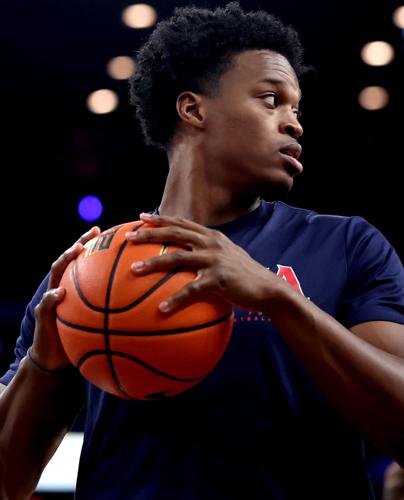
Arizona forward RJ Godfrey walks the court with the Wildcats in the minutes before the start of the second half of the game against UConn on Nov. 18, 2026.
"However, the NCAA has chosen not to acknowledge RJ's injunction and refused to look at his request for reinstatement," Lloyd said in his statement.
In their Nov. 18 emergency motion, Godfrey’s attorneys wrote that “the NCAA has refused to engage with Arizona” on the agent and all-star game issues because of its position that he is already ineligible because he played four years already. While NCAA Bylaw 12.6 now allows players five seasons of eligibility, it did not go into effect until June, after Godfrey finished his fourth college season.
The NCAA has “instead disregarded this Court’s order,” Godfrey's attorneys wrote.
In response, Bergin said the relief Godfrey’s attorneys requested would require the court to adjudicate matters that were intentionally left out of its ruling.
“The Court recognizes that much of the Plaintiff’s frustration appears to stem not from actions taken by the Defendant but from the continued inaction of the non-party NCAA,” Bergin wrote. “Nevertheless, the existence of that frustration does not change that a motion to enforce is not a vehicle to enlarge the substance of an injunction or to obtain additional relief that was neither requested nor granted in the underlying order.”
Contact sports reporter Bruce Pascoe at bpascoe@tucson.com. On X(Twitter): @brucepascoe

Bruce Pascoe
Reporter