How exactly should you care for a baby dragon when you find one in your backyard?
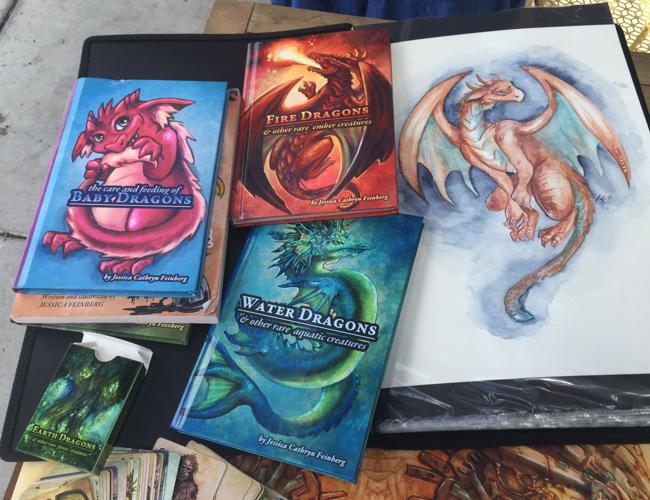
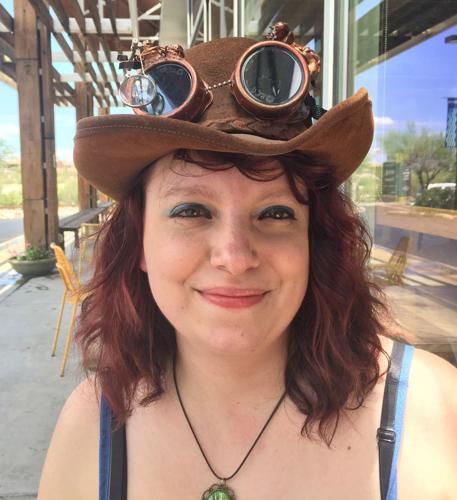
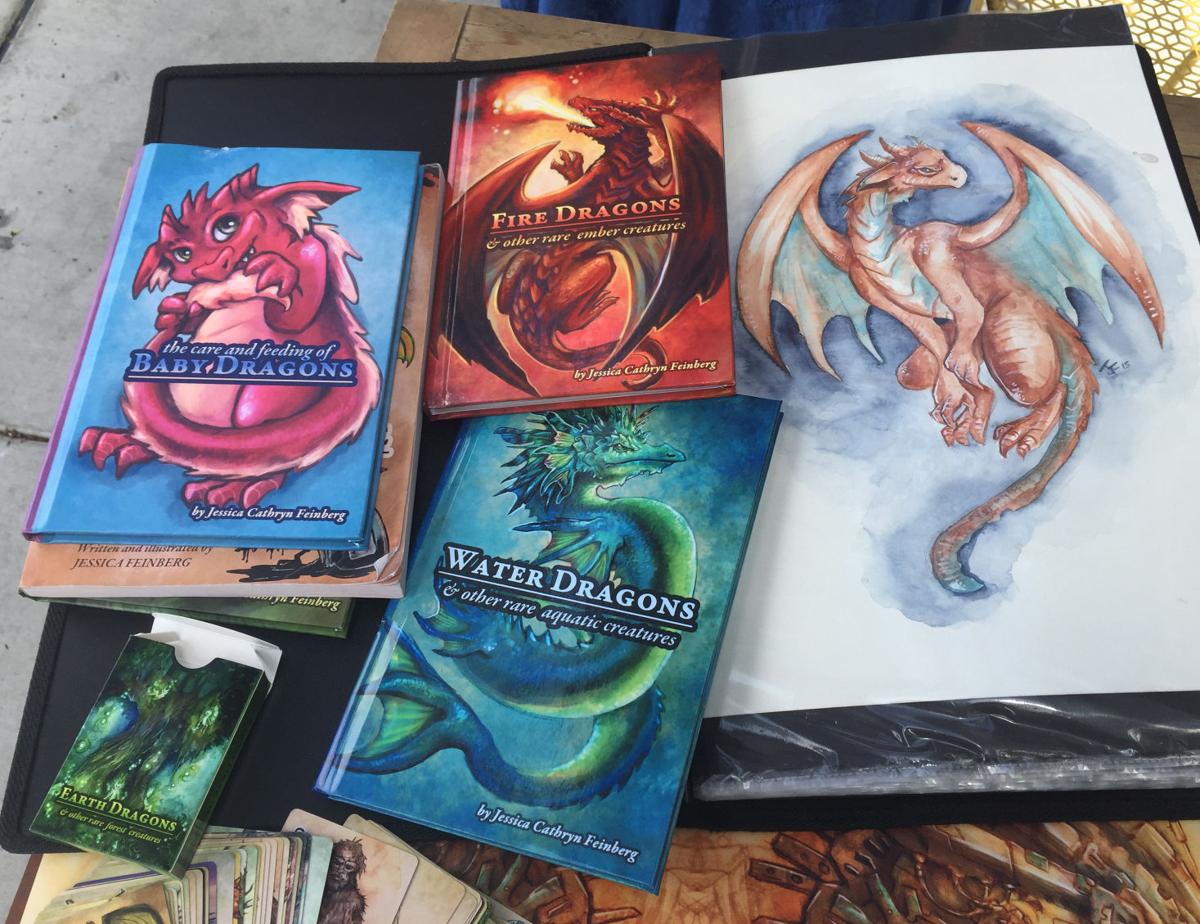
Thanks to more than a dozen online “crowd funding” campaigns, Tucson author and illustrator Jessica Feinberg provides that answer in fantasy books showing how metal dragons, goblins and other mythical creatures live, play and cause mischief in the real world.
The books spring from Feinberg’s imagination, of course, but the business model she has built in the past two years is anything but fanciful. She has raised $122,000 since February 2013, when she had her first big break on Kickstarter, a crowd-funding website in which backers pledge money to realize an idea in exchange for rewards from the campaigners.
Much of that money goes toward printing the books, prints of illustrations, playing cards, keychains, and other items Feinberg, 33, sells to her online backers in what is essentially a pre-ordering system. But the funds also allow her to pay her bills and make a living as an author.
People are also reading…
“I had the choice of working a job and doing what I love every spare minute I had or doing what I love all the time,” she said. “This is my profession now.”
While Feinberg generally raises between $5,000 and $20,000 in her campaigns, the most successful Tucson-based campaign raised $310,000 for a special piece of camera equipment, followed by $306,000 for a documentary, and $250,000 for a dungeon-themed dice game, according to information provided by Kickstarter.
A lifelong reader and illustrator, the native of Ghent, New York, worked in graphic design, taught drawing to children, and studied wildlife illustration at the Arizona-Sonora Desert Museum before she began her career using Kickstarter in 2012.
“I’m a fan of fantasy that’s not removed from the real world,” she said, giving the example of the Harry Potter series that takes place both in the wizarding world and modern England.
Among her creations is the yellow-breasted sock-snatcher dragon that steals socks but moves too fast to be seen. With her fantastical creations she hopes readers “do a double-take when they see a lizard or a hummingbird.”
In at least one instance, she accomplished her goal. A backer said her kids wouldn’t leave the back yard because they were looking for dragon eggs among the grass and bushes.
For the past 13 years, her artwork has featured steampunk creatures, such as dragons made of mechanical parts, which she draws using an architect’s template.
With most of her Kickstarter campaigns, between 100 and 300 people pledge funds, with about half repeating their support in multiple campaigns, she said.
Feinberg estimates about 15 percent of her backers are Tucsonans and another 15 percent live elsewhere in Arizona. She also has a devoted following among a group of Dungeons and Dragons players in Israel and regularly ships items to backers in Australia.
While several crowd funding models exist, Kickstarter is particularly popular among artists who can offer a specific project in exchange for financial support, Mingfeng Lin, an assistant professor who specializes in online crowd funding at the Eller College of Management at the University of Arizona, said in an email.
Kickstarter also allows artists to reach a much larger audience than they would without such a platform, he said.
“Supporters on Kickstarter can even provide instantaneous, and free, feedback to improve the product before it goes into production,” he said.
That feedback is invaluable to Feinberg’s business model, as well as being one of the most enjoyable aspects of the campaign, she said.
After publishing several books with dozens of illustrations, a backer suggested she put images on playing cards, she said.
“People like prints, but how many are you going to buy and hang on your wall?” she said.
The cards proved popular among convention-goers who trade them and they have been part of 10 successful Kickstarter campaigns, she said.
A suggestion from video-game players led her to include table-size computer mouse pads featuring metal dragons in her Kickstarter campaigns. Coloring books for adults also came from discussions with her backers.
However, cost is always an issue and she has developed several strategies, such as buying playing cards in bulk, to keep costs down.
“I have a rule of thumb that if I can’t afford it, I’m not going to sell it to someone else,” she said.
One way she keeps costs down is by using Ingram Spark, a publisher that prints books as orders come in, rather than print and store thousands of copies. Another cost-saver is paying the printer with a credit card and then immediately paying it off, which allows her to earn free hotel stays at conventions.
Given her recent success, Feinberg said she plans to run Kickstarter campaigns as long as backers continue supporting her.
“I want to put out 50 books by the time I’m 50,” she said.

Jessica
Feinberg
Contact Curt Prendergast at 573-4224 or cprendergast@tucson.com. On Twitter @CurtTucsonStar

Curt Prendergast
Editor