

Tucson-based Raytheon Missile Systems announced Monday it will build a new $75 million missile factory in Huntsville, Ala.
Tucson was a finalist for the site but was bypassed because of limits to expansion at Raytheon's current missile plant and a lack of development-ready alternative sites, the company said.
The Alabama site will employ an estimated 300 workers at an annual average wage of $60,000. Several Raytheon divisions already employ about 600 people in the Huntsville area.
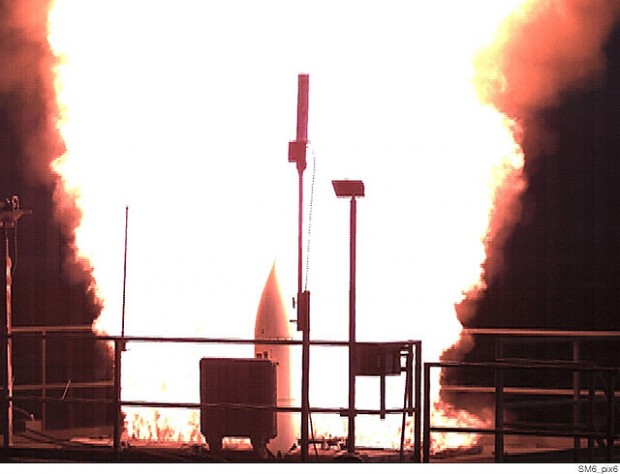
The plant will be used for final assembly and testing of Standard Missile-3 Block IB, a sea-based missile interceptor, and the Standard Missile-6, an advanced ship-defense weapon, the company said.
Raytheon said Huntsville was picked over finalists Tucson and Camden, Ark., where the company also has facilities. In a prepared statement to the Star, Raytheon said the company "conducted a rigorous site selection process for 18 months, investigating more than 80 locations."
People are also reading…
In a statement on its website, the company said it is unable to build within Raytheon's current Standard Missile final assembly compound at Tucson International Airport, "because of explosive facility siting regulations."
Developing a new site in the Tucson area wouldn't meet current scheduling needs, and "operationally, long-term encroachment concerns exist because of surrounding industrial and residential development," the company said.
The encroachment concerns involve expanded operations, not existing facilities at TIA, a company spokesman later clarified.
"Raytheon continues to have a long-term, strategic commitment to Tucson," the company said.
Tools needed to compete
The head of Tucson's main economic-development agency said he was disappointed by Raytheon's decision.
Joe Snell, president and CEO of Tucson Regional Economic Opportunities (TREO), said he believes Tucson's chances for the new plant were sunk by a combination of the lack of suitable expansion space here; the company's desire to be close to customers such as the Missile Defense Agency; and the lack of any economic incentives in Arizona.
"I think it's good news that we were short-listed," Snell said. "But we have got to put together a program that includes some tools to improve our competitiveness."
Snell noted that the Arizona Job Training Grant program, seen in the past as a key incentive to attract new jobs, has been suspended for lack of funding since early 2009.
Information was unavailable Monday on any incentives offered to Raytheon to locate in Huntsville.
Alabama offers job training and a variety of tax breaks to companies building new facilities in the state, including abatement of sales taxes on construction and income-tax credits for capital costs of qualifying projects.
Factory set to begin in 2013
Raytheon said it expects to break ground on the 200-acre Huntsville plant site later this year and build it in two phases over three years. Initial production is planned to begin in January 2013.
Workers at the new, 70,000-square-foot plant - on the U.S. Army's Redstone Arsenal site and close to major NASA and U.S. Missile Defense Agency facilities - will perform SM-3 and SM-6 final assembly, integration, testing and life-cycle support, or ongoing maintenance.
Section-level assembly, integration and testing for the missiles will remain at the Tucson and supplier sites, the company said.
The agreement to build the plant was announced by company officials, Alabama Sen. Richard Shelby and Gov. Bob Riley at the Farnborough International Air Show in England.
'Landlocked' at TIA site
The head of the local labor union representing Raytheon production workers said the company has indicated there would be no layoffs among union-represented employees as a result of the decision to build in Huntsville.
"We don't foresee any layoffs," said Jim Watson, directing business representative for the International Association of Machinists and Aerospace Workers Local 933, which represents about 1,800 workers. Watson said he believes the lack of required space at the Tucson International Airport site was the main factor in the company's decision.
"They're kind of landlocked over there at TIA," said Watson. "You only have so much land, and you don't have space for a 200-acre facility."
Watson said that if the plant were built in Pima County, the hourly workers automatically would have been represented by the machinists' union, but he didn't believe that was a major factor in the company's decision.
This report includes information from The Associated Press. Contact Assistant Business Editor David Wichner at dwichner@azstarnet.com or 573-4181.