

When a play is a powerful experience, it remains fresh in the mind.
Which explains why it seems as though Arizona Theatre Company’s first production of August Wilson’s “Fences” was just done here.
It wasn’t; it was last produced by ATC in 1990.
That’s 26 years ago. And still it resonates.
ATC opens previews of its second production of the play this weekend. At the helm of the co-production with Milwaukee Repertory Theatre is Lou Bellamy, founder and co-artistic director of the Penumbra Theatre in St. Paul, Minnesota.
In the early 1980s, Bellamy’s theater gave Wilson his first professional production of his work — “Black Bart and the Sacred Hill.” He often collaborated with the playwright, who was 60 when he died in 2003. Bellamy guesses he has done more Wilson plays than anyone.
People are also reading…
The ATC production will be the fourth time he has directed the Pulitzer Prize-winning “Fences.” He also has twice played the key role of Troy.
He knows his Wilson, which often makes watching a piece by the playwright under Bellamy’s direction one of those powerful experiences (he directed ATC’s production of Wilson’s “Ma Rainey’s Black Bottom” in 2010, and “Jitney” in 2006 — both have been impossible to forget.
“The measure of great work is that it still has vitality,” says Bellamy. “Fences” indeed has vitality.
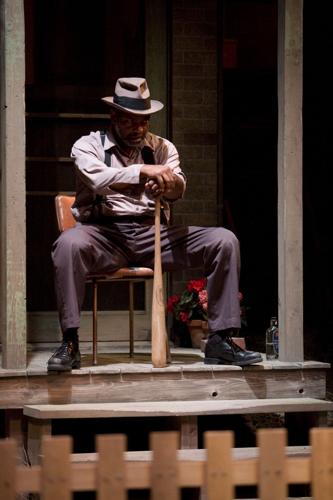
The story: “Fences” is part of Wilson’s Century Cycle — he wrote 10 plays about the black experience in America, each set in a different decade of the last century. “Fences” takes place in 1957 Pittsburg. Troy Maxson is a strong and proud black man who had played baseball for the Negro Leagues. By the time Major League teams began recruiting black players, Troy was too old to play. He is bitter about his lost opportunities and the hard, often-inhumane struggles black men who came of age during the Jim Crow days were forced to endure. His son has a chance to play college football — a chance Troy refuses to let him take. Troy finds it hard to shake the past in order to embrace the future.
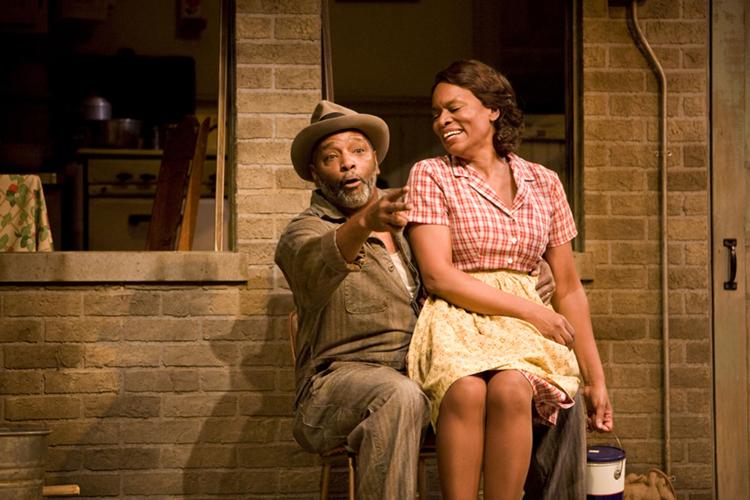
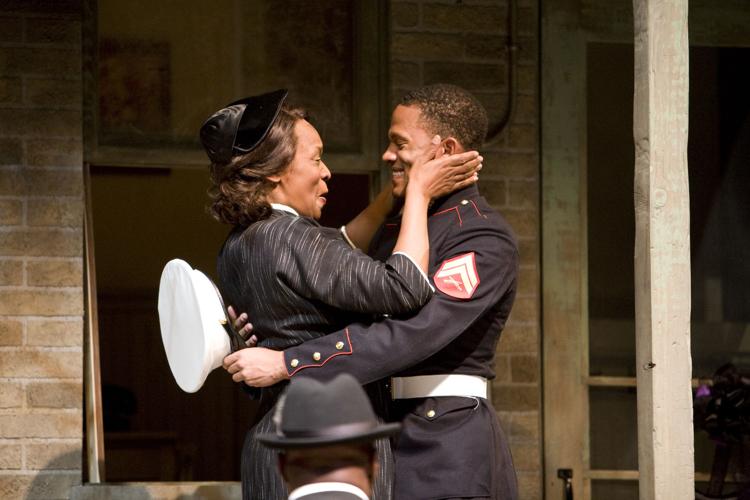
Major characters: Troy is in his early 50s and works for the sanitation department. While he takes pride in providing for his family, he can fall short in providing support and love. He is married to Rose, a practical, church-going woman and the mother of their teen son, Cory, who is obedient, gets good grades, and has the potential to play college football — a dream his father shoots down. Jim Bono is Troy’s best friend and a co-worker in the sanitation department. Troy remembers Jim’s glory days, and looks up to him. Gabriel Maxson is Troy’s brother and suffers from a debilitating head injury received during World War II. Troy’s son Lyons, born before he met Rose, has dreams of being a jazz musician, but struggles to make a living.
What Wilson had to say about “Fences:” “White America tends to look at black America in a very glancing fashion,” the playwright told the Star in a 1990 interview.
“You go see ‘Fences’ and you see a garbageman who you walk by on the street without giving a thought to. You never think that his life is filled with love, honor, duty, betrayal and all the big things that anyone’s life is filled with.”
Beyond the black experience: “People in theater and literature talk about universals and the universal experience is typified by a Euro-centric story,” says Bellamy.
“What August Wilson has done is write a very, very specific play … yet it seems to reach out and touch almost everyone.”
He experienced the play’s vast reach when he portrayed the role of Troy. He remembers when a man from Finland approached him after a performance, hugged him tightly, and said “That’s my father,” of the Troy character.
“It’s clear these tropes reach across ethnic lines,” says Bellamy. “What is so important about the play is that anyone can see themselves in the characters. It forces one to look at black lives as universal, not so different. That’s valuable today where differences are looked at first, rather than similarities.”
Bellamy echoed what Wilson told the Star. “Many people come out of the play talking about the universality of the play as if they didn’t realize that the universe existed in black life,” he said. “They are somewhat shocked to find it there.”
The classical elements: “I think Wilson was a poet, and these long arias — you’d have to call them that — are based upon African American rhythms and cultural nuance,” says Bellamy. “Yet they are presented in high classical forms of drama. … He raises everyday black life to epic proportions — the beauty and musicality of everyday black life is presented in all its splendor.”
Contact reporter Kathleen Allen at kallen@tucson.com or 573-4128. On Twitter: @kallenStar

Kathleen Allen
Reporter


