

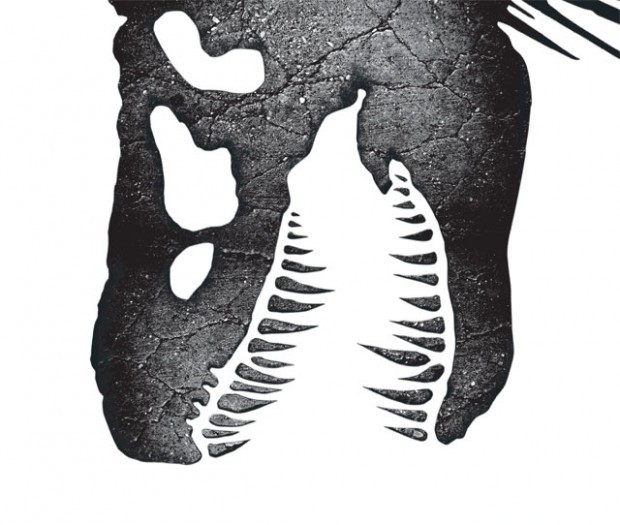
Dinosaurs haven't roamed Southern Arizona for millions of years.
But over the next few weeks, the past will come alive.
The Tucson Gem, Mineral & Fossil Showcase, known around town simply as the gem show, is a great place to check out the fossilized remains of species large and small.
"Once a year we've got absolutely the best fossil show in the world," says Karl Flessa, a professor of paleontology and paleobiology and the head of the University of Arizona geosciences department.
The gem show is not one event, but a series of shows that stretch as far north as Westward Look Resort on East Ina Road and as far south as the Tucson Expo Center on East Irvington Road and Interstate 10.
More than 20 of the event's 44 shows will feature fossils of some kind. There's everything from casts of T-rex skulls to fossilized sand dollars.
People are also reading…
Of course, if fossils aren't your thing, there are plenty of shiny gems and minerals - and more!
Vendors at Tucson's gem show, which is one of the largest in the world, sell wood carvings, paintings, oriental rugs - you name it. There are also classes on everything from bead stringing to photographing jewels.
This year's gem shows officially begin on Saturday and end Feb. 14, but shows start and stop at different times during the next two weeks. The majority of shows are open to the public, but others are just for wholesalers. The largest show is the Tucson Gem & Mineral Show, which began as a small regional event for "rockhounds" in 1955 and got the whole thing started.
This year, the theme of the Tucson Gem & Mineral Show, which is open to the public, is "Gems & Gem Minerals." Among other things, it will feature the 45-carat Hope Chrysoberyl, which is the sister stone to the Hope Diamond. Both gems were once owned by famed British collector Henry Philip Hope.
There are also seminars and lectures.
Did you know?
When it started in 1955, the Tucson Gem & Mineral Show mostly displayed minerals from Arizona, Mexico and California.
The show was started by the Tucson Gem and Mineral Society, and the first one was held at Helen Keeling Elementary School in the Amphitheater Public Schools district.
"It was just a small group of hobbyists," says Carole Lee, the society communications chairwoman.
The show expanded to three days in 1958 and moved to what is now called the Tucson Convention Center in 1970.
Over the years, the show has benefited from the support of the Smithsonian Institution in Washington, D.C., which each year sends a different exhibit.
"We've had the Case Necklace, the Hooker Emerald and a Tucson meteorite," Lee says.
This year, the Tucson Gem & Mineral Show will display the Empress Marie-Louise Diadem from the Smithsonian Institution, which boasts 79 Persian turquoise and 1006 mine-cut diamonds in addition to a 122-carat tanzanite (also from the Smithsonian), and a moon rock brought back by Apollo 17, the 1972 voyage that is the most recent manned mission to the moon.
For more info on the Tucson Gem & Mineral Show, go to www.tgms.org.
By the numbers
56
Number of years Tucson has hosted the gem show.
50,000
Number of out-of-towners expected to attend.
$100 million
The gem show's economic impact.
44
Number of shows.
42
Number of show locations.
Source: Tucson Convention and Visitors Bureau.
CLICK ON THE LINKS UNDER "RELATED STORIES" (UPPER LEFT) FOR MORE.


