

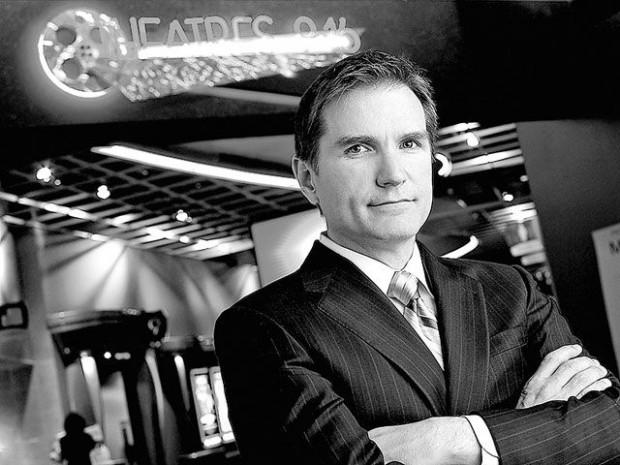
Dan Harkins was a movie guy from the embryonic stage. His online company bio says he was conceived in a movie theater. He waddled around his dad's theaters in diapers, and eventually he even got married in a theater.
Since taking over Harkins Theatres after Red Harkins' death in 1974, the Phoenix-area native has built the nation's largest family-owned chain with 31 theaters in five states and more than 3,000 employees. Now Harkins has finally made its way to Tucson, about 100 miles from where it all began.
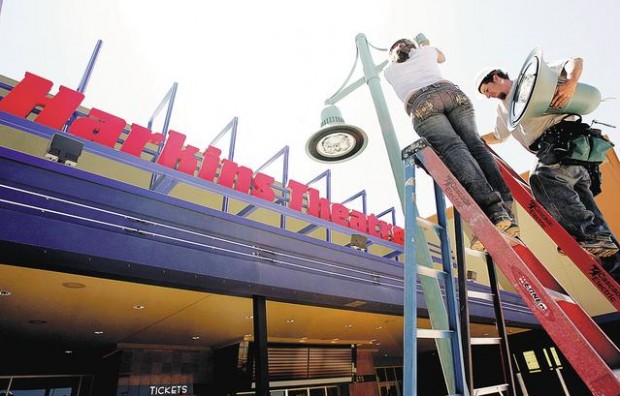
"Tucson is a very special place. I've been wanting to be here for 25 years, and it's finally happening," said Harkins, whose $15 million, all-digital Harkins Tucson Spectrum 18 opens Friday and is a first for Tucson.
Harkins says he expects all theaters to go all-digital one day, but for South Siders, the future is now.
People are also reading…
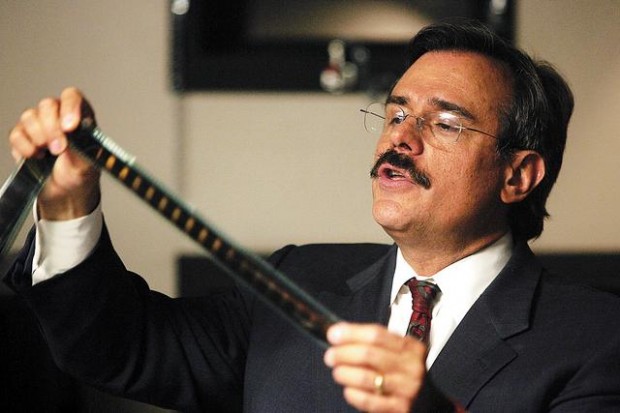
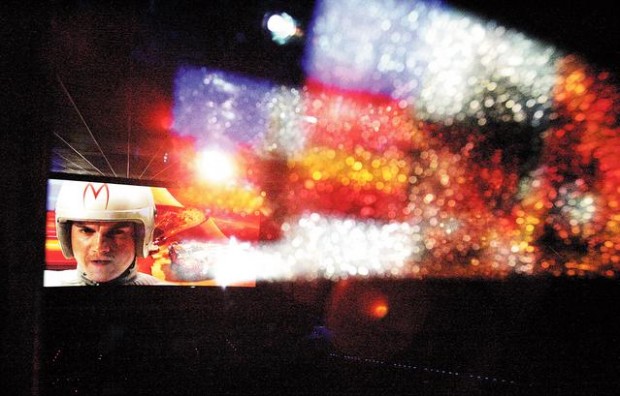
Playing movies stored on hard drives and beamed down in satellite feeds does away with the need for film and provides cleaner images that don't degrade with use.
The theater is part of the new Tucson Spectrum "power center" at Interstate 19 and West Irvington Road, with big-box retailers grouped together — a formula that has worked well in the Phoenix area. Harkins anticipates the Spectrum 18 will draw 1 million customers a year.
"You know from the moment you drive up and see the building we're a little different megaplex movie theater," said Mike Bowers, Harkins Theatres' president and chief operating officer. "We're not just a run-of-the-mill movie theater. We sell the business of show. We sell excitement. Theatrics. Going to movies, specifically. We have amenities our competitors don't."
The new theater will have Tucson's largest concession stand, with an expanded menu that includes White Castle burgers.
And, said Bowers, who attended Santa Rita High School, "we have an exclusive seat, a high-back rocker. Some might have a rocker, some might have a love seat. But our seat is exclusively ours. The seating company designed it for us in particular and does not sell it to anybody else."
Tucson City Councilman Steve Leal, whose ward includes much of the South Side, said he's looking forward to a shorter drive to see movies.
"It's just been a huge deficit, really inconvenient," said Leal, who lives near the new theater.
It also heralds a new era, he said.
"I think it adds to the comfort level for investment into the South Side. There's other things that can follow, like more restaurants."
Harkins: It's a wonderful life
In some ways, Dan Harkins' life resembles the sentimental classic "It's a Wonderful Life."
Like George Bailey, the character James Stewart plays in Frank Capra's film, Harkins gave up college to save the family business.
But unlike the Stewart character, Harkins never wanted to leave Arizona, and never battled a sense of regret over taking over the company that bore his name. Harkins was willing to do whatever it took to breathe life into the business, as well has his dad's legacy.
Growing up Harkins
Red Harkins had dreamed of being in the movies but ran out of cash on his way to Hollywood and settled in Tempe. He opened his first theater when he was 18. Dan said Red was a pillar of the Valley community, and involved Dan in the business from the start.
"I remember hanging out at the Valley Art theater in downtown Tempe before I was in kindergarten. I was just a little toddler, climbing up and down the stairs, walking into the lobby and projection booth, hanging out in the cry room," Harkins said, explaining the room was for parents with loud children.
"I would be everywhere, explore every nook and cranny of the projection booth and the snack bar," Harkins said. "I probably came close to being electrocuted many times. I was a curious young man."
Harkins remembers a picture-perfect childhood in which he was free to explore his interests while always learning from his larger-than-life father.
"He was very innovative and he passed that line of thinking on to me," he said. "I was the ultimate nerd in 1963. My dad said to me, 'Nothing is nearly as meaningful unless you get along with people.'"
From then on, Harkins was the class president every year from the sixth grade, except for when he was student body president in the eighth grade and his senior year at Scottsdale High School.
Harkins started at Arizona State University in 1971, then took a break after two years to help his ailing dad. The plan was to return after a year and then go on to law school.
But before he could start his junior year, his dad died of emphysema. An accountant told the 21-year-old Harkins that the company — which then operated five Phoenix theaters — was bankrupt because studios and other chains kept it from playing first-run films.
In the throes of grief, Harkins had to make a choice: sell the company and watch it get broken apart or quit school and devote his entire being to his father's vision of innovative, profitable theaters.
"I was dedicated to survive and succeed. That's how I mourned my father's death," said Harkins, who gave up any semblance of a personal life as he worked 120 hours every week. "It was my way of making sure Red Harkins stayed alive, especially in the hearts of moviegoers."
Struggling to turn a profit
"It was a very small company, and we had brought on a lot of debt," Harkins said.
Harkins paid his mother, Viola, $75,000 for the business.
He'd call utility companies and finagle late payments. His dad's reputation throughout town helped.
"There was a tremendous amount of respect for my dad," Harkins said. "The utility companies said, 'You're Red Harkins' son. He was a good guy.'"
Still, Harkins said, the company sunk deeper into the red for the next eight years, losing between $50,000 and $300,000 a year into the early 1980s. Studios and chains continued to shut him out of the best films, but he fought back.
"It was actually a conspiracy," Harkins said. "The theater chains and exhibitors would get together in meetings and decide among themselves who the exclusive bidder of 'Star Wars,' 'Jaws' or 'Close Encounters' would be, the only bidder the movie studio would license the film to, ignoring my bids along the way."
Harkins took his case to federal court and got the studios to back down one by one rather than face trial. His first coup came in 1982, when he persuaded Disney to let him show "Fantasia."
The film was a blockbuster for Harkins, dwarfing revenues from bigger venues in Los Angeles and New York.
"We beat the Chicago symphonic event," Harkins said, noting the audience appeal crossed over from grade school and college students to hippies who were into the psychedelic movement.
Meanwhile, he grew his company in one of the nation's fastest-growing metro areas by systematically acquiring other theaters. He then infused them with innovations such as digital projection, rocking love seats and (along with AMC) stadium seating that would be imitated industrywide.
Harkins' lawsuit was finally resolved in 1991, when the last couple of theater chains settled. "It was the longest-running antitrust case in the Ninth Circuit," Harkins said. "It didn't go to trial. What I wanted was a fair opportunity to license motion pictures for my theaters based on merit and nothing else."
Expanding horizons
The good times allowed Harkins to scale back the work hours and raise a family.
Now 55, Harkins lives in Paradise Valley with his wife, Karen, and children Danielle, 16, and James, 14.
"I had to wait until the business was profitable to find the time to court Karen and ask her to marry me," Harkins said. "We started a family as soon as possible."
The couple met through Harkins' sister, Yvonne, at a 10K race.
"On the day of the race, I jumped in the back of my sister's VW van, and there was Dr. Karen. It was love at first sight. We married in 1989 at Harkins Camelview 5." Karen is a chiropractor, nutritionist and acupuncturist.
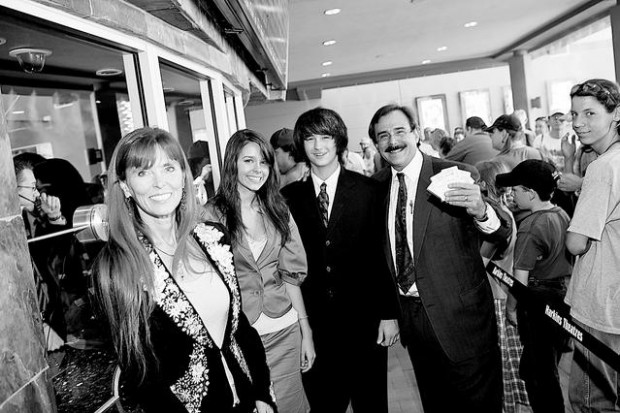
Harkins has raised his children on the movies and takes them to every theater opening. "I'm glad my own children have been able to experience this industry from the inside and are developing their own appreciation for our company and its rich history," Harkins said.
Harkins Theatres is the sixth-largest exhibitor in the United States, in recent years expanding beyond Arizona to Oklahoma, Colorado, California and Texas. He's also conquered new markets in Casa Grande and now Tucson.
"Everything I have achieved and all the success I have gained I dedicate to my father," Harkins said earlier this week. "Without his vision and his inventive entrepreneurship, this company wouldn't be what it is today. I'm grateful to be able to keep my dad's dreams alive. He would be very proud."
At the end of "It's a Wonderful Life," Stewart's character benefits from an outpouring of support from his friends and the community he's benefited. Although Dan Harkins' story is far from over, you could say he's experienced a similarly happy finish.
"I couldn't ask for a better job," Harkins said. "I love that I get to bring entertainment to millions of people. Everyone loves movies, and I never get tired of moviegoers coming up to me and telling me how much they enjoy our moviegoing experience and sharing their memories of going to Harkins when they were children."
Harkins amenities
• Harkins PlayCenter — An in-theater daycare center for ages 3 to 8, with games and activities. You can drop off your child for $6 while you watch your movie. You get a vibrating pager in case the attendants need to contact you.
• Seats are rockers with high backs designed exclusively for Harkins. Dan Harkins referred to them as "chiropractor seats."
• Concession stand popcorn is cooked with canola oil, with low or nonexistent saturated fat.
• The snack bar offers treats you won't find at other theaters, including White Castle burgers.
DID YOU KNOW
• With more than 400 screens, Harkins is the nation's largest family-owned theater chain.
• Dan Harkins and his family put their handprints in cement outside the theater at every grand opening. Harkins always buys and frames the first ticket — a tradition his father started in 1940.
Admission prices
Adult: $9.50
Child: $5.50
Senior: $6.50
Matinee: $7


